Languages
Sunday, November 22, 2026



News and Views from the Global South
Headlines

False Promises: Avoid ‘Miracle’ Rice and Just Eat a Carrot
Norman Borlaug, father of the Green Revolution, died on September 9, 2009. Alfred G. Gilman died on December 23, 2015. Both were Nobel laureates and now both dead. Gilman was a signatory to a recent letter condemning Greenpeace and its opposition to genetic engineering.
The Wild Cards
The Rio Olympics began with the signature fanfare that accompanies the Games every four years. However, unlike every year, the nature and size of the spectacle, the synchronised dancers, over-the-top fireworks and the millions spent brought a new set of disappointments with them.
History and Society in the Shaping of Terrorism Today
Among the anxieties, fears and confusions generated by the grisly tragedy that occurred on July 1 at the Holey Artisan Bakery in Dhaka, one refrain was fairly consistent – how could some young men, presumably from relatively affluent and educated families, not only become radicalised but also engage in the horrific, detached, surreal brutality through which they killed their victims. The sheer wickedness of some young men repeatedly, deliberately, cold-heartedly hacking, stabbing and decapitating people to death, left us traumatized. How COULD they? Their brutality became the story, and our response reflected the worldwide horror and disgust at the tactics used by terrorists of their particular ilk.
The UN Steps up Efforts to End Child Marriage
Barely 17 years old and from the Gajapati district in Odisha, India, Susmita has never gone to school. She rears the few animals her family owns, and this is her primary duty besides attending to household chores.
Kenya’s Health Sector Challenges Present the Ideal Setting for Creating Shared Value
The increased budgetary allocations to the health sector by county governments point to an acknowledgement not only of the enormous challenges facing the sector, but also of good health as a prerequisite to overall development.
Don’t Bash the Games
There have been few moments in my life as memorable as competing in the 1984 Olympic Games in Los Angeles. The chance to represent my country was a distinct honor, as was being part of the community of the Olympics — an event with the rare power to unite the world in the common spirit of competition and athletic excellence.
Turkey’s Syria Headache
Five years into the 'oust Assad' campaign, Turkey finds itself isolated in the region and beyond. After a narrow escape from a failed coup attempt, President Erdogan may finally be rethinking his Syria policy. Because the arming of rebels that included hard-line Islamists has not only contributed to the killing of some 280,000 innocents, it also brought upon Turkey the problem of millions of cross-border refugees and failed to put a dent against the Kurdish Workers' Party, i.e. PKK. The overly ambitious foreign policy of the Turkish government where Erdogan found himself at odds with Egypt, Libya and of course Syria, has done little to raise his profile in the region. That the Syrian engagement is a foolhardy experiment where the rebels cannot bring down Assad is now all the more evident with Russia's entry into the conflict.An Unequal Country
One of the world’s great achievements of the past decades has been the significant fall in global poverty. Between 1990 and 2012, the proportion of humanity living under $1.90 a day fell from 37 per cent to only 13pc, driven in large part by the efforts of China. South Asia also witnessed a major decline in poverty, from 51pc to 19pc, with unequal progress across countries.
Native Plants Boost Local Diets in El Salvador
Juana Morales is cooking one of the most popular dishes in El Salvador: pupusas, corn tortillas with different fillings. But hers are unique: they are not made with the traditional corn tortillas, but use Maya nuts, a highly nutritional seed that has fallen out of use but whose consumption is being encouraged in rural communities.
War on Climate Terror (I): Deserts Bury Two Thirds of African Lands
Two-thirds of the African continent is already desert or dry-lands. But while this vast extension of the second largest continent on Earth after Asia is “vital” for agriculture and food production, nearly three-fourths of it is estimated to be degraded to varying degrees.
Education: An Elusive Dream for Cameroon’s Indigenous Peoples
It is a sunny afternoon in Boui, a small village in the Boumba and Ngoko Division of Cameroon’s South East Region. A primary school teacher is drawing some wild animals on the blackboard. Then she turns to the class of fifteen pupils.
Indian Jails Slammed as Purgatory for the Poor
A media frenzy ensued in New Delhi last month when a popular television channel highlighted the horrific living conditions of women inmates in ward number six of Tihar Jail, South Asia's largest prison.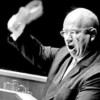
The Day a Soviet Leader Banged His Shoe at the UN
During the height of the Cold War between the United States and the Soviet Union, and particularly in the 1960s, the United Nations was the ideological battle ground where the Americans and the Soviets pummeled each other– metaphorically speaking — either on the floor of the cavernous General Assembly hall or at the horse-shoe table of the Security Council.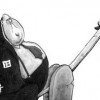
Blame It on Cronyism, Not the Free Market
The current condition of global economic inequality should be of concern to all. An Oxfam report published this year titled, An economy for the 1%, revealed that “the richest 1% now have more wealth than the rest of the world combined.” It also said that "62 of the richest people now own more wealth than the bottom half of the world's population. In 2015 it was the 80 richest, in 2014 it was 85 and in 2010, only six years back, it was 388 richest that owned similar wealth”, showing that inequality is actually growing at an increasing rate. This is also made evident by the fact that “the wealth of the poorest half of the world's population has fallen by a trillion dollars since 2010, a drop of 38 percent" while “the wealth of the richest 62 has increased [during the same period] by more than half a trillion dollars to $1.76 trillion.”
Thinking Global? Act Provincial
The least populated, northernmost province in North America even its own citizens dread to go has a per capita GDP of C$58,452 compared with C$3,439.28 for the entire Philippines.
Rigging US-style
Circle the first, first letter of the alphabet in this line. Now write the word ‘noise’ backwards and place a dot over what would be its second letter should it have been written forward.Food Safety Issues Rise in Colombo
This newspaper’s News Desk has been following up on Public Health issues for some time, and their ongoing reports should raise concerns among Colombo residents, both the affluent, and the not-so, because of the declining standards in the monitoring of food establishments, from the humble ‘buth kades’ to the restaurants of five-star hotels.
Team Refugees: Pivotal Moment in Olympic History
For the first time ever, a team of displaced athletes will have their chance to demonstrate their relentless determination and integrity in a bid to leave their own distinct mark on Olympic history.
African Farmers Can Feed the World, If Only…
Can African farmers feed the world?. Apparently the answer is “yes.” Bold as it may sound, this statement is based on specific facts: Africa is home to 60-65 per cent of the world’s uncultivated arable land and 10 per cent of renewable freshwater resources, and it has registered a 160 per cent increase in agricultural output over the past 30 years.
The Historic Reversal of Populations
It first happened in Italy in 1995. Five years later it happened in six additional countries, Bulgaria, Germany, Greece, Japan, Portugal and Spain. Today the total number of countries where it has occurred stands at 30, including most members of the European Union. In fifteen years that number is expected to nearly double and include Australia, Canada, China, Russia, South Korea and the United States (Table 1).
Developing Nations Seek Tax Body to Curb Illicit Financial Flows
Despite Western opposition, the 134-member Group of 77 is continuing to pursue a longstanding proposal for an inter-governmental UN-affiliated tax body aimed at combating corporate tax dodging and curbing illicit financial flows, including money laundering and off-shore banking.« Previous Page — Next Page »


