
Friday, October 16, 2026



News and Views from the Global South
Combating Desertification and Drought

Farmers from Central America and Brazil Join Forces to Live with Drought
Having a seven-litre container with a filter on the dining room table that purifies the collected rainwater, and opening a small valve to fill a cup and quench thirst, is almost revolutionry for Salvadoran peasant farmer Víctor de León.
VIDEO: World Day to Combat Desertification – Land Has True Value. Invest In It
 We are witnessing the degradation of about 24% of the planet's land, with water scarcity affecting almost 2 billion people on the planet.
Intelligent Land Use Seeks to Make Headway in Latin America
Consumers can be allies in curbing desertification in Latin America, where different initiatives are being promoted to curtail it, such as sustainable land management, progress towards neutrality in land degradation or the incorporation of the bioeconomy.
When a Grass Towers over the Trees
As governments scramble for corrective options to the worsening land degradation set to cost the global economy a whopping 23 trillion dollars within the next 30 years, a humble grass species, the bamboo, is emerging as the unlikely hero.
Great Green Wall Brings Hope, Greener Pastures to Africa’s Sahel
Hope, smiles and new vitality seem to be returning slowly but surely in various parts of the Sahel region, where the mighty Sahara Desert has all but ‘eaten’ and degraded huge parts of landscapes, destroying livelihoods and subjecting many communities to extreme poverty.
Why Milk, Meat & Eggs Can Make a Big Difference to World’s Most Nutritionally Vulnerable People
As the world becomes increasingly aware of the growing demands being made of our planet, more and more of us are making lifestyle choices to reduce our negative environmental impact and carbon footprint.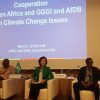
Public-Private Pacts Open Doors to Climate Finance in Rwanda and Ethiopia
The Global Green Growth Institute (GGGI) presented the African model of a National Financing Vehicle in which the governments of Rwanda and Ethiopia have successfully promoted green growth and climate resilience, at an event May 25 on the sidelines of the annual meetings of the Board of Governors of the African Development Bank (AfDB) in Busan, South Korea.
Unlocking Private Finance for Developing Countries’ Green Growth
Climate finance has never been more urgently needed, with massive investments in climate action required to meet the goals of the Paris Agreement and avoid the devastating effects of a warmer planet.
Africa Gains Momentum in Green Climate Solutions
Promoting the widespread use of innovative technologies will be critical to combat the hostile effects of climate change and reduce greenhouse gas emissions, and many African countries are already leading the way with science-based solutions.
Climate Finance: The Paris Agreement’s “Lifeblood”
As negotiators concluded ten days of climate talks in Bonn last week, climate finance was underlined as a key element without which the Paris Agreement’s operational guidelines would be meaningless.
Optimal Use of Water Works Miracles in Brazil’s Semi-Arid Region
Cattle ranching has been severely affected by drought in Brazi's Northeast region, but it has not only survived but has made a comeback in the Jacuípe river basin thanks to an optimal use of water.
Belt and Road Initiative Vows Green Infrastructure with Connectivity
"My son in primary school did not attend a birthday celebration because it was cancelled due to bad air -- and we live in Seoul, a great place to live," said Dr. Frank Rijsberman, director-general of the Global Green Growth Institute (GGGI).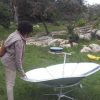
Low Awareness Restrains Growth of Solar Technologies
Every year, Amos Chandiringa, 43, a farmer in Nemaire village in Makoni district in northeastern Zimbabwe, laboriously waters his tobacco nursery with a watering can. The toil of the job often leaves him without the energy or time to do other household chores.
Leading from the Front: Zambia Launches Plant a Million Trees Initiative
As global climate experts meet in Bonn this week to discuss how to take climate action forward, Zambia counts itself amongst the leaders as President Edgar Lungu officially launches the Plant a Million (PAM) trees Initiative.
Over to You, Children! Zambia’s ‘Plant a Million Trees’ Takes Root
Trees are a vital component in the ecosystem—they not only give oxygen, store carbon, stabilise the soil and give refuge to wildlife, but also provide materials for tools, shelter and ultimately, food for both animals and human beings.
New GCF Project Signals Paradigm Shift for Water-Scarce Barbados
At the start of 2017, the Caribbean Drought and Precipitation Monitoring Network (CDPN) warned eastern Caribbean countries that they were facing “abnormal climate conditions” and possibly another full-blown drought.
DR Congo’s Mai-Ndombe Forest ‘Savaged’ As Landless Communities Struggle
Thousands of logs loaded into makeshift boats at the port of Inongo at Lake Mai-Ndombe stand ready to be transported to Kinshasa, the capital of the Democratic Republic of Congo (DRC).
Caribbean Eyes Untapped Potential of World’s Largest Climate Fund
The Caribbean Community Climate Change Centre (CCCCC) also known as the 5Cs, is looking for ways to boost the region’s access to the Green Climate Fund (GCF).
Pakistan Needs Global Climate Funds to Combat Shifting Weather Patterns
As shifting weather patterns and extreme climates become the norm, access to climate funds are deemed essential for developing countries, such as Pakistan, that are facing the brunt of climate change.
Is Desalination an Answer to the Water Crisis?
On World Water Day, March 22, universal access to clean water continues to be a privilege, when it should be a right. Experts predict that by 2030 the global water demand will exceed supply by 40%.
We Must Take Care of Nature, Because Without Rain There Is No Fresh Water
Confidence in large rivers and giant aquifers plummeted in many parts of the world, in the face of the expansion of water crises after intense and prolonged droughts in the last decade.« Previous Page — Next Page »





Today, some two billion people depend on ecosystems in dryland areas, with 90 percent of them living in developing countries. But the pace of arable land degradation is accelerating – now estimated at 35 times the historical rate -- impacting biodiversity, availability of clean water and food security, as well as exposing vulnerable communities to the harsh impacts of climate change. As the only legally binding international agreement linking environment and development to sustainable land management, the United Nations Convention to Combat Desertification (UNCCD) works to improve the living conditions of people in the drylands. IPS looks at local solutions being implemented around the world, from restoring soil productivity and mitigating the effects of drought, to projects that empower communities to manage their dryland resources more effectively.

The Week with IPS

Tracking global progress towards a sustainable world
