Languages
Tuesday, November 17, 2026



News and Views from the Global South
Africa

Climate: Africa’s Human Existence Is at Severe Risk
“Africa’s human existence and development is under threat from the adverse impacts of climate change – its population, ecosystems and unique biodiversity will all be the major victims of global climate change.”
Champions of Hygiene
Lydia Abuya, a tenant living in the Kaptembwa informal settlement west of Nakuru town, leaves one of the six on-plot toilets. She returns with a pail of water to splash away the waste.
Climate Change and the Middle East (II)
No Water in the Kingdom of the Two Seas—Nor Elsewhere
There is an oil producing country situated in the Gulf region, made of a cluster of islands. It is small, surface and population wise. But it holds the dubious privilege of ranking top of the list out of the 33 countries most likely to be water-stressed in the year 2040.

Climate Change (I)
Will the Middle East Become ‘Uninhabitable’?
This is not about any alarming header—it is the dramatic conclusion of several scientific studies about the on-going climate change impact on the Middle East region, particularly in the Gulf area. The examples are stark.
Innovations Boost Income for Women Rice Farmers
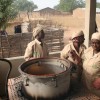
Salabanya Tabaitou no longer squints from the irritating wood smoke each time she has to parboil her rice paddy. Now Tabaitou feeds logs into a chute of a specially designed brick stove with a chimney that draws away the smoke. The stove with a stainless steel parboiling vessel cooks her rice in 20 minutes - something she would have spent two hours doing using the traditional method.
The Unknown Fate of Thousands of Abducted Women and Girls in Nigeria
The plight of 219 Chibok schoolgirls abducted two years ago is all too common in Nigeria's conflict-affected north-eastern communities, and up to 7,000 women and girls might be living in abduction and sex slavery, senior United Nations officials on 14 April 2016 warned.
Genetic Resources to Fight Climate Change
With Kenya’s meteorological records over the last 50 years indicating increased irregularity and variability in precipitation, the effects of changing climate are hitting hard. Rising temperatures as well other forms of extreme weather events in form of droughts and floods are a common feature.
Desert Locust Invading Yemen, More Arab States
Now that Yemenis begin to hope that their year-long armed conflict may come to an end as a result of the Gulf Cooperation Council and the United Nations sponsored round of talks between the parties in dispute, scheduled on 18 April in Kuwait, a new threat to their already desperate humanitarian crisis has just appeared in the form of a much feared massive desert locust invasion.
Gender Equality and Equity in Health Will Anchor Drive Towards a Sustainable National Development
Last month, the Government of Kenya (GoK) in partnership with United Nations Population Fund (UNFPA) at the sidelines of the 60th Session of the UN Commission of Women in New York, launched the report on the ‘Assessment of the UNFPA Campaign to End Preventable Maternal and New-born Mortality in support of the Campaign for Accelerated Reduction of Maternal Mortality in Africa’Female Engineers Defy the Odds
Nearly every aspect of modern life is a result of the work done by engineers; from running water to the internet, sky-scrapers to smartphone apps that people use for dating. Sadly, in Tanzania this profession attracts only a few women due to prevalent attitudes that it is a man’s job.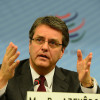
Opinion: Africa, the Need for Greater Integration
There is a misconception, by some, that the World Trade Organization (WTO) is a barrier to regional integration. It is one of a number of misconceptions that do not match up with the facts like the perception that the WTO is a rich man's club. Today the WTO has 162 members and rising at all stages of development. 43 of those members are African countries and rising. The organization now covers around 98% of world trade. It is a truly global organization, one where everybody has an equal say. And it is an organization which supports regional integration in Africa. Indeed, I would say that the need for better integration across the continent is indisputable.
Plan for Poorer Countries to Fund HIV Response Raises Concerns
Calls for low and middle income countries to contribute an additional 6.1 billion dollars to the global HIV response by 2020 could see some vulnerable groups left behind, said HIV activists meeting at the United Nations last week.
Focusing on Future of Food: What’s Next for Global Agricultural Research?
Food security scientists from around the globe gathered in Johannesburg last week with one objective: to work towards the transformation of agriculture as engine for growth in developing regions of the world. The gathering was also an opportunity to examine what farmers need to prosper in the face of social and environmental challenges.
Ethiopia’s Smoldering Oromo
The Ethiopian government's most serious domestic political crisis in more than a decade began over a scruffy football field appropriated by local officials for development.
Turning to Agriculture
Facing an unprecedented economic crisis, South Sudan -- the newest nation of the world -- has urged its 12 million inhabitants to turn to agriculture instead of depending on declining oil revenues.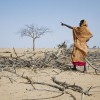
‘Little Boy’ Devouring African Food
There is a ‘Little Boy’ who has nothing to do with the atomic bomb that the United States dropped on the Japanese city of Hiroshima on 6 August 1945. This time it is about another ‘Little Boy’ who has been devastating the harvests in many regions, especially in Africa.
Saving Beira
Mozambique’s second largest city, Beira, is heading for climate change-induced disaster. Cyclones, floods, storm surges and the rising sea level are threatening to annihilate this important Indian Ocean coastal city; a city which is strategic for landlocked countries like Zimbabwe and Zambia.
OPINION: Why South Africa Must Not Lose Plot on Civil Society
South Africa celebrated human rights month this March with President Zuma recalling the “heroism of our people who stood up for their rights.” However, this same month which commemorates the sacrifices of those who took part in the struggle against apartheid and those who died in the Sharpeville Massacre of 21 March 1960 was not a happy one for today’s civil society activists and organisations engaged in defending human rights. Two shocking incidents raise troubling questions for the future of civil society in the country.
Balancing Economic Potential of Marine and Social Life
When Africa’s oldest protected marine area, Tsitsikamma -- the largest in the world, incorporating 80 km of rocky coastline, bustling with marine life, much of it endangered -- was opened as a pilot for public fishing on December 15, 2015, there was a big outcry.
Women Benefit From Simple Economic Ventures
Angelina Chiziane starts her day by getting her husband ready for work in a small village in the southern province of Gaza, Mozambique, some 216 kilometers away from the capital, Maputo.
Benefits of Backpack Biogas
Billions of dollars of aid has been pumped into Africa. Yet effective change too often remains an elusive outcome, leading to a vicious cycle: more needs, more aid but still little change. How to resolve this seemingly intractable dilemma?« Previous Page — Next Page » *#*

The Week with IPS

NEXT STOP - SDGs
Tracking global progress towards a sustainable world
Tracking global progress towards a sustainable world
