Languages
Thursday, November 19, 2026



News and Views from the Global South
Africa

World’s Poorest Nations Slowly Mending
The number of "least developed countries" (LDCs), which rose from the original 24 back in 1971 to the current 49, is beginning to shrink - haltingly.
Zimbabwe Votes in Critical Test of Freedom
“We definitely can’t miss this grand chance to cast our vote. It’s like Zimbabwe is just gaining independence; the excitement to see a new government coming into power is just incredible and we hope we get a new Zimbabwe rolling again,” 38-year-old Mildred Saungweme from Harare’s Hatfield suburb, told IPS.
Most Brides in Niger Are Children
For El Hadji Souley Moussa, a 60-year-old retired bank employee in Niger, “marrying off a daughter when she is young is a source of great pride. This way, she is protected from pregnancy outside of marriage.”
Voting to Save Zimbabwe’s Economy
At a recent campaign rally in Zimbabwe’s Midlands Province, Prime Minister Morgan Tsvangirai pledged to establish rural-based companies to create employment. It was a promise that appealed to 34-year-old sociologist Agnes Ngwenya who graduated from the University of Zimbabwe 10 years ago, but has not yet found work.
Caribbean May Seek Reparations for Slavery
As Caribbean countries prepare to observe Emancipation Day on Aug. 1, they are also caught up in an ongoing debate over reparations for slavery.
Climate Change Teaches Some Lessons
Tourism, agriculture, fishing, the water supply – climate change threatens the very foundations of society and the economy in Mauritius. As the Indian Ocean island nation develops its adaptation strategies, it is working to ground the next generation of citizens firmly in principles of sustainable development.
Technology and Innovation Aim at Greater Food Security
In the face of global climate change and currency devaluation, improved strategies are being used to combat high international poverty and malnutrition rates, and to increase global food security.
Malian Politicians Warn of Election Fraud
An increasing number of Mali’s political groups have warned of widespread fraud ahead of the presidential election on Sunday Jul. 28.
U.N. Struggles to Reach Displaced in South Sudan
Following fighting in the South Sudan state of Jonglei , the United Nations is trying to coordinate a humanitarian effort to help tens of thousands of people who have fled to the bush. The World Food Programme (WFP) has launched an operation to provide food for those who have escaped the conflict.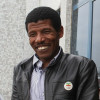
Olympics Gold Medalist Sets Sights on Ethiopia’s Parliament
Ethiopia’s track legend Haile Gebrselassie is mostly known for one thing – his world records. The two-time Olympic gold medallist, multiple world 10,000 m champion and holder of more than 27 world records in distances ranging from 1,500 m to the marathon, is now contemplating running a different race – for political office.
Kenyan Spring Failing to Blossom
Kenyan police are said to be investigating the rise of a group dubbed the March 4th Movement (M4M), which aims to make Kenya ungovernable by recruiting youths to take part in protests, similar to those that saw Egyptians overthrow their president. But politicians and analysts here say they do not foresee the movement capable of creating an East African Spring.
Soldiers Trade in Illegal Ivory
At a popular tourist art market in Goma, in eastern Democratic Republic of Congo, paintings and art sculptures made from bronze, copper, malachite, stone or wood attract visitors. It seems like an ordinary tourist market. But only the regulars know that this is also a black market for ivory products.
U.S. Courts Uphold Conflict Minerals Disclosure
A U.S. federal judge has upheld a key regulatory provision aimed at ensuring that the profits from products mined in central Africa are not used to benefit armed groups, particularly in the Democratic Republic of Congo (DRC).
Zimbabweans Wary of Another Stolen Election
Gibson Muzungu’s hope for a free and fair election on Jul. 31 has faded after local Zimbabwe Africa National Union-Patriotic Front party officials seized his identity card, apparently to check if he was a registered voter.
Smallholders Feed a Nation as Land Reform Fails
Moses Chiengerere is one of the Zimbabwe’s hundreds of thousands of smallholder maize farmers keeping this southern African nation’s granaries stocked with the grain.
‘Missing Melody in the Tune of Sustainable Development’
It is 10.26 am in Kampala and a Ugandan woman is airing her gripe about the opposite sex on the airwaves.
Malnutrition Killing Children in Cameroon
At the Garoua Regional Hospital’s Paediatric Feeding Centre in northern Cameroon, Aicha Ahidjo* is relieved to hear that her one-year-old son will survive. The child was suffering from chronic malnutrition, and other children have died of it.
First Steps to Save Burkina Faso’s Forests
Burkina Faso has just received a grant of 30 million dollars from the Forest Investment Programme to help protect the country's forests and reduce greenhouse gas emissions associated with deforestation.
/UPDATE*/ Opinion Divided on Rebirth of Ethiopia’s Opposition
Since the violence that ensued after the ruling party won Ethiopia’s 2005 elections, this East African nation has seen little in the way of political dissent. That is, until the last few months.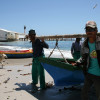
Southern African Trade Talks Stall, and the Clock Ticks
Southern Africa has to settle in for another round of negotiations after talks on Economic Partnership Agreements failed to produce results in June, bringing countries closer to losing access to the lucrative European Union market.
In Search of a New Pan-Africanism
Bridging the gap between Pan-Africanism and the African Renaissance has been a top priority for the African Union (AU).« Previous Page — Next Page » *#*

The Week with IPS

NEXT STOP - SDGs
Tracking global progress towards a sustainable world
Tracking global progress towards a sustainable world
