Languages
Thursday, October 1, 2026



News and Views from the Global South
Aid

Developing Countries COVID-19 Debt Crisis Could Put SDGs & Climate Agreement Completely Out of Reach
The inability of developing nations to spend on post COVID-19 recovery and resilience has placed the world on the "the verge of a debt crisis". “We face the spectre of a divided world and a lost decade for development,” United Nations Secretary-General António Guterres said on Monday, Mar. 29, during a high-level meeting on financing development post COVID-19.
Arab Region Counts Cost of Devastating COVID-19 Pandemic
More than eight million people moved onto the poverty line in the Arab region, a conference of Arab and Asian parliamentarians heard. The hybrid conference, held simultaneously in Beirut, Lebanon, and via video conferencing to delegates in Asia and the Arab region, was a follow up on earlier discussions on the regions' ICPD25 Commitments.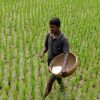
Bangladesh Welcomes a New High Yielding Biofortified Zinc Rice
The Bangladesh National Seed Board has approved the release of the newest biofortified zinc rice variety in the country: the BRRI dhan100. This latest zinc rice variety was developed by the Bangladesh Rice Research Institute (BRRI). HarvestPlus assists BRRI in crop development and breeder seed production of biofortified zinc rice.
Maquila Female Workers in Their Own Words: Fighting COVID and Labor Abuse
A compilation of testimonies collected by Blanca Velázquez Díaz and published by the Ebert Foundation (available at: http://library.fes.de/pdf-files/bueros/mexiko/17328.pdf) offers an account of the harsh reality by which some workers of the maquila industry in the Mexican state of Morelos have gone through over these last twelve months. Their words reflect, undoubtedly, similar experiences of millions of workers in different parts of the country.
Humanitarian & Food Aid Can Never be Enough to Manage Cascading Disasters
The intersection of crisis, climate change and COVID-19 has resulted in a “rapid rise in hunger”, according to United Nations World Food Programme (WFP) Deputy Executive Director Amir Abdullah.
Debt Moratoria in the Next Pandemic: Be Prepared, and Be Fair
Imagine it is 2025 and that, unfortunately, another pandemic is sweeping the world. Much like in the 2020 crisis, borrowers have seen their livelihoods upended and are struggling to repay loans.
Hope & Numbers: What will it take to Tip the Scales on Climate Action?
We should be well on the way to solving the climate crisis by now. According to the Paris Agreement, last year should have been the year that all countries presented their commitments to cut carbon emissions for limiting global climate heating to within 1.5oC of pre-industrial levels.
Water Governance and Data Collection is Key to Reach Development Goals
Prioritising water governance and ensuring data collection and investment in groundwater use around the world are some of the key issues that need to be addressed with regards to achieving development goals.
The UN Food Systems Summit: How Not to Respond to the Urgency of Reform
Global food systems have been failing most people for a long time, and the COVID-19 pandemic has made a critical situation even worse. 265 million people are threatened by famine, up 50% on last year; 700 million suffer from chronic hunger; and 2 billion more from malnutrition, with obesity and associated diet-related diseases increasing in all world regions.
Why Water & Sanitation Systems are Vital for the Economy
This World Water Day, we celebrate the value of water, which at first might be a given: after all, water is the basis of all life. Without water we have no health, wealth, equality, or education.
The Value of Water Goes Far Beyond its Stock Price
In the midst of a global pandemic, when the presence of water in our lives has never seemed more important, its future availability has also never been more uncertain.
Access to Safe Water Never Loses Value
The global community is celebrating World Water Day 2021. In the COVID-19 pandemic era, the importance and value of water for all people has never been clearer. Access to safe water is essential for public health and thriving communities.
A Moral Failure: Billions of People with No Access to Clean Drinking Water
Water is integral to sustainable development, but we are well behind on the goals and targets that we have set ourselves.
Clean Water Vital for Protecting Those on the Frontline of Climate Change in Post-Pandemic World
For many, the last year will be remembered as the time our day-to-day lives screeched to a halt. As Covid-19 spread mercilessly across the world, wreaking havoc on health and livelihoods, world leaders, health experts and scientists grappled with how to protect populations and stem the tide of the virus.
Failing to Collect Data About Women is no Trivial Offence
Women get freezing cold in trains and in big city offices because the air conditioning is set for men’s sensitivity to the cold. They spend the whole theatre interval (when visits to the theatre were still possible) in the queue because there are too few toilets.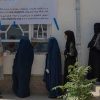
How to Achieve Peace in Afghanistan
There is much expectation about US President Joe Biden's Afghanistan strategy to end the United States' longest war effectively. So far, he continues to rely on Ambassador Zalmai Khalilzad, the Special Envoy for Afghanistan, appointed by Mr. Trump.
Drug Users Often Do Not Seek Help Because They Fear Legal Repercussion
In the February 12th editorial on the issue of illicit drug use, the Samoa Observer stated that “… there is no data currently available to show that drug abuse including meth consumption levels in Samoa have reached crisis levels, which would warrant the government considering decriminalizing drug use and consumption.” The United Nation’s position on this is clear, we must not sit by and wait for a problem to blight our communities before acting. The evidence shows that it is cheaper and more effective to prevent drug use than to deal with the consequences. To be clear, my concerns are for the drug users and their families and not for the criminal dealers.
How Marginalised Women in India Bore an Extra Burden of COVID-19 ‘Shadow Pandemic’
Women living in rural India and those belonging to marginalised communities faced an enormous burden during the COVID-19 pandemic shutdowns, including domestic violence, loss of financial assistance and income, says Rehana Adeeb, a grassroots Muslim woman leader and activist.
Drug Use is a Health Issue – We Need to Decriminalize
Earlier this month, and in December 2020 the Government of Samoa conducted operations that resulted in the confiscation of a total of 1,400 grams of methamphetamine at the border, smuggled from the US. The law enforcement officials (from the Ministry of Customs and Revenue and the Ministry of Police and Prisons) that intercepted these drugs deserve congratulations for their professionalism and skill. Meth is destructive and harmful - and it is good to see this potential threat removed from the community.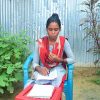
Overcoming the Learning Divide: Assessing What Students Missed During School Closings for COVID-19
School closings and the varied impacts of remote learning amid the COVID-19 pandemic are a global challenge. Educators worldwide have been struggling to meet contemporary educational standards in this environment. But this challenge is followed by yet another: how to assess the readiness of students to resume in-school education when schools open. At BRAC, the international nongovernmental organization that operates 25,000 schools in Bangladesh, serving 750,000 students, we have developed an approach that could be helpful.
Pacific Islanders Turn to Local Economies to Drive Post-pandemic Recovery
While Pacific Island countries have, so far, been spared a catastrophic spread of COVID-19, their economies have been devastated by the effects of border closures, internal lockdowns and the demise of international tourism and trade. With the global pandemic far from over, Pacific Islanders are looking to their local and regional economies to drive resilience and recovery.« Previous Page — Next Page »


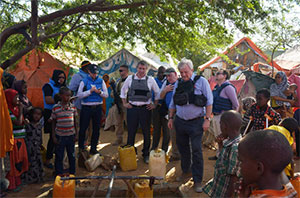 UN Emergency Relief Coordinator Visits Somalia. Credit: UN Photo/Tobin Jones
In recent years, conflicts have broken out across the world with no sign of slowing down or stopping. In times like this, millions of people globally are in dire need of humanitarian aid. Famine, warfare, natural disasters, and economic decline plague a host of nations, including Palestine, Sudan, Chad, Lebanon, and Haiti, to name a few. Humanitarian aid provides millions of people with critical services including healthcare, food, clean drinking water, psychosocial support, housing, and access to education. UN agencies such as the UNDP, UNICEF, the World Food Programme (WFP), UNHCR, UNRWA, and UNEP work with the UN Office for the Coordination of Humanitarian Aid (OCHA) and local organizations to come up with the best possible strategies to support affected communities. At the same time, humanitarian aid and those working on the frontlines are consistently threatened by both actors directly involved in conflict as well as those who are meant to contribute to the international humanitarian regime at large. The near-collapse of United States international aid structures in 2025, including the termination of 83% of USAID’s 6,300 global initiatives, has left millions of people without access to vital humanitarian assistance. 98 million people in 2025, only 65% of people targeted for humanitarian assistance, received the help they needed. In contrast, 123 million people received some form of humanitarian assistance in 2024, and OCHA’s 2026 Global Humanitarian Overview estimates that 239 million people are in need of assistance in 2026. IPS is well-positioned to discuss current initiatives to provide aid and relief through in-depth reporting and opinion content.

The Week with IPS

NEXT STOP - SDGs
Tracking global progress towards a sustainable world
Tracking global progress towards a sustainable world
