Languages
Friday, October 9, 2026



News and Views from the Global South
Aid

As Marshall Islands Integrates Healthcare Services, Experts Offer a Word of Caution
In Jack Niedenthal’s office in Majuro, there is an ominous reminder of the dark history of the Marshall Islands—once the site for dozens of nuclear tests conducted by the United States between 1946 and 1962. But it also provides a strong message about the future of island nation.
Increasing Leprosy Cases in Micronesia Points to Better Detection and Awareness
 Elizabeth Keller is one of the most senior health officials in the Federated States of Micronesia (FSM).
She is the current acting chief of Public Health and also the head of the leprosy programme in the island nation’s capital of Pohnpei.
Elizabeth Keller is one of the most senior health officials in the Federated States of Micronesia (FSM).
She is the current acting chief of Public Health and also the head of the leprosy programme in the island nation’s capital of Pohnpei. 
Financial Hurdles to Eliminating Leprosy in Micronesia
Mayleen Ekiek has been working with the Department of Health in the Federated States of Micronesia (FSM) for 12 years now. She is the head of the National Leprosy Programme in the Pacific island nation, which still remains one of three, along with the Marshall Islands and Kiribati, that is yet to eliminate leprosy. 
‘The First City Completely Devastated by Climate Change’ Tries to Rebuild after Cyclone Idai
The city of Dondo, about 30 kilometres from Beira, central Mozambique, didn’t escape the strong winds of Cyclone Idai. It is estimated that more than 17,000 families were displaced and more than a dozen schools were destroyed in the city.
Cyclone Idai: A Time to Reassess Disaster Management
It was one of the worst tropical cyclones hit Southern Africa in recent times. Cyclone Idai, which has been characterised by heavy rains and flooding including mudslides in some parts of Mozambique, Zimbabwe, and Malawi, has left more than 750 dead, with thousands marooned in remote rural areas, whilst others are still unaccounted for. More than 1,5 million people are affected by the cyclone in the region.
“Don’t Tell My Husband I Have Leprosy”: Social Stigma Silences Marshall Islands’ Women
Meretha Pierson has been a nurse for the past seven years, working in the government-run leprosy clinic in Majuro, the capital of the Marshall Islands. Her patients come in all ages, from different economic backgrounds and different professions. But, aside from their diagnosis, they all have something else in common: everyone wants to keep their illness a secret.
World’s Best Teacher Prize and One Million Dollars Awarded to Kenyan Teacher from Impoverished Community
A maths and physical science teacher from an impoverished school in Kenya’s Rift Valley, Peter Tabichi, has won the one million dollar Global Teacher Prize, becoming the first teacher from Africa to clinch the prize established to honour the profession.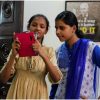
A New Window for Delhi’s Migrant Women & Girls
When the most devastating flood in Bihar’s history came in 1987, Renu Devi recalled that the rampaging waters and landslides had swept away people who were sleeping, along with their beds.
South Florida’s Underserved Refugee Communities
South Florida has long been known as a haven for refugees and migrants. Widely referred to as the “gateway to Latin America”, 1 in every 5 Florida residents is an immigrant. Significantly, the “sunshine state” welcomes 1,000 new settlers every day.
Myanmar and China’s Bride Trafficking Problem
Women and girls from Myanmar are increasingly being trafficked as “brides” to China, a human rights group found.
How One Kenyan Teacher is Lifting His Students Out of Poverty With Science
Keriko Mixed Day Secondary School in Nakuru County, situated in a remote, semi-arid part of Kenya’s Rift Valley, could pass for an ordinary secondary school in any part of Africa. But ordinary it is not.
Climate Change: a Threat to Agriculture & UN’s Goal to Eradicate Hunger
The United Nations has vowed to eradicate extreme hunger and malnutrition on a self-imposed deadline of 2030. But it is facing a harsh realty where human-induced climate change – including flash floods, droughts, heatwaves, typhoons and landslides-- is increasingly threatening agriculture, which also provides livelihoods for over 40 per cent of the global population.
Helping St. Vincent’s Fishers Maintain an Essential Industry in a Changing Climate
From an influx of sargassum in near-shore waters, to fish venturing further out to sea to find cooler, more oxygenated water, fishers in St. Vincent and the Grenadines are battling the vagaries of climate change. The country is doing what it can to respond. 
Tobacco Industry Targets Women in Asia
International Women’s Day on 8 March recognized and celebrated the progress women are making globally. The day also acknowledged the risks, exploitation and suffering many continue to endure.
Syrian Crisis Enters Ninth Year with 11 Million Refugees Overseas & 6 Million Home
The bell rings and the halls erupt with the sounds of chatter and excitement as hundreds of children run to the dusty courtyard for recess. I joined them to play football but the game instead turned into a round of questions.
Q&A: Inventor from a Small Fishing Village in Saint Lucia Provides Hope for Water Woes
Karlis Noel spends his days in his lab in the small, picturesque community of Laborie in St. Lucia. The former fisherman’s story might sound like an overnight success, but his present accolades in the field of engineering are the result of years of hard work and an unceasing drive to make life easier for communities in the throes of a water crisis.
Nigeria Mourns the Loss of Leading African Academic Who Was in Ethiopian Airlines Crash
Nigeria is mourning along with the rest of the world after the downing of Ethiopian Airlines Flight, which claimed all of the 157 lives onboard. The fatalities included people from 35 countries, 19 United Nations officials and two Nigerians, one of whom was regarded as Africa's leading academic and labelled a genius by many.
Millions of Venezuelans in Need of Protection
The international community must extend protections for Venezuelans in light of a growing humanitarian crisis with no end in sight. Human Rights Watch has urged governments in the Americas to provide temporary protection to the millions of Venezuelans fleeing a severe humanitarian crisis.
Environmental Funding For Guyana Must Cater for Mangroves Too
For several decades, Guyana has been using mangroves to protect its coasts against natural hazards, and the country believes its mangrove forests should be included in programmes like the REDD+ of United Nations, in order to access financing to continue their restoration and maintenance, as they complement miles of seawalls that help to prevent flooding.
Women as Forerunners of Change: When Financial Inclusion Meets Digital Transformation
Imagine a world where women fully participate in society, and enjoy equal access to resources and opportunities. Most probably, the 2030 Agenda would be nearing its fulfillment and we would be closer to achieving the better planet we wish to build.
Break the Menstrual Taboo
It is time to rise up and fight a long neglected taboo: menstruation. Marking International Women’s Day, United Nations human rights experts called on the international community to break taboos around menstruation, noting its impacts on women and girls’ human rights.« Previous Page — Next Page »





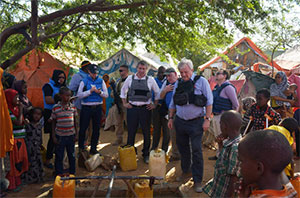 UN Emergency Relief Coordinator Visits Somalia. Credit: UN Photo/Tobin Jones
In recent years, conflicts have broken out across the world with no sign of slowing down or stopping. In times like this, millions of people globally are in dire need of humanitarian aid. Famine, warfare, natural disasters, and economic decline plague a host of nations, including Palestine, Sudan, Chad, Lebanon, and Haiti, to name a few. Humanitarian aid provides millions of people with critical services including healthcare, food, clean drinking water, psychosocial support, housing, and access to education. UN agencies such as the UNDP, UNICEF, the World Food Programme (WFP), UNHCR, UNRWA, and UNEP work with the UN Office for the Coordination of Humanitarian Aid (OCHA) and local organizations to come up with the best possible strategies to support affected communities. At the same time, humanitarian aid and those working on the frontlines are consistently threatened by both actors directly involved in conflict as well as those who are meant to contribute to the international humanitarian regime at large. The near-collapse of United States international aid structures in 2025, including the termination of 83% of USAID’s 6,300 global initiatives, has left millions of people without access to vital humanitarian assistance. 98 million people in 2025, only 65% of people targeted for humanitarian assistance, received the help they needed. In contrast, 123 million people received some form of humanitarian assistance in 2024, and OCHA’s 2026 Global Humanitarian Overview estimates that 239 million people are in need of assistance in 2026. IPS is well-positioned to discuss current initiatives to provide aid and relief through in-depth reporting and opinion content.

The Week with IPS

NEXT STOP - SDGs
Tracking global progress towards a sustainable world
Tracking global progress towards a sustainable world
