Languages
Friday, October 9, 2026



News and Views from the Global South
Aid
Sharing the Burden of Refugees; the World Can Do Better
As the world marks World Refugee Day on June 20th to celebrate the strength, courage and perseverance of refugees, a glaring concern remains just how inadequate the global response to the refugee crisis has been.
The Importance of the Upcoming FAO Election
With each passing day, the world gets just a little smaller as the internet and cell phones bring our communities together, reveal our shared challenges, and lay bare our failures. As global citizens, we are all concerned about the growing number of hungry people around the world and the threats to food security. The simple fact is that more than 800 million people go hungry every day, and if that number shocks you, know that experts predict the number to grow significantly over the next ten years.
U. S. Backing for Heated Tobacco Products Triggers Misrepresentation
The U.S. Food and Drug Administration’s (FDA) decision authorizing the sale of Philip Morris International (PMI)’s heated tobacco system, IQOS, in the United States inadvertently puts a foot in the door to increase sales of new tobacco products in the developing world.
Mobilisation Needed for Climate-Related Disasters
Climate-related displacement and food insecurity is not a future possibility, but it is already happening and it’s only projected to worsen without urgent action in coming years.
Pakistani and Afghan Refugees Seek Safe Haven in Sri Lanka
Thirteen-year-old Bariea, a Pakistani asylum seeker in Sri Lanka, is taking shelter at a mosque in the city of Negombo, where an uneasy mix of high anxiety and extreme boredom hover over the room.
Class Analyst: Global Income Inequality
As a child growing up in Communist Yugoslavia, Branko Milanovic witnessed the protests of 1968, when students occupied the campus of the University of Belgrade and hoisted banners reading “Down with the Red bourgeoisie!”
The Contribution of Humanitarian Action to Peace
The connection of humanitarian action to broader objectives like peace, development and human rights is understandably complex, but it is also an area in which some fresh thinking is important.
Cyclones and Struggling Economy Could Impact Mozambique’s Elections
Mozambique, which was affected by an unprecedented two tropical cyclones over a matter of weeks, is still reeling from the impact a month after the latest disaster. But resultant devastation caused by the cyclones could impact the country’s elections as concerns are raised over whether the southern African nation can properly hold the ballot scheduled for later this year.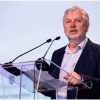
Do We Need a Global Convention of Common Principles for Building Peace?
When the Stockholm International Peace Research Institute (SIPRI) concluded a three-day forum on “Peace and Development” on May 16, the primary focus was the daunting challenges threatening global security, including growing military interventions, spreading humanitarian emergencies, forced migration, increasing civil wars, extreme weather conditions triggered by climate change and widespread poverty and conflict-related hunger.
Citizenship & Growth: Inclusive Citizenship Laws Tend to Foster Economic Development
The notion of citizenship has evolved over time. Historically, allegiance was typically to an ethnic group or a feudal lord. With the birth of the nation-state in the 19th century came the need to distinguish between those who belonged to the state and those who didn’t, and therefore to create a legal distinction between nationals and foreigners.
Spotlighting the ‘Abilities’ in ‘Disabilities’
The power of sport can help make global sustainable development a reality, and such power transcends cultural, linguistic and even physical barriers.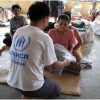
Aid Organisations Welcome New Development Chief
International aid organisations have reacted positively to the appointment of new UK International Secretary of State for Development, Rory Stewart.
The Ethiopian City Lost in the Shadow of South Sudan’s War
 Right up against the border with South Sudan, the western Gambella region of Ethiopia has become a watchword for trouble and no-go areas as its neighbour’s troubles have spilled over. But now there may be reason for optimism on either side of the border.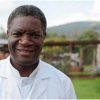
Women, Peace and Security: Let’s Turn Words into Action
To be able to tackle a problem we must first recognize that it exists. When I first spoke at the United Nations Security Council in 2009, I was asked why the issue of sexual violence was even relevant to peace and security. At that time, it was not generally accepted that rape is in fact a weapon of war. Today, that statement is both widely accepted and central to the international community’s understanding of this crucial issue.
Global Energy Consumption is Up — So Are Emissions
Our acceptance of climate change doesn’t keep pace with our energy consumption reduction. However, the latest International Energy Agency’s (IEA’S) Global Energy and CO2 Status Report for 2018 has some good news.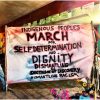
UN’s Empty Promises to World’s Indigenous Peoples
The United Nations, as in so many other areas, gives lip service in support of Indigenous issues while lacking the political will and enforcement power over individual member states to comply with the protection of fundamental human rights for the Original Nations of Indigenous Peoples of the world.
Revealed — A Roadmap to Defeat Tobacco Tax & Keep Indonesians Addicted
The image of a smoking toddler from Indonesia horrified the world but did little to motivate local policy makers to enact measures to protect children and youth from the harms of tobacco use. Indonesia has one of the world’s highest smoking rates where two out of three men and about 40 percent of adolescent boys smoke.
Q&A: 607 Island Atolls Means it’s Hard to Distribute Leprosy Healthcare to All Micronesians
During his 22-year career in the health sector, Marcus Samo has seen the Federated States of Micronesia (FSM) suffer from an increased burden of disease while at the same time the resources to address them have either remained the same or decreased.
Missing Data & Inefficient Drug Distribution Tops List of Micronesia’s Leprosy Challenges
It’s a good day for Dexter, a 25-year-old fisherman from Pohnpei in the Federated States of Micronesia. He’s just been told that he is cured of leprosy.
As Marshall Islands Integrates Healthcare Services, Experts Offer a Word of Caution
In Jack Niedenthal’s office in Majuro, there is an ominous reminder of the dark history of the Marshall Islands—once the site for dozens of nuclear tests conducted by the United States between 1946 and 1962. But it also provides a strong message about the future of island nation.
Increasing Leprosy Cases in Micronesia Points to Better Detection and Awareness
 Elizabeth Keller is one of the most senior health officials in the Federated States of Micronesia (FSM).
She is the current acting chief of Public Health and also the head of the leprosy programme in the island nation’s capital of Pohnpei.
Elizabeth Keller is one of the most senior health officials in the Federated States of Micronesia (FSM).
She is the current acting chief of Public Health and also the head of the leprosy programme in the island nation’s capital of Pohnpei. « Previous Page — Next Page »





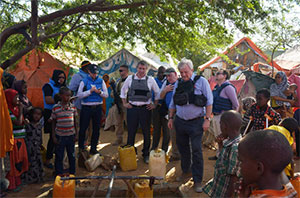 UN Emergency Relief Coordinator Visits Somalia. Credit: UN Photo/Tobin Jones
In recent years, conflicts have broken out across the world with no sign of slowing down or stopping. In times like this, millions of people globally are in dire need of humanitarian aid. Famine, warfare, natural disasters, and economic decline plague a host of nations, including Palestine, Sudan, Chad, Lebanon, and Haiti, to name a few. Humanitarian aid provides millions of people with critical services including healthcare, food, clean drinking water, psychosocial support, housing, and access to education. UN agencies such as the UNDP, UNICEF, the World Food Programme (WFP), UNHCR, UNRWA, and UNEP work with the UN Office for the Coordination of Humanitarian Aid (OCHA) and local organizations to come up with the best possible strategies to support affected communities. At the same time, humanitarian aid and those working on the frontlines are consistently threatened by both actors directly involved in conflict as well as those who are meant to contribute to the international humanitarian regime at large. The near-collapse of United States international aid structures in 2025, including the termination of 83% of USAID’s 6,300 global initiatives, has left millions of people without access to vital humanitarian assistance. 98 million people in 2025, only 65% of people targeted for humanitarian assistance, received the help they needed. In contrast, 123 million people received some form of humanitarian assistance in 2024, and OCHA’s 2026 Global Humanitarian Overview estimates that 239 million people are in need of assistance in 2026. IPS is well-positioned to discuss current initiatives to provide aid and relief through in-depth reporting and opinion content.

The Week with IPS

NEXT STOP - SDGs
Tracking global progress towards a sustainable world
Tracking global progress towards a sustainable world
