Languages
Monday, November 9, 2026



News and Views from the Global South
Armed Conflicts

Q&A: Nuclear Disarmament a Non-Starter, “But I Would Love to Be Proven Wrong”
Albert Einstein, the internationally-renowned physicist who developed the theory of relativity, once famously remarked: “I know not with what weapons World War III will be fought, but World War IV will be fought with sticks and stones.”
Migrants Between Scylla and Charybdis
Not even a month has passed since over 700 hundred migrants lost their lives in their attempt to reaching the shores of Italy and the media spotlights have already faded on the island of Sicily, Italy’s southern region and main gateway to Europe.
Analysis: Global Politics at a Turning Point – Part 2
In the following months, reports of the use of chemical weapons by Syrian forces multiplied. The most serious was an allegation that the Syrian army had used sarin gas on Mar. 19, 2013 at Khan al Assal, north of Aleppo, and in a suburb of Damascus against its opponents. This was followed by two more allegations of small attacks in April.
Analysis: Global Politics at a Turning Point – Part 1
President Barack Obama’s Nowroz greeting to the Iranian people earlier this year was the first clear indication to the world that the United States and Iran were very close to agreement on the contents of the nuclear agreement they had been working towards for the previous 16 months.
Faith-Based Organisations Warn of Impending Nuclear Disaster
As the month-long review conference on the Nuclear Non-Proliferation Treaty (NPT) continued into its second week, a coalition of some 50 faith-based organisations (FBOs), anti-nuclear peace activists and civil society organisations (CSOs) was assigned an unenviable task: a brief three-minute presentation warning the world of the disastrous humanitarian consequences of a nuclear attack.
Israel Slammed Over Treatment of Palestinian Children in Detention
Palestine’s ambassador to the United Nations, Riyad Mansour, has sent a letter to the U.N. Security Council demanding that action be taken against Israel over the abuse of Palestinian children after they have been arrested by Israeli security forces.Close to a Thousand Nigerian Girls Freed, Many Malnourished or Pregnant
Boko Haram, fleeing to a new hideout, has abandoned hundreds of women and girls in the Sambisa forest where the high school girls from Chibok were initially taken over one year ago. It is not certain, however, that the freed girls and women were part of the 200 plus kidnapped victims of Boko Haram, officials say.
Opinion: The West and Its Self-Assumed Right to Intervene
The ‘West’ is a concept that flourished during the Cold War. Then it was West against East in the form of the Soviet empire. The East was evil against which all democratic countries – read West – were called on to fight.
The U.N. at 70: Impressive Successes and Monumental Failures
The United Nations was created to save succeeding generations from the scourge of war, protect human rights, maintain international peace and security, and uphold international law. Its 70-year history is marked with many successes, but also disappointments. We need to look at both sides so that we can make the U.N. more effective in the future.
U.N. Staffers Secure at Home, Moving Targets Overseas
When the United Nations spent over 2.2 billion dollars refurbishing its ageing 65-year-old Secretariat building, one of its primary goals was to strengthen security to prevent any violent attacks on the glass house by New York city’s East River.
Opinion: Continuing the Centennial Work of Women and Citizen Diplomacy in Korea
A century ago, the suffragist Jane Addams boarded a ship with other American women peace activists to participate in a Congress of Women in The Hague.
As Nuke Talks Begin, U.N. Chief Warns of Dangerous Return to Cold War Mentalities
Against the backdrop of a new Cold War between the United States and Russia, two of the world’s major nuclear powers, the United Nations is once again playing host to a four-week-long international review conference on the Nuclear Non-Proliferation Treaty (NPT).
Middle East Conflicts Trigger New U.S.-Russia Arms Race
The escalating military conflicts in the Middle East – and the month-long aerial bombings of Yemen by an Arab coalition led by Saudi Arabia – have triggered a new arms race in the politically-volatile region.
Peace Is Not a Boy’s Club
Governments have long pledged to bring more women to the peace table, but for many (if not most), it has been little more than lip service.
U.N. Committee Gets ‘Unhindered Access’ to Azerbaijan’s Detention Centres – But Is it Enough?
Months after being denied access to Azerbaijan’s places of detention, the head of the United Nation’s Subcommittee on Prevention of Torture (SPT) announced Friday that her four-member delegation had successfully conducted investigations of Azerbaijani prisons, police stations and investigative isolation units.
Opinion: Burundi – Fragile Peace at Risk Ahead of Elections
Pierre Claver Mbonimpa is not permitted to get close to an airport, train station or port without authorisation from a judge. He cannot travel outside of the capital of his native Burundi, Bujumbura. Whenever called upon, he must present himself before judicial authorities.
Talk of Death Squads to Combat New Wave of Gang Violence in El Salvador
The resurgence of violent crime in El Salvador is giving rise to a hostile social environment in El Salvador reminiscent of the country’s 12-year civil war, which could compromise the country’s still unsteady democracy.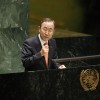
Opinion: Challenging the Nuclear Powers’ Extremism
On the eve of the Nuclear Non-Proliferation Treaty (NPT) Review Conference five years ago, U.N. Secretary-General Ban Ki-moon warned that governments alone will not rid the world of the specter of nuclear annihilation.
Saudis Compensate Civilian Killings with 274 Million in Humanitarian Aid to Yemen
Saudi Arabia’s right hand does not know what its left foot is up to, belittles an Asian diplomat, mixing his metaphors to describe the political paradox in the ongoing military conflict in Yemen.In One Terrible Weekend, ISIL Beheads Christians and Hundreds Drown in a ‘Mass Grave’
As Europeans debated their policies towards the leaky flotillas steaming out of Libya, carrying most to a certain death at sea, members of ISIL were streaming a video of captured Ethiopian Christians on a beach.
U.N. Helpless as Crises Rage in 10 Critical Hot Spots
The United Nations is fighting a losing battle against a rash of political and humanitarian crises in 10 of the world’s critical “hot spots.”« Previous Page — Next Page »





Armed conflicts are a sad constant on daily front pages worldwide. Wars, civil wars, revolts, coups, genocides, ethnic and political violence, and global terrorism capture our attention for the geopolitical landslides, human suffering, food crises and streams of migration that follow in their wake. As in times of natural disaster, man-made crises claim frequent casualties among the poor, women and children. IPS examines emerging and ongoing armed conflicts around the world with an eye on the underlying social and political dynamics, and special focus on the lived experiences of those most affected by armed conflict.

The Week with IPS

NEXT STOP - SDGs
Tracking global progress towards a sustainable world
Tracking global progress towards a sustainable world
