Languages
Saturday, November 14, 2026



News and Views from the Global South
Armed Conflicts

Syrian Kurds Find the Language of Freedom
"I want to learn how to read and write in my own language," says Manal, a young Kurd from Syria. Neither she nor any of Manal’s 30 classmates have ever been so close to achieving their goal.
Losing Land, and Finding a Roof
Asmahan Ramadan and her family have taken thousands of photos on the rooftop of their home. Not of themselves, or of the overcrowded Dheisheh refugee camp they see every day.
Culture of Peace Should Replace Culture of Violence
When U.N. Secretary-General Ban Ki-moon addresses the High-Level Forum on Culture of Peace later this week, he will transmit a message that underlines his political philosophy: all disputes need to be resolved by peaceful means, not through military might.
Gaza Economy Tailored to Fail
"Gaza's economy is expected to grow modestly and people will likely still be worse off in 2015 compared to the mid-1990s," reads a press release announcing the United Nations' August 2012 report, ‘Gaza in 2020 – A Liveable Place?’U.S. Declares Haqqani Network a Terrorist Organisation
The U.S. State Department on Friday declared the Haqqani network, a militant group based in Pakistan, a “terrorist organisation”.
Questions Linger as U.S. Cedes Detention Power in Afghanistan
Continued tensions over U.S. detention power in Afghanistan are highlighting issues related to the country’s sovereignty.
Justice a Long Way Off for Dead Miners
The South African Police Service members who were involved in a bloodbath with striking workers at the Marikana mine in North West Province could face murder charges, sources close to the investigation told IPS.
Taliban Need No Education
Samina Afridi, a lecturer at the University of Peshawar, regrets that down history the leaders of the Pashtun (also Pakhtun) tribes have conspired to keep them away from education and literacy. The Taliban are only the latest example.
Peace in Afghanistan, the Civil Society Way
More than a decade after the fall of the Taliban, Afghanistan is still in the midst of an irregular war. Talking peace is difficult because no one quite knows who to talk to.
Amidst Rising Xenophobia, U.N. to Reiterate Culture of Peace
Amidst growing attacks on religious groups and a rising intolerance toward migrants and minorities worldwide, the 193-member General Assembly will hold a High-Level Forum next week to discuss one of the key issues on the U.N. agenda aimed at promoting social, economic and political harmony: a culture of peace.Report Details U.S. Abuse of Gaddafi Opponents Under Bush
Startling new evidence of the torture, unlawful rendition, and other abuse of Libyan anti-Gaddafi rebels in U.S. detention facilities during the George W. Bush administration was revealed Wednesday by Human Rights Watch (HRW).
Colombia’s Rebels Insist Peace Is Only Possible with Reforms
The Revolutionary Armed Forces of Colombia (FARC) are taking a pragmatic, reformist stance in the new attempt to negotiate a peace agreement with the Colombian government, to put an end to nearly half a century of civil war.
After Dempsey Warning, Israel May Curb War Threat
President Barack Obama’s explicit warning that he will not accept a unilateral Israeli attack against Iran may force Israeli Prime Minister Benjamin Netanyahu to step back from his ostensible threat of war.
Côte d’Ivoire’s Universities – Shedding a Legacy of Violence and Corruption
Yacouba Coulibaly was pursuing a doctorate in education at Cocody University in Abidjan before Côte d’Ivoire’s post-election violence started in 2010. But his classes were routinely disrupted by armed members of a powerful student federation that wished to hold meetings instead.Gun Violence a Growing Concern in Papua New Guinea
In Papua New Guinea, the largest island nation in Melanesia in the southwest Pacific, where more than 60 percent of major crimes involve guns, a burgeoning illegal arms trade is associated with lack of employment growth and low human security, with vulnerable communities suffering the consequences.
Israel ‘Pillaging’ Palestinian Resources
By mining natural resources from the occupied Palestinian territories for its own economic purposes, Israel is committing the war crime of pillage in the Dead Sea area, according to a report released Monday by Palestinian human rights group Al Haq.
Libyan Weapons Arming Regional Conflicts
In the aftermath of Libya’s revolution, Libyan fighters and weapons are flooding areas of conflict in neighbouring countries, according to local fighters and officials in several countries.
Israelis Brace Dubiously for War With Iran
Parviz Barkhordar says he loves both Israel and Iran. For many, this dual affinity might seem contradictory, but according to Barkhordar, it makes total sense.Nepal’s President Urged to Reject War-Era Amnesty
The Nepali government is receiving significant national and international blowback for a draft ordinance that rights groups, including ones in the United States, say would allow for a widespread amnesty for some accused of human rights and other abuses perpetrated during Nepal's decade-long civil war.
Long Wait to Defect From Assad’s Forces
"Of course I want to defect but I cannot give up my salary. How could I possibly feed my 11 children?" The war is putting every Syrian on the brink, including this policeman on the side of President Bashar Al Assad.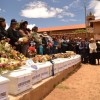
Peru Identifies Civil War Victims – at Snail’s Pace
Of the 69,000 people killed during the 1980-2000 armed conflict in Peru, at least 16,000 were buried in secret unmarked graves. So far, only 2,064 of these bodies have been recovered, and just 50 percent have been identified, according to a new report.« Previous Page — Next Page »


Armed conflicts are a sad constant on daily front pages worldwide. Wars, civil wars, revolts, coups, genocides, ethnic and political violence, and global terrorism capture our attention for the geopolitical landslides, human suffering, food crises and streams of migration that follow in their wake. As in times of natural disaster, man-made crises claim frequent casualties among the poor, women and children. IPS examines emerging and ongoing armed conflicts around the world with an eye on the underlying social and political dynamics, and special focus on the lived experiences of those most affected by armed conflict.

The Week with IPS

NEXT STOP - SDGs
Tracking global progress towards a sustainable world
Tracking global progress towards a sustainable world
