Languages
Saturday, November 21, 2026



News and Views from the Global South
Asia-Pacific

INDIA: Kashmir’s Fence Eats Crops
Touseef Bhat’s seven-acre farm in this scenic alpine valley of Bandipora district has an incongruous feature – an electrified barbed wire fence running through it.JAPAN: Wall Street Protest Finds Strong Echoes
Inspired by the ongoing Occupy Wall Street demonstrations in the United States, thousands of Japanese youth and workers, dissatisfied with growing unemployment and harsh working conditions in the world’s third largest economy, have taken to the streets to demand stable jobs and government reforms.Sri Lankan Rights Abuses Obstruct Trade Efforts with Canada
Despite the crossfire of Canadian accusations of human rights violations by Sri Lanka at the end of its civil war and Colombo's corresponding counter-claims, the economically battered South Asian country aims to bolster its trading relationship with Canada and increase foreign direct investment.
PAKISTAN: Singing Against the Taliban
"In the last few years, I have sung more than a dozen songs against the Taliban," award-wining singer Khyal Muhammad tells IPS. "I got threatening messages on the mobile phone. But I will continue to sing because it gives me strength."
FILM: Political Prisoners Are Burma’s Unsung Heroes
In a move that highlighted its sub-par human rights record, the government of Burma announced Oct. 11 that it would release 6,359 prisoners, but how many of these will be drawn from the country's estimated 500 to over 2,000 political prisoners remains uncertain.CHINA: New Laws to Crack Down on Uyghurs
China is contemplating new legislation to define terrorism more precisely, raising fears that the government is using the so-called ‘war on terror’ to crack down on Uyghur separatists in the country’s restive Muslim region of Xinjiang.
OP-ED: China’s Farming History Misapplied in Africa
As sub-Saharan Africa grapples with high food prices in some regions and famine in others, many experts argue that increasing food production through a programme of hybrid seeds and chemical inputs is the way to go.PHILIPPINES: Prisoners Find Their E-Families
For the first time since giving birth in prison 13 years ago, Sarah, an inmate in the Philippines’ largest detention centre for female convicts, saw her daughter via Skype video chat in her prison cell.POPULATION: Youth Bulge Adds to Pakistan’s Woes
Pakistan’s population explosion is posing a greater danger than militancy and religious intolerance, says noted medical doctor and demographer Farid Midhet.
INDIA: Kashmir’s Media Miracle Feeds on Conflict
"If one were to search for a positive outcome to the ongoing armed conflict in Jammu and Kashmir state, it would be the growth of journalism," says Prof. Shams Imran at the department of journalism, Central University of Kashmir.THAILAND: Bangkok Braces for Month of Floods
As the Thai Airways flight descends into Suvarnabhumi International Airport, passengers pull out cameras to snap pictures of flood waters rising inexorably and predicted to inundate the capital city by the end of the week.U.S.-NORTH KOREA: Persistence Pays Off with “Rogue” Regimes
The United States and North Korea are resuming the joint search for U.S. soldiers still missing from the Korean War, one of the few positive areas of interaction between two countries estranged for more than 60 years.
U.N. Tally Excluded Most Afghan Civilian Deaths in Night Raids
A July United Nations report asserting that only 30 civilians died in targeted raids in Afghanistan during the first six months of 2011 reflected only a very small fraction of night raids in which civilians were killed, according to officials of the independent Afghan commission which had co-produced the 2010 report on civilian casualties with the U.N. Mission.
Civil Society Groups Call for Action to Curb Land Grabbing
Civil society organisations are calling on governments in developing countries to stop leasing and selling out land to transnational corporations because it leads to land degradation and food insecurity.JAPAN: Forests Provide Cover for Recovery
In the wake of the massive tsunami that devastated the Tohoku region in March, Japan has witnessed a sharp rise in wood imports for temporary housing units and other recovery projects.Plot Allegations Stir Complex Nationalist Feelings in Iran
The news of Iran's participation in an alleged plot to assassinate the Saudi Arabian ambassador in Washington and subsequent harsh rhetoric by senior officials in both Washington and Riyadh have generated deep and complex nationalist feelings on the part of the public here.PAKISTAN: Diplomatic Tensions over U.S. Talks with Militant Groups
Assurances by visiting U.S. Secretary of State Hillary Clinton here late last week that Pakistan has a major role to play in future peace talks in Afghanistan have helped ease growing tensions between Islamabad and Washington.
Durban May Be Last Chance to Stabilise Climate Under Two Degrees
The window to limit global warming to less than two degrees C is closing so fast it can be measured in months, a new scientific analysis revealed Sunday.DEVELOPMENT: Disgruntled Activists Meet in Seoul Ahead of Summit
As extreme weather conditions, rising carbon emissions, unprecedented global economic crises and widening social inequalities throw the planet increasingly off balance, the world is gearing up for another earth summit.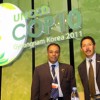
AFRICA: Gov’ts Fail to Invest in Hungriest, Poorest Regions
For millennia, people have coped with drought in the Horn of Africa, comprised mainly of drylands. Yet today, more than 13 million people there are starving because of political instability, poor government policies and failure to invest in the world's poorest people, say experts here in Changwon.
Q&A: ‘Soil is Key to Global Warming, Food Security’
Luc Gnacadja, in his second three-year term as executive secretary, United Nations Convention to Combat Desertification (UNCCD), is widely seen as delivering on his commitment to manage the world's drylands.« Previous Page — Next Page »


The Week with IPS

NEXT STOP - SDGs
Tracking global progress towards a sustainable world
Tracking global progress towards a sustainable world
