Languages
Saturday, November 21, 2026



News and Views from the Global South
Asia-Pacific
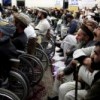
Armed Conflicts Claim Unprecedented Number of Civilians
Afghanistan, once described as the graveyard of empires, is ranked number one as the country with the most "significant rise" in civilian deaths last year, turning it into a veritable killing field, according to a new report by the London-based Minority Rights Group International (MRG).
Stray Dog Issue Hounds Animal Welfare in India
Moves to enact a new law on animal welfare in India have upset public health advocates, who fear it will interfere with efforts to control rabies-carrying stray dogs.
CAMBODIA: Critics Fear War Crimes Court to Drop New Khmer Rouge Cases
There are no publicly named suspects, no defence lawyers and no official victims. And soon, court observers in Cambodia fear, there will be no further Khmer Rouge trials.U.N. to Host World Summit on Nuclear Safety
The severity of the recent nuclear accident at the Fukushima Daiichi power plant in Japan has prompted U.N. Secretary- General Ban Ki-moon to convene a high-level meeting of world leaders on a politically-sensitive issue: nuclear security.SRI LANKA: For Women, War for Survival Continues in Peacetime
The civil war ended two years ago this month, but for war-affected women—widows, mothers, daughters, and former rebels— the struggle to survive rages on.INDIA: Unnecessary C-Sections Violate Women’s Rights
It was smooth sailing for 30-year-old Susan George throughout her pregnancy, until the day she went to give birth at the government hospital. Doctors told her they had to do a caesarean section because they could not wait for a normal delivery.
INDIA: Waste to Energy Project Not So Green
A waste-to-energy (WtE) project in the heart of the Indian capital run by a powerful industrial family is testing the enforceability of the country’s environmental and zoning laws.Japan Veers Away from Nuclear Energy
Prime Minister Naoto Kan’s decision to stop the building of new nuclear power plants and explore solar and wind energy signals a drastic turn in Japan’s energy policy that has brought a sigh of relief to wary scientists, anti-nuclear groups and an increasingly anxious public.SOUTHEAST ASIA: ASEAN in Quandary over Burma’s Request to Head Bloc
The new Burmese government’s request to chair the Association of Southeast Asian Nations (ASEAN) by 2014 has given its neighbours a political headache they have decided to put off dealing with till later this year.
Afghan Forces ‘Not Ready’ for Handover
Almost a decade of neglect has raised serious concerns about the readiness of Afghan security forces to take over from foreign forces by the end of 2014, a new report claims.
INDIA: Water Efficient Methods Revolutionise Sugarcane Growing
When their sugarcane crops failed to deliver a good yield three years ago, Kantabai Chavan and her husband Baban decided to try a new strategy.
CAMBODIA: Understanding of Climate Change Sketchy, But Concern Real
The rains were kind to Cambodian farmer Tep Van last year, when the monsoon season doused his land with enough water to soak his fields and grow his precious rice crop. But he’s not sure he can count on the same luck this year.
ECONOMY: Malawians Keen to Build Trade Ties with India
Building on historical relationships, Malawians have set their sights on strengthening trade and investment relations with India in sectors as diverse as agriculture, telecommunications and pharmaceuticals.PAKISTAN: Osama’s Women: Who Are They, What Do They Know?
Pakistan authorities announced they would let the United States interrogate the widows of Al-Qaeda leader Osama bin Laden, provided their countries of origin grant permission to do so.NEPAL: Women Race to the Top: Mt. Everest
The temperature is 10 degrees below freezing and the wind is like a hurricane, threatening to sweep away the unwary from the treacherously slippery mountain slope that has been home to Suzanne Al Houby and 39 other iron-willed women for almost a fortnight.Pakistan PM Ducks the Osama Question
Prime Minister Yousaf Raza Gilani defended Pakistan’s Inter-Services Intelligence (ISI) amid scathing criticism from the world community that the spy agency had aided and abetted Osama bin Laden, who was hunted down and killed by U.S. forces in Pakistan May 1.U.N. Experts Push for Details on Bin Laden Operation
Was last week's killing of an unarmed Osama bin Laden in his hideout in Pakistan legitimate self-defence, justified homicide or extra-judicial execution?
PHILIPPINES: Women Clamour for Contraceptives
In a small women's clinic in the congested community of San Andres Bukid in the Philippine capital, a mother of 11 is availing herself of family planning services for the first time in her life.Iran’s Two Executives Play a Lose-Lose Game
The very public disagreement between Iran's Leader, Ayatollah Ali Khamenei, and President Mahmoud Ahmadinejad over the sacking of the intelligence minister, Heydar Moslehi, is turning out to be a losing game for both sides.After Bin Laden Hit, U.S. Aides Raise Dubious Hopes for Peace
Barack Obama and top administration officials have taken advantage of the killing of Osama bin Laden to establish a new narrative suggesting the event will pave the way for negotiations with the Taliban for peace in Afghanistan.Pakistan in Deep Turmoil
Pakistani Prime Minister Yousuf Raza Gilani faces the nation Monday, amid opposition demands for the resignation of the country’s top political and military leaders in the wake of the secret U.S. operation that killed Al-Qaeda chief Osama bin Laden on Pakistani soil.« Previous Page — Next Page »


The Week with IPS

NEXT STOP - SDGs
Tracking global progress towards a sustainable world
Tracking global progress towards a sustainable world
