Languages
Monday, November 23, 2026



News and Views from the Global South
Civil Society

Adolescent Health Congress Skirts Issue of Abuse, Trafficking
Twenty-year-old Gogontlejang Phaladi of Mahalapye, Botswana is grateful she was never sent to a so-called “hyena” like scores of girls in neighboring Malawi were.
Historic Resolution on Women & Peacekeeping Remains Mostly Unimplemented
At the 26 October launch of GNWP’s (Global Network of Women Peacebuilders) manual “No Money, No NAP” on dedicated budgetary allocation to fund the implementation of the 1325 National Action Plans, Executive Director of UN Women Phumzile Mlambo-Ngcuka characterized UNSCR 1325 as the most unimplemented resolution of the UN Security Council.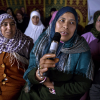
Ending the Male Monopoly on Peace: Women Still Need More Seats at the Table
Whether targeted by perpetrators of sexual violence, oppressed by ideological extremists, or uniquely threatened by the bombing of hospital maternity units, women often bear the brunt of conflicts. Yet when it comes to peace negotiations, women too often don’t have a seat at the table. The continuing reality that men, particularly armed men, enjoy an almost exclusive role in peace processes defies both logic and evidence.
Mexican Immigrants Help Sustain Two Economies – and Are Discarded
They work for years to bolster the economies of two countries. For one, the United States, they provide labour and taxes; for the other, Mexico, they send remittances that support tens of thousands of families and communities. Then they are deported, and neither government takes into account their special needs.
Press Freedom Groups Condemn U.S. Withdrawal from UNESCO
Civil society groups have called on the United States to reverse its decision to withdraw from a UN body, citing concerns for press freedom and journalists’ safety.
Hydropower Dams Invade Brazil’s Agricultural Economy
“After being displaced for the third time,” Daniel Schlindewein became an activist struggling for the rights of people affected by dams in Brazil, and is so combative that the legal authorities banned him from going near the installations of the Sinop hydroelectric dam, which is in the final stages of construction.
Joining Forces to Improve Lives in Honduran Shantytowns
On the north side of the Honduran capital, nine poor neighbourhoods are rewriting their future, amidst the violence and insecurity that plague them as “hot spots” ruled by “maras” or gangs.
Inclusive Electoral Processes: a Pathway to More Peaceful Societies
The Sustainable Development Goals 16 (SDG16) calls on UN Member States to promote responsive, inclusive, participatory and representative decision-making, and to build effective, accountable and transparent institutions at all levels.
Rainwater Harvesting Improves Lives in El Salvador
Filling a jug with water to supply her household needs used to be an ordeal for Salvadoran villager Corina Canjura, because it meant walking several kilometers to the river, which took up a great deal of time, or else paying for water.
The Tuxá Indigenous Paradise, Submerged under Water
The Tuxá indigenous people had lived for centuries in the north of the Brazilian state of Bahia, on the banks of the São Francisco River. But in 1988 their territory was flooded by the Itaparica hydropower plant, and since then they have become landless. Their roots are now buried under the waters of the reservoir.
Marginalised Minorities and Homeless Especially Hard-hit by Mexico’s Quake
Maricela Fernández, an indigenous woman from the Ñañhú or Otomí people, shows the damages that the Sept. 19 earthquake inflicted on the old house where 10 families of her people were living as squatters, in a neighbourhood in the center-west of Mexico City.
Crisis in Cameroon Spurs Govt Crackdown on Press
“For too long we have been afraid to speak out against injustices and all sorts of atrocities happening in Cameroon, thinking it [the silence] will protect us. If I were to repeat what I have done on Canal 2 English [television], I will do it again. I now stand ready for any eventuality,” says Cameroonian journalist Elie Smith.
Indigenous Land Conflicts Finally Garner Attention in Argentina
The territorial claims of hundreds of indigenous communities, which extend throughout most of Argentina's vast geography, burst onto the public agenda of a country built by and for descendants of European colonisers and immigrants, accustomed to looking at native people as outsiders.
Mexico’s Disaster Response System Severely Stretched by Quake
Central Mexico faced Wednesday the challenge of putting itself back together after the powerful 7.1-magnitude quake that devastated the capital and the neighbouring states of Mexico, Morelos and Puebla the day before.
A Trump Doctrine of Hypocrisy
In his first address on the global stage of the General Assembly, United States’ President Donald Trump touted an “America First” approach at the very institution that is meant to inspire collaboration between nations.
Small Farmers in Brazil’s Amazon Region Seek Sustainability
The deforestation caused by the expansion of livestock farming and soy monoculture appears unstoppable in the Amazon rainforest in the west-central Brazilian state of Mato Grosso. But small-scale farmers are trying to reverse that trend.
Islamic Organization Promotes Cultural Rapprochement Between US & Muslim World
The Organization of Islamic Cooperation (OIC), by virtue of its position of being the second largest international organization outside the UN system with 57 member countries comprising one fifth of the world population and covering Asia, Africa, Europe and the Americas, is indeed an important actor in dealing with rapprochement between cultures, in particular rapprochement between the Muslim World and its international partners like the USA.
Secretary-General Talks Myanmar, Trump Ahead of General Assembly
In an environment full of major threats, countries must work together towards peace and stability, the Secretary-General said ahead of the General Assembly.
Towards a Resource Efficient and Pollution Free Asia-Pacific
Senior government officials from across Asia and the Pacific will meet in Bangkok this week for the first-ever Asia-Pacific Ministerial Summit on the Environment. The high-level meeting is co-convened by the United Nations Economic and Social Commission for Asia and the Pacific (UN ESCAP) and UN Environment and is a unique opportunity for the region’s environment leaders to discuss how they can work together towards a resource efficient and pollution-free Asia-Pacific.
Partnerships Key to Implementing 2030 Development Agenda
The UN’s 2030 Agenda highlights the strong commitment to ending poverty in all its forms and dimensions, including by eradicating extreme poverty by 2030. It also emphasizes the determination to end hunger and to achieve food security as a matter of priority and to end all forms of malnutrition.
Internet Shutdowns in Africa Stifling Press Freedom
“The internet for journalism is now like the air you breathe,” said Befeqadu Hailu, an Ethiopian journalist and a member of the Zone 9 blogger collective who was arrested in April 2014 and charged with terrorism. “Without the internet, modern journalism means nothing.” Yet, the internet is something that journalists in multiple African countries are often forced to do without.« Previous Page — Next Page »


 Representatives of Civil Society, Sierra Leone. Credit: UN Photo/Eskinder Debebe
Civil society faces mounting threats worldwide, even as it remains essential for democratic accountability, especially in countries struggling with economic instability and social inequality. However, at the same time, nations with weak democratic governance structures also systemically suppress the power of civil society. Human rights activists across the Global South frequently challenge issues such as political persecution and gender oppression, but in return face state-sanctioned punishment for their advocacy. Imprisonment and exile are common mechanisms of punishment that seek to erode the strength of civil society. The 2026 World Press Freedom Index has reached its lowest level in 25 years, with more than half of the world’s countries now falling into the "difficult" or “very serious” category for press freedom. IPS seeks to highlight the work of civil society across the Global South as well as the challenges that they face.
Updated by Yilan Batista and Shuli Wong August 2026

The Week with IPS

NEXT STOP - SDGs
Tracking global progress towards a sustainable world
