
Wednesday, November 11, 2026



News and Views from the Global South
Climate Change

Confronting the New Climate Reality in Asia and the Pacific
In less than ten days world leaders will be gathering at the United Nations in New York for the Climate Action Summit. Their goal is simple; to increase ambition and accelerate action in the face of a mounting climate emergency. For many this means ambition and action that enables countries to decarbonize their economies by the middle of the century. But that is only half the equation. Equally ambitious plans are also needed to build the resilience of vulnerable sectors and communities being battered by climate related disasters of increasing frequency, intensity and unpredictability.
A Brief Guide to the Impacts of Climate Change on Food Production
Food may be a universal language – but in these record-breaking hot days, so too is climate change. With July clocking in as the hottest month on Earth in recorded history and extreme weather ramping up globally, farmers are facing the brunt of climate change in croplands and pastures around the world.
‘I Want my Kids to Know What a Rhino and Turtle Are’ – #ClimateStrike Kids Say
 From Nigeria, to Kenya to the Democratic Republic of Congo, to South Africa, thousands of African climate campaigners have taken to the streets joining millions around the world for the global Climate Strike ahead of the United Nations Climate Action Summit 2019, which starts in New York next week.
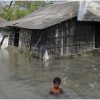
Rural Bangladesh Families Spend 2.0 Billion Dollars on Climate Change ― Dwarfing Government & International Finance
In an alarming imbalance struggling families in rural Bangladesh spend almost US$2 billion a year on preventing climate-related disasters or repairing damage caused by climate change ― far more than either the Bangladesh government or international bodies.
Not Enough Good Information About Africa’s Climate for Adaptation
 "We don't have a good appreciation of our local weather systems," says Dr James Kinyangi head of the African Development Bank's climate and development Africa special fund, which supports investments in climate and weather observations networks in Africa.
As Climate Crisis Worsens & Poverty Rises, UN Appears Off-Track on Development Agenda
The two key goals in the UN’s development agenda are the eradication of extreme poverty and hunger by 2030. But most of the world’s developing nations, currently fighting a losing battle against rising poverty and hunger –and suffering from the devastating impact of climate change-- are likely to miss the deadline for most of the 17 Sustainable Development Goals (SDGs), according to the latest report by Secretary-General Antonio Guterres.
Key Changes in International Agriculture and Rural Development Issues: Three Priority Areas in the Context of the 2030 Development Agenda
Transformations in international agricultural and rural development issues Some major changes in international agricultural and rural development over the last 30-40 years need to be taken into account in efforts to promote sustainable development and an inclusive rural transformation (IFAD 2016) as we approach the third decade of the millennium. This opinion piece, drawing on a longer article published in Agriculture for Development Journal (Summer 2019 Issue), seeks to stimulate reflection and debate on how work to support agricultural and rural development can evolve to address key challenges and opportunities related to migration, sustainable urbanization and youth in a changing global policy context.
World’s Whale Population Struggles to Recover from Carnage Amid Serious Concerns
Sri Lanka is endowed with an impressive and large concentration of whales off its shores and it is believed they are not a population that migrates seasonally. 26 species have been spotted in Sri Lankan waters, including the massive blue whales.
Multidisciplinarity of Data: Time to Put Data at the Heart of UN’s 2030 Agenda
The 2030 Agenda for Sustainable Development was adopted in 2015. At its core are 17 Sustainable Development Goals and 169 targets, all meant to guide efforts by all countries towards a more sustainable, prosperous and equal future.
Translating Ambition to Action: High Hopes for United Nations Action Week
In less than 10 days, countries from around the planet will come together in New York for the United Nations Secretary General’s Climate Action Summit. I look forward to representing the Pacific Community (SPC) at this important event, and throughout “Action Week” during the upcoming UN General Assembly.
Ministers Call for Coalition to scale up land restoration massively worldwide
1. On the road to the Climate Action Summit, the Minister of Environment, Forest and Climate Change of India and President of COP14, His Excellency Mr. Prakash Javedkar, and the United Nations Deputy Secretary-General, Her Excellency Ms. Amina J. Mohammed, hosted a high-level luncheon on land and climate on 9 September 2019, on the margins of the UNCCD Fourteenth Session of the Conference of the Parties (COP14). The event was co-facilitated by the United Nations Convention to Combat Desertification (UNCCD) and the United Nations Environment Programme (UNEP).
The Push for Peace-From the Global Village to the Global Neighborhood
From the ashes of a tragedy that wiped out almost 90% of the city of Hiroshima on 6 August 1945, an institute called the Hiroshima Peacebuilders Center (HPC) rose like a phoenix of hope that is pioneering the creation of a global pool of peacebuilders. It is driven by the 2030 Agenda for Sustainable Development declaration that "there can be no sustainable development without peace and no peace without sustainable development.”
Let’s Get Climate Action into Traction with Gender Equality
Climate change is already altering the face of our planet. Research shows that we need to put all our efforts over the coming decade to limit warming to 1.5°C and mitigate the catastrophic risks posed by increased droughts, floods, and extreme weather events.
India Promotes South-South Cooperation, but Key Questions Unaddressed
At his speech at the United Nations Convention to Combat Desertification (UNCCD) summit in Delhi, Prime Minister Narendra Modi emphasised South-South cooperation and technology solutions, but issues of land ownership dog the ongoing negotiations. As the second week of the UNCCD Conference of Parties (COP) kicked off in Delhi, Indian Prime Minister Narendra Modi highlighted South-South cooperation and issues of land degradation.
Desertification Costs World Economy up to 15 trillion dollars – U.N.
Forest fires, droughts and other forms of land degradation cost the global economy as much as 15 trillion dollars every year and are deepening the climate change crisis, a top United Nations environment official said Friday.
Achieving Global Consensus on How to Slow Down Loss of Land
Expectations are high, perhaps too high, as the 14th Conference of the Parties (CoP 14) of the United Nations Convention to Combat Desertification (UNCCD), now into the third day of its two-week session, is being held outside the smog-filled Indian capital of New Delhi.
Eastern Caribbean Embarks on Strategy Towards a Blue-Green Economy
Micro, small and medium enterprises as well as niche markets and experiences such as bee tourism may well hold the key for the Organisation of Eastern Caribbean States as countries of that sub-region, known as the OECS, ramp up efforts to build economies that are resilient to the impacts of climate change. 
Is the UN’s High Seas Treaty Heading Towards Troubled Waters?
The world’s high seas, which extend beyond 200 nautical miles, are deemed “international waters” to be shared globally-- but they remain largely ungoverned.
How the African Development Bank Plans to Mobilise Funds for Climate Adaptation
IPS Correspondent Isaiah Esipisu reports from the Climate Change and Development in Africa Conference taking place at the African Union headquarters in Addis Ababa, Ethiopia. 
The Arctic: Earth´s Last Frontier
The last frontier for utilizing and maybe even exhausting Earth´s natural resources is opening up in the Arctic and some of the world´s wealthiest nations are trying to secure their piece of the cake. Some act openly, others are more secretive – recently one of the competitors entered the game in a remarkably unwieldy manner.
Our Food Systems Need Transformation
The right to food is a universal human right. Yet, over 820 million people are going hungry, according the latest edition of the State of Food Security and Nutrition in the World (SOFI 2019). In addition, 2 billion people in the world are food insecure with great risk of malnutrition and poor health” 1.« Previous Page — Next Page »





As unsustainable human consumption and production systems are driving changes in average temperatures and weather patterns, "abnormal" is increasingly becoming the norm. So far, a lack of financing has been standing in the way of a comprehensive global plan for climate adaptation, and a global financial crisis has contributed to an increasing reliance on public-private partnerships. Our Climate Change page provides you with the latest news about international and local efforts to address what's frequently been called "the challenge of our time", the forces behind the climate change and the impact it has on the world's most vulnerable populations. Along the way, we bring you stories on growing citizen awareness, new scientific data, and emerging climate policies towards sustainable development.

The Week with IPS

Tracking global progress towards a sustainable world

