Languages
Monday, November 9, 2026



News and Views from the Global South
Conferences
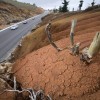
“Land Is Our Ally, But Its Patience Is Not Eternal”
Land degradation poses a threat to all life on Earth including humanity. To stop the enormous loss of life-giving land, the United Nations Convention to Combat Desertification (UNCCD) is pushing for a sustainable development goal of Zero Net Land Degradation (ZNLD) to be adopted at the upcoming Conference on Sustainable Development, known as Rio+20, in Brazil.
Rio+20 – a Call to Responsibility, a Call to Action
We are all going through a period of great confusion and uncertainty.
Time for a More Sustainable Global Food System
It is vitally important that governments and civil society organisations start transitioning to a more sustainable global food system in order to achieve lasting development.
A Future With Food, or No Future At All
The upcoming Rio+20 Conference on Sustainable Development will not succeed if the crises of hunger and malnutrition are not effectively addressed. The issues are so inextricably linked with sustainable development that they have to be part of the agenda, according to a report released Wednesday by the United Nations Food and Agricultural Organisation (FAO) for the upcoming Earth Summit that will take place in Rio de Janeiro from Jun. 20-22.
Climate Change and Family Planning – Twin Issues for LDCs
The reproductive rights agenda, from improving women’s access to education to systematic family planning to reducing birth rates and combating poverty, has become a cornerstone of most industrialised nations’ development policies toward the least developed countries (LDCs), comprised primarily of sub-Saharan African states.
Q&A: North-South Divide Looms Heavily Over Rio+20 Summit
The 1992 Earth Summit in Rio de Janeiro was to a large extent derailed by a North-South divide: a battle between a coalition of rich industrial nations versus the world's developing countries led by the Group of 77.
Rio+20 is Everyone’s Conference
The United Nations Conference on Sustainable Development, otherwise known as Rio+20, is a once-in-a-generation opportunity.
‘Green Economy’ – New Disguise for Old Tricks?
Though the current global economic and financial crises are undoubtedly devastating much of the world, they present the perfect opportunity for remodeling our economic system, according to participants at the ninth annual Terra Futura (Future Earth) exhibition of ‘good practices’ in social, economic and environmental sustainability held here from May 25-27.
Q&A: A Green Economy Without a Pricetag on Nature?
As thousands gear up for the 2012 Earth Summit, Rio+20, scheduled to kick off in Brazil on Jun. 20, questions on the viability and adequacy of a ‘green economy’ abound.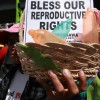
Conference Reaffirms Reproductive Rights
While much of the world is facing a global financial crisis, made worse by government cuts in social spending, members of parliament meeting here Wednesday agreed the economic crunch is no reason for governments to relax their commitment to women’s reproductive rights and health, made 18 years ago.Global Temperatures Rising on a Devastating Trajectory
Climate-heating carbon emissions set a record high in 2011, in a 3.2 percent increase over the previous year, the International Energy Agency reported this week. The main reason for this dangerous increase is that governments are failing to implement policies to prevent catastrophic increases of global temperatures.
Will Rio+20 Spark a Green Revolution?
Think of Rio+20 as the hothouse to grow the green ideas and values humanity needs to thrive in the 21st century.
Awareness of Climate Change Must Go Mainstream
Addressing a group of journalists during a workshop in Bangkok, Ali Raza Rizvi, Asia head of the International Union for the Conservation of Nature (IUCN)’s regional climate change and resilience programme, noted that many Asian countries have become ‘disaster friendly’.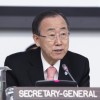
U.N. Chief Disappointed Over Deadlocked Rio+20 Negotiations
Secretary-General Ban Ki-moon, who has invested heavily in the success of the upcoming U.N. Conference on Sustainable Development (UNCSD), is publicly expressing his frustration at the lack of substantial progress on a final plan of action for a greener economy and a sustainable future worldwide.
Belo Monte Dam Hit by Friendly Fire
Those who made the final decision on the design of Brazil’s Belo Monte hydroelectric dam will face legal action in the future for the damages caused. This is the kind of warning one would expect from environmentalists, but in this case it comes from a surprising quarter: staunch supporters of hydropower.
Q&A: Earth Summit Deadlocked Until Eleventh Hour
The 1992 Earth Summit in Rio de Janeiro has been described as one of the largest international conferences in the history of the United Nations, attracting over 20,000 participants, including more than 100 world leaders.
Bangladesh Set to Take the Reins at Rio+20
Experts believe that the upcoming United Nations Earth Summit, Rio+ 20, scheduled to take place in Brazil from Jun.20-22, could be a real opportunity for Bangladesh to negotiate a road to sustainable development.
Can ‘Blue Forests’ Mitigate Climate Change?
Fifty-five percent of global atmospheric carbon captured by living organisms happens in the ocean.Parliamentarians Track Progress on Reproductive Rights
Have women around the world become more empowered in their reproductive health and rights over the past 18 years? This is one of the questions that some 300 parliamentarians from around the world will be examining when they meet in Istanbul, Turkey, this week for the Fifth International Parliamentarians’ Conference on the Implementation of the International Conference on Population and Development (ICPD) programme of action.
G8 Turns to Private Sector for Food Crisis Solutions
On the eve of the Group of Eight (G8) summit near Washington, President Barack Obama on Friday unveiled a major new initiative aimed at shoring up food security and combating global hunger.Industrialised Countries Under Critical Spotlight at U.N. Meet
The latest session of the United Nations Framework Convention on Climate Change (UNFCCC), taking place May 15-25 in the former German capital Bonn, is the perfect opportunity to reaffirm the enormous and growing body of scientific expertise on policies to tackle global warming.« Previous Page — Next Page »





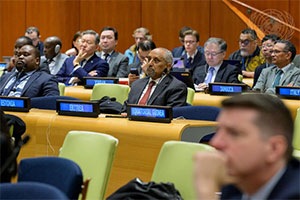 General Assembly Meets to Hear Briefing on UN80 Initiative. Credit: UN Photo/Manuel Elías
Global development conferences are continuing to produce critical frameworks for South-South cooperation and multilateral reform. In January of 2024, the 3rd Global South Nexus (GSN) International Conference was held in Odisha, India, with its theme being “Creating Responsible Professionals for Advancing SDGs: Inputs from Global North and South.” The 2025 UN SDG Report provided a midpoint assessment of the 2030 Agenda, with only 35% of targets on track and 18% having reversed. The 2025 UN Climate Change Conference (COP30) in Belém, Brazil, agreed to mobilize $1.3 trillion annually for climate action by 2035, operationalize the loss and damage fund, triple adaptation finance, and launched the Belém Mission to 1.5°C. In 2025, the Partnership for Economic Policy (PEP) convened its annual Policy Conference in Nairobi, Kenya, addressing the issue of “Financing and Inclusivity in Green Energy Transition in the Global South.” As the Global South advocates increasingly for a South-South framework alongside North-South cooperation, international conferences on sustainability aim to bridge economic and social divides between developed and developing countries in achieving the UN SDGs. Furthermore, to mark the UN’s 80th anniversary, the UN80 Initiative was launched to reshape how the UN system works so that every mandate, dollar, and decision creates greater impact for the global system.

The Week with IPS

NEXT STOP - SDGs
Tracking global progress towards a sustainable world
Tracking global progress towards a sustainable world
