Languages
Friday, November 13, 2026



News and Views from the Global South
Development & Aid

The Year of Debt Distress and Damaging Development Trade-Off
As the year 2022 drew to an end, the United Nations Conference on Trade and Development (UNCTAD) warned, “Developing countries face ‘impossible trade-off’ on debt”, that spiralling debt in low and middle-income countries (LMICs) has compromised their chances of sustainable development.
As the Climate Crisis Bites, Soil Needs Doctors Too
In a wiser world, the term ‘treating someone like dirt’ would be a good thing. After all, 15 of the 18 nutrients essential to plants are supplied by soils and around 95% of the food we eat comes directly or indirectly from them, according to the United Nations Food and Agriculture Organization (FAO). So dirt is actually a precious resource that deserves to be treated with respect, care and perhaps even a little love.
Cabo Verde Hoists the Blue Flag
On 20 January, the world’s best sailors arrived in Mindelo, Cabo Verde, completing the initial leg of the 2023 edition of The Ocean Race. Coinciding with this stop was the launch of Cabo Verde’s first blue bond at the Ocean Summit, an event jointly organized by The Ocean Race and the Government of Cabo Verde on the sidelines of the grueling round-the-world race. United Nations Secretary-General Antonio Guterres was in attendance as this year’s keynote speaker.
Solar Energy Useless Without Good Batteries in Brazil’s Amazon Jungle
“Our electric power is of bad quality, it ruins electrical appliances,” complained Jesus Mota, 63. “In other places it works well, not here. Just because we are indigenous,” protested his wife, Adélia Augusto da Silva, of the same age.
How (Much) Are You Today?
Gone are those times when catastrophes were measured in terms of human suffering. Now, with an exception: Ukrainians victims of the Russian invasion, everything is calculated in just money.
New Business Technology Transfer Provides Benefits for African Pharmaceutical Industry
A few months after German biotechnology company BioNTech announced the establishment of the first-ever local vaccine manufacturing in Rwanda, experts believe the successful implementation of such initiatives across the continent will require countries to acquire know-how while encouraging potential industrial partners in the pharmaceutical industry.
Digital Politics: “Disconnected Citizens Are Kept Away from Opportunities”
In 2022, Saudi Arabia “quietly” sentenced Salma al-Shehab to 34 years in prison over her Twitter activity, marking the longest Saudi sentence ever for a peaceful activist. Fast forward and award-winning Ugandan author Kakwenza Rukirabashaija was charged with two counts of "offensive communication" after making unflattering remarks about the president and his son on Twitter. The message is clear: your well-crafted 280 characters can land you in jail.
On International Day of Education, We Must Prioritize Girls in Humanitarian Crisis
“Is it a sin to be a girl? We don’t want to be at home and illiterate. We want to go to school, study and be intelligent.” In just a few words, this plea for education from a young Afghan girl has captured the world’s attention. Her heartbreaking question shows how the Taliban’s recent ban on girls attending secondary school and university – effectively ending education opportunities for all Afghan girls and women – is not only violating their fundamental human right to education but shattering countless hopes and dreams in an instant. [related_articles]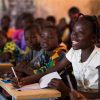
Delivering On Our Promise of Universal Education
As we mark the International Day of Education, world leaders must make good on their promise of providing quality education for all by 2030. Education is our investment in peace where there is war, our investment in equality where there is injustice, our investment in prosperity where there is poverty.
Pope, Sasakawa in Global Appeal for a Leprosy Free World
In the four years preceding the COVID-19 pandemic, the spread of leprosy or Hansen’s disease, seemed to be losing steam. Between 2016 and early 2020, new case numbers remained more or less constant.
Unstoppable Gas Leaks in Mexico
A dark mole dots the brown earth, among the green scrub at this spot in southeastern Mexico. A repetitive “glug, glug,” a noise sounding like a thirsty animal, and an intense stench lead to this site, hidden in the undergrowth, where a broken pipe has created a pool of dense oil.
Africa Wants IMF Special Drawing Rights Re-Allocated to Finance Its Development
African countries, many reeling under high debt and experiencing economic recession, could benefit from the reallocation of Special Drawing Rights (SDR), financial instruments of the International Monetary Fund (IMF).
Malaysia’s TVET Ecosystem in Need of All-of-Society Engagement
Technical and Vocational Education and Training (TVET) in Malaysia originated from the colonial and early post-colonial governments’ need for trained and skilled manpower to run state agencies and projects.
The People of Africa Need Relief: the Biden Administration can Provide it
United States Treasury Secretary Janet Yellen is traveling to South Africa, Zambia, and Senegal this week in the hopes of strengthening U.S.-Africa relations at a time of waning U.S. influence on the continent — the first in a series of Biden administration trips announced at last month’s U.S.-Africa Leaders Summit.
How Innovative Farming Rescues Crises-Stricken Farmers in This Indian Village
The South Indian State of Karnataka has been reeling for the past three years—the late arrival of monsoons, the surging temperatures, and drastic changes in the weather patterns are putting the state’s farmers in dire straits.
Ukraine Crisis and No First Use of Nuclear Weapons
The Ukraine crisis that erupted in February last year continues with no prospect for cessation. The intensified hostilities have inflicted great suffering in population centers and destroyed infrastructure facilities, compelling large numbers of civilians, including many children and women, to live in a state of constant peril.
The Climate Conversations
 Climate change is a global problem that requires a global solution. However, negotiating a solution has been challenging due to several factors. One of the main reasons that recent COP Climate summits and other international climate talks have not been able to resolve climate change is that there is a lack of consensus among countries on how to address the issue. Developed countries, which have historically been the largest emitters of greenhouse gases, are often unwilling to take on significant emissions reductions or to provide financial assistance to developing countries to help them adapt to the effects of climate change.
The Value of Strong Multilateral Cooperation in a Fractured World
The multilateral system, even in the face of heightened geopolitical tension and big power rivalry, remains the uniquely inclusive vehicle for managing mutual interdependencies in ways that enhance national and global welfare. The complex challenges of a global pandemic, climate emergency, inequality and the risk of nuclear conflict cannot be dealt with by one country or one region alone. Coordinated collective action is required.
Pakistan’s 10 Billion Dollar Flood Funding Question
Terming the recent international donors’ conference held in Geneva a “success” after Pakistan was able to secure 10 billion US dollars, Prime Minister Shehbaz Sharif has promised “every penny” of the pledges will be used towards rehabilitation of flood-hit people.
The Year of Inflation Exposes Dogma and Class Bias
Inflation worries topped Ipsos’s What Worries the World survey in 2022 overtaking COVID concerns. The return of inflation caught major central banks, e.g., the US Federal Reserve (Fed), Bank of England, European Central Bank “off guard”. The persistence of inflation also surprised the International Monetary Fund (IMF). The return of inflation and its persistence exposed the poverty of the economics profession, unable to agree on its causes and required policy responses. It also exposed the profession’s anti-working class biases.
Africa’s Vast Arable Land Underutilized for Both Cash and Food Crops
Concerns are rife that while Africa is growing more crops, these are not for food and that on the current trajectory, present food import costs into Africa, now estimated at 55 billion US dollars a year, could double by 2030.« Previous Page — Next Page »


 2026 High-level Political Forum on Sustainable Development. Credit: UN Photo/Eskinder Debebe
In 2015, the United Nations and its Member States adopted the Sustainable Development Goals (SDGs) in an effort to make the world a more sustainable and peaceful place for future generations. Progress on the 17 SDGs has been uneven, and inequality persists across the globe. 10 years after adoption, the 2025 UN SDGs Report revealed that only 35% of the SDG targets are on track, with more than half moving too slowly, and 18% moving backwards from the 2015 baseline. Poverty remains one of the world’s most pressing issues, with hunger, violence, and inequality impeding the opportunities for all people to achieve success. In September 2024, the United Nations Summit of the Future introduced a new goal: to eradicate global poverty by 2030, ensure universal rights to basic services, and increase the overall standard of living in terms of industrialization, economic well-being, citizen health, and literacy. Furthermore, recent shifts in United States foreign aid policy – notably, major budget cuts to USAID and the termination of thousands of development programmes– have severely threatened vital lifelines of financial aid to impoverished communities around the world. Additionally, the United States’ withdrawal from the Paris Climate Agreement has undercut international efforts at sustainable development. With the upcoming 2030 deadline, the UN Secretary-General has called for urgent multilateralism across six priority areas: food systems, energy, digital connectivity, education, jobs and social protection, and climate and biodiversity. IPS sheds light on marginalized communities that struggle on a daily basis to survive and have their stories heard and respected.
Updated by Yilan Batista and Shuli Wong August 2026

The Week with IPS

NEXT STOP - SDGs
Tracking global progress towards a sustainable world
Tracking global progress towards a sustainable world
