Languages
Tuesday, November 17, 2026



News and Views from the Global South
Development & Aid

Mental Health Achievements in Bangladesh
Mental health is a state of well-being when both your body and your mind are in balance, and you are able to deal with the difficulties and challenges that come your way and easily find joy, peace, and happiness once the challenge is overcome. For many people though, the challenges often remain for too long - the pain of losing someone you dearly loved, being diagnosed with a chronic disease like cancer or a heart condition, losing your family/home/job or feeling like you failed to meet expectations. All those things and more can trigger so much intense stress and maladjustment, that if it goes unchecked and untreated, it may lead to a chronic disease, a mental health disorder. WHO defines health as “a state of complete physical, mental and social well-being and not merely the absence of disease or infirmity”. The majority of people are able to cope and get back to life as normal, but for the many who cannot, they begin to experience intense detachment from reality (experiencing delusions, pervasive sadness, uncontrollable fears, intense anger and/or fantasies and hallucinations). For those individuals, there is limited help and treatment in every country in the world. Those who suffer from mental health disorders and the brave professionals who learn to treat them are chronically stigmatized, under-appreciated and under-paid.
Illegal Immigration: A 21st Century Crisis
Illegal immigration is a 21st century crisis that will only worsen with the consequences of climate change.
Another Unenviable Annual Record for Global Greenhouse Gas Emissions
A few days before the international community gathers for COP26, widely considered the most important climate conference since the 2015 gathering which resulted in the Paris Climate Agreement, the World Meteorological Organization (WMO) is reporting that despite global hits in trade and travel by the COVID-19 pandemic, the concentration of greenhouse gases in the atmosphere reached a new high in 2020.
Egypt Must End State Oppression of Women and Girls
The fate of Egyptian women and girls delicately hangs in the balance as the country continues to have one of the worst records in the world for gender equality. With oppression often state-sanctioned, Egyptian women face a daily struggle against sexual harassment and other violations of their basic human rights, including institutionalised violence.
How the Social Sector Thinks About Tech Is Wrong
Today, technology has become integral to almost all aspects of work—from implementing and standardising processes and collecting data to monitoring and evaluation and helping an organisation scale. This was increasingly apparent during the COVID-19 pandemic, when all organisations turned to technologies like WhatsApp and Zoom to stay connected and deliver their programmes to communities. And yet in the nonprofit sector, tech is viewed as an overhead rather than being fundamental to the functioning of an organisation.
Green Gold: Billion Dollar Question for Congo Rainforest
On the brink of an unprecedented environmental emergency, EU ambassadors to the Democratic Republic of Congo (DRC) gathered earlier this month for a luxury river cruise hosted by the country’s Environment Minister, Eve Bazaiba.
COP26 Could Get Hot, but Southern African Region Needs it to be Cool and Committed
COP26 is almost upon us, and dire warnings abound that it’s boom or bust for a greener future. Meanwhile, everybody boasts about what they will do to cool down our planet, but there is a disjuncture between talk and action. Even Queen Elizabeth II of the host country, the United Kingdom, has grumbled publicly that not enough action is taking place on climate change.
Bleak Prospects for Least Developed Countries
“The outlook for LDCs is grim”. The latest United Nations (UN) assessment of prospects for the least developed countries (LDCs) notes recent setbacks without finding any silver lining on the horizon. Promises unkept Half a century ago, LDCs were first officially recognised by a UN General Assembly resolution. It built on research, analysis and advocacy by the UN Conference on Trade and Development (UNCTAD).
Latin America Heads to Glasgow Climate Summit with Half-Empty Hands
Latin America and the Caribbean are heading to a new climate summit with a menu of insufficient measures to address the effects of the crisis, in the midst of the impact of the covid-19 pandemic.
World’s Deadliest Malaria Parasite Dominance in Africa Could Be Over – Experts
One morning in 2016, Lillian Nekesa's 3-year-old woke up with flu-like classic symptoms of malaria. This was not Kevin's first encounter with the killer disease. Kevin was nonetheless not immediately rushed to Busia County Referral Hospital for advanced treatment in keeping with his severe symptoms.
COP26: Funding Innovation Crucial for Strengthening Climate-Stressed Food Systems
The global food system is facing more demands from society than ever before in modern times – and rightly so. From responding to the climate crisis to dealing with rising malnutrition and ensuring the sustainable use of natural resources and protection of biodiversity, the responsibility of our food systems is no longer just to “feed the world.”
For Girls, the Biggest Danger of Sexual Violence Lurks at Home
"During the pandemic, sexual violence against girls has grown because they have been confined with their abusers. If the home is not a safe place for them, what is then, the streets?" Mía Calderón, a young activist for sexual and reproductive rights in the capital of Peru, remarks with indignation.
An Ambitious, Stakeholder-Driven Climate Change Commitment Ahead of COP26: Eswatini’s Revised Nationally Determined Contribution (NDC) Process
There is no country today that has not experienced the effects of climate change, from changing weather patterns to extreme, devastating weather events.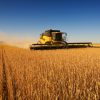
Grabbed
“Imagine that the land your family has worked for generations is suddenly stripped away from you, purchased by wealthy companies or governments to produce food or bio-fuels or simply as a profitable investment for other people, often far away. You watch on helplessly as vast tracts of land are cleared for mono-culture crops and rivers are polluted with run-off and chemicals.”
We Heard Public Development Banks, but Will They Have the Guts to Deliver?
Public development banks have committed to ramp up action to tackle climate change, to protect biodiversity, to promote human rights, to align their investments with the SDGs and the Paris Agreement, and to create spaces of dialogue with civil society, farmers, indigenous peoples, and communities affected by the projects that they, as banks, finance.
In Sub-Saharan Africa and Elsewhere, We Need to Look Harder for Tuberculosis
Before COVID-19 came along, tuberculosis (TB) was a primary focus of health authorities in sub-Saharan Africa. In 2019, approximately 1.4 million people were diagnosed with TB in the region, but epidemiologists estimated that 1 million more had TB but were neither diagnosed nor treated.
Despite Climate Crisis, Politicians Will Double the Production of Energy from Fossil Fuels
In a time when the world's scientific community sounds louder, and stronger than ever, the alarm about the fast growing climate crisis and its destructive impacts, governments still plan to produce more than double the amount of fossil fuels in 2030.
Bringing Quality Education to Syria’s Most Vulnerable, Crisis-Impacted Children – Their Education Cannot Wait
In war-torn Syria, the support of Education Cannot Wait (ECW) – the United Nations global fund for education in emergencies and protracted crises – is bringing positive, life-changing educational opportunities tailored to children like 11-year-old Ali.
COP26: Building Climate Resilience Will Require a Focus on Those Furthest Behind
As the United Nations Climate Change Conference, also known as COP26, approaches (31 October -12 November in Glasgow, Scotland), climate action is more urgent than ever. Yes, we need climate change mitigation.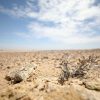
Climate Change: How 1.3 Billion Africans Cause Least But Suffer Most
While Africa reportedly causes just 4 percent of global emissions of Carbon Dioxide (CO2) —an acidic colourless gas with a density about 53% higher than that of dry air, causing climate change—, this vast continent, home to over 1.3 billion inhabitants in 52 countries, bears the heaviest brunt of 80 percent of the climate crisis destructive impacts.
Fair Tax Plan Could Prejudice Global South
An agreement between 136 countries aimed at forcing the world’s biggest companies to pay a fair share of tax has been condemned by critics who say it will benefit richer states at the expense of the global South.« Previous Page — Next Page »


 2026 High-level Political Forum on Sustainable Development. Credit: UN Photo/Eskinder Debebe
In 2015, the United Nations and its Member States adopted the Sustainable Development Goals (SDGs) in an effort to make the world a more sustainable and peaceful place for future generations. Progress on the 17 SDGs has been uneven, and inequality persists across the globe. 10 years after adoption, the 2025 UN SDGs Report revealed that only 35% of the SDG targets are on track, with more than half moving too slowly, and 18% moving backwards from the 2015 baseline. Poverty remains one of the world’s most pressing issues, with hunger, violence, and inequality impeding the opportunities for all people to achieve success. In September 2024, the United Nations Summit of the Future introduced a new goal: to eradicate global poverty by 2030, ensure universal rights to basic services, and increase the overall standard of living in terms of industrialization, economic well-being, citizen health, and literacy. Furthermore, recent shifts in United States foreign aid policy – notably, major budget cuts to USAID and the termination of thousands of development programmes– have severely threatened vital lifelines of financial aid to impoverished communities around the world. Additionally, the United States’ withdrawal from the Paris Climate Agreement has undercut international efforts at sustainable development. With the upcoming 2030 deadline, the UN Secretary-General has called for urgent multilateralism across six priority areas: food systems, energy, digital connectivity, education, jobs and social protection, and climate and biodiversity. IPS sheds light on marginalized communities that struggle on a daily basis to survive and have their stories heard and respected.
Updated by Yilan Batista and Shuli Wong August 2026

The Week with IPS

NEXT STOP - SDGs
Tracking global progress towards a sustainable world
Tracking global progress towards a sustainable world
