Languages
Tuesday, November 17, 2026



News and Views from the Global South
Development & Aid

Forests & Climate: We Need to do Much, Much More
Governments agree that saving the climate means saving forests – but ambition and action fall short of what’s required. First the good news: one of the forest goals agreed by governments, businesses and civil society organizations has been met.
Turning Carriers of Water into Managers of Water
Each morning, Langelihle Tshuma checks her taps to confirm the water supply before preparing for the day ahead. Despite living in the city, the married housewife and mother of four has become accustomed to what in most cities would be considered an essential service.
Guess Who’s Behind Paralysis on COVID19 in the UN Committee on World Food Security
‘COVID 19 has multiplied hunger and malnutrition challenges. We need transformative action!’ The first speaker at the UN Committee on World Food Security’s (CFS) 49th Plenary Session, the Secretary-General of the United Nations, turned the spotlight on the disastrous impacts of the pandemic that have afflicted communities around the world for close to two years.
Inflation Bogey Blocking Recovery
The bogey of inflation has been revived. Dubious pre-pandemic economic progress, fiscal constraints and vaccine apartheid were bad enough. Now, ostensibly anti-inflationary measures also threaten recovery and sustainable development.
We Will Never Give Up the Slavery Reparations Fight, say Caribbean Rastafarians
The Rastafarian organizations in the Caribbean are determined that the issue of slavery reparations will emerge from the eclipse of COVID-19. As the world deals with the impacts of efforts to contain the virus’ spread and regional governments tackle vaccine hesitancy and a wave of misinformation, issues not directly related to COVID-19 have had to be temporarily shelved.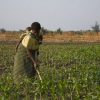
What Fate for Three Billion of Humans Who Are Born Equals?
While more than a third of all purchased food is wasted in rich, mostly Western States, and a similar percentage is lost in poor countries due to the lack of appropriate harvesting, storage and transportation facilities, over three billion people --or some 40 percent of world population-- cannot afford a healthy diet. Add to these figures --which were released by UN's Food and Agriculture Organization (FAO) on 16 October this year, marking the World Food Day-- another dramatic fact.
A School & Cultural Institution Aims to Level the Playing Field for Women & Girls in Rural Uganda
As we honored women and girls last week, on the annual International Day of Rural Women on October 15, we want to highlight how a community is coming together to change the lives and livelihoods of rural women and girls in Uganda.
Table Banking Helping Women in Kenya to Put Food on the Table
Pascaline Chemutai’s five acres of land located in the country’s breadbasket region of Rift Valley recently produced 115 bags of maize, each weighing 90 kilograms. She tells IPS that of these, 110 bags will be transported to traders in Nairobi and neighbouring Kiambu County at a negotiated price of $23 per bag.
Inclusive Education to Break the Cycles of Poverty
In September 2021, children in the northern hemisphere returned to school after the summer break. For some, the end of the holidays signaled a return to normalcy and to the joys of learning after facing months of school closures due to the Covid-19 pandemic. For the majority of children in the Global South, however, the return to reality looked grimmer.
Argentina’s Small Farming Communities Reach Consumers Online
"The biggest problem for family farmers has always been to market and sell what they produce, at a fair price," says Natalia Manini, a member of the Union of Landless Rural Workers (UST), a small farmers organisation in Argentina that has been taking steps to forge direct ties with consumers.
World Food Day 2021
 Our lives depend on the world’s agri-food system.
Every time we eat, we participate in the system.
A sustainable agri-food system is one in which sufficient, nutritious and safe foods are available to everyone.

How Land Management Can Restore Hope to Women in Rural Kenya
Jenifer Kamba, 33, has always loved farming – a love passed on to her by her late husband after they married 14 years ago. The young farmer duo grew maise, pepper and vegetables on their two-acre farm in Kivandini of Kenya’s Machakos county. Even after her husband died five years ago, Kamba didn’t stop farming. However, of late, the soil looks dry, and her production has declined considerably.
Winning the Human Race, Together
“Now is the time for a stronger, more networked and inclusive multilateral system anchored in the United Nations,” said UN Secretary-General António Guterres in his latest report “Our Common Agenda.” Indeed, there is a fork in the road: we can either choose to breakdown or to breakthrough.
Will the World Bank Walk Away with $100 Billion IDA20 Replenishment Without “Walking the Talk” on Disability?
Will the World Bank walk away with $100 Billion IDA20 replenishment without “Walking the Talk” on disability? The World Bank Group’s (WBG) International Development Association (IDA), the Bank’s low-income lending arm, aspires to raise $100 billion for its early 20th replenishment (IDA20). IDA20’s focus includes “reducing barriers preventing …persons with disabilities…from achieving their full potential”.
Cuba’s Power Crisis Drives Home Need to Accelerate Energy Transition
With aging infrastructure and problems with fuel supplies, Cuba is facing a crisis in its electric power generation system, which could accelerate plans to increase the share of renewable sources in the energy mix.
Atoll Nation of Tuvalu Adopts ‘Cubes’ to Step Up Nutritious Food Production
Tuvalu, a small atoll island nation in the Central Pacific Ocean, is one of few countries in the world to have so far evaded the pandemic. But, while it has achieved a milestone with no recorded cases of COVID-19, its population of about 11,931 continues to battle food uncertainties and poor nutrition. These challenges, present long before the pandemic emerged, have been exacerbated by lockdown restrictions and economic hardships during the past year and a half.
Education Cannot Wait Interviews the LEGO Foundation’s New CEO Anne-Birgitte Albrectsen
Anne-Birgitte Albrectsen is the CEO of The LEGO Foundation. Ms. Albrectsen has spent almost 30 years in fields of international development, human rights and diplomacy, most recently holding the position of Global CEO at Plan International since September 2015.
World Food Day: Climate Change is Exacerbating Hunger & Conflict—it’s Time to Break the Cycle
Hunger, violent conflict and the visible impacts of climate change are all on the rise. World Food Day, October 16, is a reminder that we need to talk about the intricate ways that these challenges are connected—and how to tackle them together.
Disparities in Poverty Between Ethnic Groups & Across Genders Show Why We Need to Dig Deeper into Poverty Data
During the pandemic, we learnt a new word – at least I did: comorbidity. It means that one or more additional conditions co-occur (all happen at the same time for a person) alongside a primary condition – in this case the virus.
Better Late than Never, but Act Now
The world should now be more aware of likely COVID-19 devastation unless urgently checked. Last week, the World Health Organization (WHO) announced an US$8 billion plan to quickly vaccinate many more people to expedite ending the pandemic.
Mental Health at a Cost, Inequality
World Mental Health Day was on October 10, 2021. The theme for this year was "Mental Health in an unequal World". This is an appropriate focus given the extreme inequities to access to mental health services that exist in our society.« Previous Page — Next Page »


 2026 High-level Political Forum on Sustainable Development. Credit: UN Photo/Eskinder Debebe
In 2015, the United Nations and its Member States adopted the Sustainable Development Goals (SDGs) in an effort to make the world a more sustainable and peaceful place for future generations. Progress on the 17 SDGs has been uneven, and inequality persists across the globe. 10 years after adoption, the 2025 UN SDGs Report revealed that only 35% of the SDG targets are on track, with more than half moving too slowly, and 18% moving backwards from the 2015 baseline. Poverty remains one of the world’s most pressing issues, with hunger, violence, and inequality impeding the opportunities for all people to achieve success. In September 2024, the United Nations Summit of the Future introduced a new goal: to eradicate global poverty by 2030, ensure universal rights to basic services, and increase the overall standard of living in terms of industrialization, economic well-being, citizen health, and literacy. Furthermore, recent shifts in United States foreign aid policy – notably, major budget cuts to USAID and the termination of thousands of development programmes– have severely threatened vital lifelines of financial aid to impoverished communities around the world. Additionally, the United States’ withdrawal from the Paris Climate Agreement has undercut international efforts at sustainable development. With the upcoming 2030 deadline, the UN Secretary-General has called for urgent multilateralism across six priority areas: food systems, energy, digital connectivity, education, jobs and social protection, and climate and biodiversity. IPS sheds light on marginalized communities that struggle on a daily basis to survive and have their stories heard and respected.
Updated by Yilan Batista and Shuli Wong August 2026

The Week with IPS

NEXT STOP - SDGs
Tracking global progress towards a sustainable world
Tracking global progress towards a sustainable world
