Languages
Thursday, November 19, 2026



News and Views from the Global South
Development & Aid

Reflecting Back and Imagining Forward
What a challenging year 2020 has been! A year of living dangerously – “Tahun vivere pericoloso”- perhaps these words of late President Soekarno of Indonesia are the best description. Fortunately, I managed to remain sane, reading and writing op-eds (mostly about the pandemic, here, here).
Ten Defining Moments for Women in 2020
While 2020 will be remembered most for the way COVID-19 changed our lives in nearly every way and in every part of the world, we made some strides for women’s rights and gender equality.
Food Culture in Spotlight on UNESCO Heritage List
Cuisine formed a notable portion of the latest inscriptions on UNESCO’s Representative List of the Intangible Cultural Heritage of Humanity, with hawker food in Singapore and couscous traditions in North Africa being celebrated.
2020: A Yet More Devastating Year Closes With At Least Some Signs Of Hope
Despite its grim record of multiple natural disasters and a deepening climate crisis, one could be forgiven for looking back on 2019 with a degree of nostalgia. There is no disguising the extent of the calamity wrought this year by COVID-19, yet as we approach the end of 2020 we may also draw strength from positive developments emerging.
Hope Thrives on Action
As Mohammed, a Palestine refugee with impaired vision who attends a specialized UNRWA programme for children with disabilities, told us during our mission to Lebanon a week ago: “I was worried. I was worried that I could not continue my education because the programme was going to be cut. Now I have hope that I can continue to study and make my dream come true.” As 2020 comes to a close and we reflect on Education Cannot Wait’s mission this past year, two things stand out: hope and action. Amidst multiple crises around the globe, exacerbated by the COVID-19 global pandemic, hope has been the fuel driving us all forward to take action to deliver to those left furthest behind. Indeed, while hope is life-sustaining for a young girl or boy enduring conflict, forced displacement and disaster, it cannot be sustained without action.
‘We Might Have a Covid-21 or Covid-22 Coming Our Way’
Cristián Samper is working for the Wildlife Conservation Society, an organization that concerns itself with the health of wildlife all over the globe. And he warned --even before the Covid-19 pandemic – about the dangers of a viral pandemic.
The World in 2021
The year 2020 is ending with the world caught up in an unprecedented human and economic crisis. The pandemic has contaminated 75 million people and killed 1.7 million. With the lockdowns, the global economy has suffered the worst recession in 75 years, causing the loss of income for millions of people. In such a bleak environment, what will the new year bring? Whilst uncertainty is the only certainty, eight points are likely to be key in the year ahead:
Why Transforming Our Food Systems Is a Feminist Issue
In countries where women are most marginalized, discriminated under the law and where gendered norms prevent women from owning property and resources, people are also the hungriest. This is because gender equality and food systems are intertwined.
Empowering Women through Wisdom
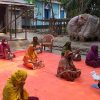
During the COVID 19 lockdown in Sri Lanka, seven women from diverse religious and ethnic backgrounds came together to deliver Wisdom and their message that women must be empowered and their voices for national unity must be heard through this movement.
2020: The Year of COVID 19
 At the end of this year, we must pay our respects to the nearly 1.5 million people who have died from the Coronavirus.
COVID 19 has inflicted extensive damage beyond human casualties, exposing the frailties of governments, societies, economies and health systems, particularly in those countries that chose to ignore the warnings and advice of the WHO.
The Impact of COVID-19 on Child Marriage and Other Gender-Based Violence
I recently visited rural areas of Bangladesh amid the COVID-19 pandemic and returned to Dhaka with a new understanding of the impact that COVID-19 is having on child marriage, a harmful practice that is a global challenge. The fundamental shift that I saw was that child marriage, which has typically been encouraged by struggling parents, is now being encouraged by struggling girls. This worrisome trend underscores a new burden of the pandemic on the poor.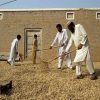
A Pakistani Farmer is Using Technology to Stop Agricultural Exploitation
Anas Shaikh is a Pakistani farmer on a mission to bring solutions to the many difficulties small and medium-scale farmer’s face in making a sustainable living.
Uganda’s School Plan for Refugee Children Could Become a Global Template
Thirteen-year-old Wita Kasanganjo is a pupil at Maratatu Primary School in the Kyangwali Refugee Settlement based in Uganda’s Hoima district. But last month, when Uganda’s President Yoweri Museveni ordered the re-opening of schools for the first time since the mid-March nationwide closure, Kasanganjo was not part of the returning group of students. The government, in a cautious lifting of coronavirus lockdown restrictions, has allowed only pupils who are part of the final year or candidate classes to return to their schooling.
Afghanistan’s Historic Year: Peace Talks, Security Transition but Higher Levels of Violence
While Afghanistan ends a historic year, filled with the hope for peace as the government and Taliban sat down for almost three months of consecutive peace talks for the first time in 19 years, it was also a year filled with violence with provisional statistics by the United Nations showing casualties for this year being higher than 2019.
San Salvador Steps Up Battle against Landslides and Floods
The San Salvador volcano is a gift of nature for the inhabitants of the capital who live at its foot, a gigantic green lung that gives them oxygen and fresh air. But it is also a curse.
How Africa can Lead the World in the COVID-19 Recovery
Africa, compared to Asia, Europe and the US, has largely escaped the devastating death toll of COVID-19, accounting for a fraction of the world’s 63 million cases.
Latin American Electric Utilities COVID-accelerated Evolution
The COVID-19 pandemic has accelerated an evolution across Latin American electric utilities. The need for utilities to manage structural issues derived from increased deployment of Renewable Sources of Energy (RSE) such as wind and solar and Distributed Energy Resources (DER) has rapidly increased. Technology is unleashing major disruptions and challenges. In many ways, Latin America’s traditional electric utilities are in crisis.
Five Years since the Paris Agreement: The Race to Net Zero Is On
In the wake of the worldwide COVID-19 pandemic, there are both challenges and opportunities in ensuring that COP26, a UN climate change summit, builds confidence in the Paris Agreement as an effective tool to avoid climate crisis.
Aren’t We Missing Food Security Experts in the Incoming President-Elect Biden-Kamala Harris Administration?
Food insecurity across the U.S. continues to be on the rise because of the effects of COVID-19. According to Feeding America, over 50 million Americans will experience food insecurity, including 17 million children.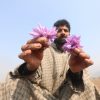
Kashmir’s New Land Laws Could Impact Biodiversity
Walking in the middle of fields of delicately-scented purple saffron crocus flowers, 36-year-old Mubeen Yasin, a saffron farmer from the southern region of Indian Kashmir, is not optimistic that in a few years time the scenery will remain as beautiful as it is today.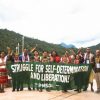
Reclaim Your Rights: Defend Indigenous People’s Lands
Rights are earned through hard-fought struggles. And for Indigenous Peoples (IP), its fulfillment comes from the collective and continuous defense of ancestral land and territory, and assertion of their ways of life and the right to self-determination.« Previous Page — Next Page »


 2026 High-level Political Forum on Sustainable Development. Credit: UN Photo/Eskinder Debebe
In 2015, the United Nations and its Member States adopted the Sustainable Development Goals (SDGs) in an effort to make the world a more sustainable and peaceful place for future generations. Progress on the 17 SDGs has been uneven, and inequality persists across the globe. 10 years after adoption, the 2025 UN SDGs Report revealed that only 35% of the SDG targets are on track, with more than half moving too slowly, and 18% moving backwards from the 2015 baseline. Poverty remains one of the world’s most pressing issues, with hunger, violence, and inequality impeding the opportunities for all people to achieve success. In September 2024, the United Nations Summit of the Future introduced a new goal: to eradicate global poverty by 2030, ensure universal rights to basic services, and increase the overall standard of living in terms of industrialization, economic well-being, citizen health, and literacy. Furthermore, recent shifts in United States foreign aid policy – notably, major budget cuts to USAID and the termination of thousands of development programmes– have severely threatened vital lifelines of financial aid to impoverished communities around the world. Additionally, the United States’ withdrawal from the Paris Climate Agreement has undercut international efforts at sustainable development. With the upcoming 2030 deadline, the UN Secretary-General has called for urgent multilateralism across six priority areas: food systems, energy, digital connectivity, education, jobs and social protection, and climate and biodiversity. IPS sheds light on marginalized communities that struggle on a daily basis to survive and have their stories heard and respected.
Updated by Yilan Batista and Shuli Wong August 2026

The Week with IPS

NEXT STOP - SDGs
Tracking global progress towards a sustainable world
Tracking global progress towards a sustainable world
