Languages
Tuesday, November 17, 2026



News and Views from the Global South
Economy & Trade

Transforming Girls’ Education, Changing The World
As we approach this year’s Transforming Education Summit, global leaders can and must prioritize expertise and mobilize political will to support efforts to ensure inclusive and quality education for all, especially girls. This is at the heart of Sustainable Development Goal 4 in the 2030 Agenda for Sustainable Development, as well as the commitments made in the Charlevoix Declaration and the G7 Declaration on Girls’ Education.
From Worm Composting to Biofuels, the Caribbean Seeks Solutions to Seaweed Influx
In June 2022, swathes of matted, putrid seaweed took over the shores of beaches across the Caribbean. It was the worst seaweed influx reported since 2011, when ocean currents began depositing tons of the brown seaweed, known as Sargassum, across the region, leaving authorities grappling with the severe ecological and economic fallout.
Monster Monsoon: “Pakistan and Its People Are Paying the Costs of What They Are Not Responsible For.”
Pakistan has been going through the worst time of its recent history due to unprecedented colossal monsoon rains and devastating floods. The current floods would have been expected less than once a century, but climate experts claim that what we are seeing today is just a trailer of what’s in store for us if we don’t pay heed to climate change. More than 112 districts are currently afffected and around 30 million people; their property and land are totally devastated. Across the country, where hundreds of thousands of cattle died due to the Lumpy Skin Disease, now more than 727,000 have perished due to floods and rains. The number is increasing rapidly.
Africa Should Trade its Carbon Credits to Fund Renewable Energy – UNECA
Africa needs to trade in carbon credits to reduce greenhouse gas emissions, finance the transition to renewable energy, and boost economic development, the United Nations Economic Commission for Africa (UNECA) says.
A Tale of the Spanish Neckties and Other Made-in-Europe Things
Shortly before the 25 August approval by the Spanish Parliament of the government’s plan to save energy, the country’s right and far-right opposition parties revived their debate about an earlier suggestion of not wearing neckties in the Spanish Congress and Senate and other official institutions.
Shaping Our Digital Future
Asia and the Pacific is the most digitally divided region of the world, and South-East Asia is the most divided subregion. The Covid-19 pandemic detonated a “digital big bang” that spurred people, governments and businesses to become “digital by default;” a sea change that generated vast digital dividends. These benefits that have not been distributed equally, however. New development gaps have emerged as digital transformation reinforces a vicious cycle of socioeconomic inequalities, within and across countries.
How France Underdevelops Africa
Most sub-Saharan African French colonies got formal independence in the 1960s. But their economies have progressed little, leaving most people in poverty, and generally worse off than in other post-colonial African economies. Decolonization? Pre-Second World War colonial monetary arrangements were consolidated into the Colonies Françaises d’Afrique (CFA) franc zone set up on 26 December 1945. Decolonization became inevitable after France’s defeat at Dien Bien Phu in 1954 and withdrawal from Algeria less than a decade later.
Argentina Seeks Elusive Investment to Fully Exploit Shale Gas
Argentina, which has one of the largest unconventional hydrocarbon deposits in the world, has been forced to import gas for 6.6 billion dollars so far this year.
Indian Workers Defend Their Steel with Their Lives
The long and distant epoch of pre-history, dated to the time before the start of the Common Era, is conventionally divided into three periods: the Stone Age, the Bronze Age, and the Iron Age. Subsequently, in the era of written history, we generally have not relied upon specific metals or minerals to define our periods. Too many metals and minerals, harnessed by new production techniques and new labour patterns, have contributed to our immense capacity to generate large surpluses. There is the Age of Industry but not, for instance, the Age of Steel, the core metal of our period.
There’s no Stopping Renewable Power in Chile, but Community Energy Is Not Taking Off
Renewable energies, especially solar and wind power, are growing inexorably in Chile, driven by large companies. But community generation of alternative energy is not taking off, despite a law promoting it.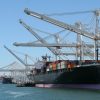
“The Worse, The Better” Doctrine and the Melting Ice
‘There is a prevailing doctrine among the right and far-right political parties who are still in the opposition and are most likely to jump to power in those countries where they are not already ruling. It is the doctrine of “the worse things go, the better for us.”
UN Labour Report Highlights Employment Challenges for Youth
When COVID-19 prompted economic shutdowns across the globe, many analysts predicted that youth would be especially at risk. This is because young people tend to have fewer economic assets and limited experience in the labor market.
How NOT to Win Friends and Influence People
After four years of Trump’s ‘America first’ isolationism, US President Joe Biden announced “America is back”. His White House has since tried to find allies against China and Russia. But it has not found many, especially in the Global South. His summit with Southeast Asian leaders was well attended, but promised little. Worse, his Summit of the Americas revealed fading US influence in its long-time backyard.
Millions Go Hungry– While Billions Worth of Food Go into Landfills
The ominous warnings keep coming non-stop: some of the world’s developing nations, mostly in Africa and Asia, are heading towards mass hunger and starvation. The World Food Programme (WFP) warned last week that as many as 828 million people go to bed hungry every night while the number of those facing acute food insecurity has soared -- from 135 million to 345 million -- since 2019. A total of 50 million people in 45 countries are teetering on the edge of famine.
Starvation Pounds Inflation-Hit Urban Zimbabweans
With inflation at 256.9 percent, 49-year-old Dambudzo Chauruka can no longer afford to buy bread despite working as a civil servant in Zimbabwe.
Biofuels Slow Down Electric Vehicles in Brazil
Brazil celebrated 100,000 electric vehicles in circulation in late July, but this is a drop in the ocean compared to the 46 million combustion vehicles registered in the country and in contrast with the pace of the phasing out of oil in the world's automotive industry.
Chinese Fleet Threatens Latin America’s Fish Stocks
Illegal and excessive fishing, mainly attributed to Chinese fleets, remains a threat to marine resources in the eastern Pacific and southwest Atlantic, as well as to that sector of the economy in Latin American countries bathed by either ocean.
Yes, Africa’s Informal Sector Has Problems, But the Answer Isn’t to Marginalise It
African leaders are increasingly aspiring to “modernise” their cities. That is to make them “globally competitive” and “smart”. The hope is to strategically position cities in Africa to drive the continent’s much-needed socio-economic transformation.
An Unexpected Treasure
When University of Arizona political economy professor, William Mishler needed Kiribati census and household income data for a project he was working on with Millennium Challenge Corporation (MCC) he turned to the Pacific Data Hub (PDH) to access the microdata he needed.
A World in Crisis Needs Both Trade and Aid
We are in the toughest period the world economy has faced since the creation of the multilateral system more than three-quarters of a century ago. A quadruple shock of COVID, climate change, conflict and cost-of-living has undone years of hard-fought development gains.
Stagflation: From Tragedy to Farce
Half a century after the 1970s’ stagflation, economies are slowing, even contracting, as prices rise again. Thus, the World Bank warns, “Surging energy and food prices heighten the risk of a prolonged period of global stagflation reminiscent of the 1970s.” In March, Reuters reported, “With surging oil prices, concerns about the hawkishness of the Federal Reserve and fears of Russian aggression in Eastern Europe, the mood on Wall Street feels like a return to the 1970s”.« Previous Page — Next Page »


 UN Commission on International Trade Law Holds Colloquium on Harmonizing Law in Age of Digital Trade and Finance. Credit: UN Photo/Manuel Elías
Trade has historically been a geopolitical tool that can both be used to propel development as well as entrench inequalities. In various nations in East Asia and Latin America, increased trade, as often seen in export booms, has allowed them to achieve influential standings within the global economy. On the other hand, many low-income countries in Sub-Saharan Africa, Asia, and Latin America struggle to maintain a robust trade performance, and oftentimes are subjugated to exploitative trade dynamics through intense extraction of their natural resources. In recent decades, international trade has reached a new era as emerging economies across the world are rising in economic preeminence. Stable international trade is crucial to world peace as global interconnectedness facilitates reliable diplomacy. Nevertheless, significant challenges are on the rise. Notably, a major wave of United States tariff escalations in January 2025 lifted US import taxes to their highest level since the 1930s, changing market dynamics and forcing renegotiations with global trading partners.These articles are aimed at informing readers about the complexities of trade and its varying effects on development, with a special focus on the consequences of the global economic crisis, the potential of fair trade and the gender implications of trade policies.
Updated by Yilan Batista and Shuli Wong August 2026

The Week with IPS

NEXT STOP - SDGs
Tracking global progress towards a sustainable world
Tracking global progress towards a sustainable world
