Languages
Tuesday, November 17, 2026



News and Views from the Global South
Economy & Trade
Innovative Financing to Protect Public Health During a Pandemic
Economic recovery since the COVID-19 pandemic has been uneven amidst a cautious loosening of restrictions. But even at the height of the pandemic, it was business as usual for the tobacco industry.
Inflation Targeting Farce: High Costs, Moot Benefits
Policymakers have become obsessed with achieving low inflation. Many central banks adopt inflation targeting (IT) monetary policy (MP) frameworks in various ways. Some have mandates to keep inflation at 2% over the medium term. Many believe this ensures sustained long-term prosperity.
Mexico’s Electric Mobility, Stuck in Fossil Fuel Traffic
The Mexico City government began testing an elevated route for electric buses with great fanfare on Sept. 11, in a bid to promote more sustainable transport. The initiative is part of an incipient promotion of electromobility in the country, amidst pro-fossil fuel energy policies.
Equal Pay for Work of Equal Value
International Equal Pay Day, observed officially by the United Nations on 16 September, aims to draw attention to the gender pay gap – the difference between what a woman earns compared to a man for work of equal value – and the systemic inequalities it is rooted in.
Great Wind and Solar Potential Boosts Green Hydrogen in Northern Brazil
Brazil could become a world leader in the production of green hydrogen, and the northeastern state of Ceará has anticipated this future role by making the port of Pecém, with its export processing zone, a hub for this energy source.
What Does the African Continental Free Trade Agreement Hold for Women?
Agnes Opus sells cereals in Busia, the border town between Kenya and Uganda. This is her lifeline through which she caters for her immediate family’s needs from school fees to housing and medical care and support to her extended family. While she dedicates all her energy and time to this work which she loves, she struggles to meet all her needs. She faces many non-tariff barriers including harassment by officials and unclear and ever-changing information on trade requirements.
Africa Struggles with Neo-Colonialism
After a quarter century of economic stagnation, African economic recovery early in the 21st century was under great pressure even before the pandemic, due to new trade arrangements, falling commodity prices and severe environmental stress.
Optimism Prevails Despite Uncertainty Over Revolution to Build Africa’s Food Systems
The 2022 Africa Green Revolution Forum (AGRF) Summit ended in Kigali, Rwanda, with policymakers, activists, researchers, business leaders, and agricultural experts divided over the right pace to build resilient agri-food systems on the continent.
United We Stand to Achieve Sustainable Development
The world today faces a future that is in peril. Our challenges have become more complex and interconnected, as we see the impacts of the COVID-19 pandemic, an uneven economic recovery, a climate emergency, growing inequalities, and an increase in conflicts globally. This year also marks a grim milestone, with over 100 million people forcibly displaced.
Africa Needs More Action, Fewer Words to Secure Food and Nutrition
For more than five years, Ritta Achevih was harvesting one bag of maize or less from her small plot each season. She could hardly provide enough healthy food for her big family.
In the Face of Scarcity, Cubans Dream of Once Again Drinking Their Daily Cup of Coffee
While the Cuban government's plans to increase production begin to bear fruit, Mireya Barrios confesses that she seeks every possible way to enjoy a cup of coffee every day, in the face of high prices and scarcity.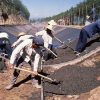
Developing Countries Must Grow More Food
Climate change and war on Ukraine a wake-up call
As our planet continues to heat up, extreme weather has affected many of us. From the west coast of North America across Europe, the Middle East and Asia to Pakistan and New Zealand, wildfires and flash floods have destroyed homes and property and disrupted the daily lives of millions.

Sand Poachers Fueling Environmental Harm in Zimbabwe
In Chitungwiza, right next to the highway, 36-year-old Nesbit Gavanga and his five colleagues use shovels as they load trucks with sand. The six apparently are in the business of sand-poaching and openly explain that every other day they engage in running battles with environmental officials who seek to curtail land degradation here. The group’s informal sand quarry lies 25 kilometers southeast of the Zimbabwean capital Harare.
Bukele’s Failed Bitcoin Experiment in El Salvador
A year after Salvadoran President Nayib Bukele decided to make El Salvador the first country where bitcoin is legal tender, the experiment has so far failed, as few of the original plan's objectives have been achieved.
Afghanistan: A Treasure Worth More than a Trillion Dollars
Both mainstream media, international bodies and human rights defenders continue to rightly denounce the Taliban's inhuman abuses against the Afghan people’s basic rights, in particular those of women and girls.
Eight International Development Priorities for the new UK Prime Minister
The UK’s new Prime Minister (and former Foreign Secretary), Liz Truss, enters Downing Street with a full and urgent in-tray, dominated by the highest inflation rate for 40 years and concerns across the country about the cost-of-living crisis.
1980s’ Redux? New context, Old Threats
As rich countries raise interest rates in double-edged efforts to address inflation, developing countries are struggling to cope with slowdowns, inflation, higher interest rates and other costs, plus growing debt distress.
The Right Policies Can Protect the Workers of Asia and the Pacific
Most of the 2.1 billion strong workforce in Asia and the Pacific are denied access to decent jobs, health care and social protection but there is an array polices and tools that governments can use to remedy these deficiencies and ensure that the rights and aspirations of these workers and their families are upheld and that they remain the engine of economic growth for the region.
Biomethane, the Energy that Cleans Garbage in Brazil
The increasing productivity with which humankind generates waste has gained at least one sustainable counterpart: the extraction of biogas from landfills, a growing activity in Brazil.
Special Economic Zones: A Nod Towards Capitalism in Venezuela
Venezuela is preparing to replicate the experience of Special Economic Zones (SEZs), a mechanism with which more than 60 countries have tried to draw investment and accelerate economic growth, while under its avowedly socialist government a "silent neoliberalism" is gaining ground.
Transforming Girls’ Education, Changing The World
As we approach this year’s Transforming Education Summit, global leaders can and must prioritize expertise and mobilize political will to support efforts to ensure inclusive and quality education for all, especially girls. This is at the heart of Sustainable Development Goal 4 in the 2030 Agenda for Sustainable Development, as well as the commitments made in the Charlevoix Declaration and the G7 Declaration on Girls’ Education.« Previous Page — Next Page »


 UN Commission on International Trade Law Holds Colloquium on Harmonizing Law in Age of Digital Trade and Finance. Credit: UN Photo/Manuel Elías
Trade has historically been a geopolitical tool that can both be used to propel development as well as entrench inequalities. In various nations in East Asia and Latin America, increased trade, as often seen in export booms, has allowed them to achieve influential standings within the global economy. On the other hand, many low-income countries in Sub-Saharan Africa, Asia, and Latin America struggle to maintain a robust trade performance, and oftentimes are subjugated to exploitative trade dynamics through intense extraction of their natural resources. In recent decades, international trade has reached a new era as emerging economies across the world are rising in economic preeminence. Stable international trade is crucial to world peace as global interconnectedness facilitates reliable diplomacy. Nevertheless, significant challenges are on the rise. Notably, a major wave of United States tariff escalations in January 2025 lifted US import taxes to their highest level since the 1930s, changing market dynamics and forcing renegotiations with global trading partners.These articles are aimed at informing readers about the complexities of trade and its varying effects on development, with a special focus on the consequences of the global economic crisis, the potential of fair trade and the gender implications of trade policies.
Updated by Yilan Batista and Shuli Wong August 2026

The Week with IPS

NEXT STOP - SDGs
Tracking global progress towards a sustainable world
Tracking global progress towards a sustainable world
