Languages
Tuesday, November 17, 2026



News and Views from the Global South
Economy & Trade

East African Countries Seek Cross-border Cooperation to Combat Wildlife Trafficking
For many years, East African countries were considered wildlife trafficking hotspots. Now conservation organisations have started to mobilise all stakeholders to combat the illegal trade that targets animals – some to the edge of extinction.
Smallholder Farmers in Uganda Recruit Black Soldier Fly for Green Fertiliser
The conflict in Ukraine has led to an increase in fertiliser prices in Uganda and neighbouring Kenya. Amidst the shortages, some farmers are shifting to a more sustainable way of enriching their soils using frass from the Black Soldier Fly.
Reject CPTPP, Stay out of New Cold War
Joining or ratifying dubious trade deals is supposed to offer miraculous solutions to recent lacklustre economic progress. Such naïve advocacy is misleading at best, and downright irresponsible, even reckless, at worst. TPP ‘pivot to Asia’ US President Barack Obama’s ‘pivot to Asia’ after his 2012 re-election sought to check China’s sustained economic growth and technological progress. Its economic centrepiece was the Trans-Pacific Partnership (TPP).
Clean Energies Seek to Overcome Obstacles in Argentina
The multitude of solar panels stands out along a dirt road in an unpopulated area. Although located just an hour's drive from Buenos Aires, the new solar park in the municipality of Escobar is in a place of silence and solitude, symbolic of the difficulties faced by renewable energies in making inroads in Argentina.
Achieving the SDGs in Extraordinary Times
The start of the “Decade of Action” to achieve the United Nations’ Sustainable Development Goals (SDGs) has also marked the start of an unprecedented period of overlapping crises.
“Made in Chile” Electric Buses, Another Stride Towards Electromobility
The manufacture in Chile of an electric bus christened Queltehue, a wading bird native to the country, is another step towards electromobility and in the fight against pollution that triggers frequent environmental crises and smog emergencies in Santiago and other cities.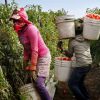
Hundreds of Millions of Human Workers Treated Worse than Robots
While the world’s big private business pours billions of dollars in producing automatic machines and assuring their optimal functioning, bareley no money has been invested in the hundreds of millions of human workers, who are left shockingly unprotected, treated like cheap robots, or even worse.
World Faces Cascading Crises Causing Profound Suffering & Multiple Famines
Our world is in deep trouble – and so too are the Sustainable Development Goals (SDGs). Time is running out. But there is still hope. Because we know what we need to do:
Income-based Solutions Paramount for Addressing Food Insecurity – Experts
Lisa Argiropulos, a single mother of two teenage sons and a resident of Ottawa, Ontario, has been facing food insecurity since 2016, after an accident that left her with chronic pain and disabilities.
Aid for Power in New Cold War
Long a means for powerful nations to influence developing countries, development finance has gained renewed significance in the new Cold War. Unlike during the US-Soviet Cold War, the rivalry now is between mixed market capitalist systems.
Narrow Valuation of Nature is Widening Biodiversity Loss
Nature has diverse values for different people, but it is poorly evaluated, and this is driving the global biodiversity crisis, top scientists say in a new report.
Wild Species Central to Human Survival, New IPBES Report Offers Options for their Sustainable Use
Fifty thousand wild species meet the needs of billions of people worldwide, providing food, cosmetics, shelter, clothing, medicine and inspiration. But now, a million species of plants and animals face extinction with far-reaching consequences, including endangering economies, food security and livelihoods.
Migrant Workers from Mexico, Caught Up in Trafficking, Forced Labor and Exploitation
Eduardo Reyes, originally from Puebla in central Mexico, was offered a 40-hour workweek contract by his recruiter and his employer in the United States, but ended up performing hundreds of hours of unpaid work that was not authorized because his visa had expired, unbeknownst to him.
Intersecting Crises are Impeding the UN’s Sustainable Development Goals, Threatening Peace & Security
This week marks the mid-way point to the 2030 Agenda on Sustainable Development and with it the release of the UN’s Sustainable Development Goals Report 2022.
Sanctions Are a Boomerang
Economic sanctions against countries whose behavior is reproached by the West operate as punishment although they fail in their declared political objectives, and in cases such as Venezuela the contrast is clearly on display in the windows of high-end stores that sell imported goods.
Tap Into Indigenous Knowledge To Preserve Our Forests
A few years ago, I found myself in the Baka indigenous sacred forest in Assok, in Cameroon in the course of my work in supporting them to preserve their forest against land grabbers. We were building a forest hut using only leaves and the knowledge of our indigenous partners.
Recovering Edible Food from Waste Provides Environmental and Social Solutions in Argentina
For 30 years, Tomasa Chávez visited the Central Market of Buenos Aires and rummaged through the tons of fruits and vegetables that the stallholders discarded, in search of food. Today she continues to do so, but there is a difference: since 2021 she has been one of the workers hired to recover food as part of a formal program launched by the Central Market.
The Rape of the Indian Ocean
The Story of the Yellow Fin Tuna
Over the last past several decades marine fish stocks worldwide have been under intense threat. There have been many high sounding declarations and agreements to reduce catch effort, to use more environmentally friendly fishing gear, to prevent illegal fishing and to impose “closed seasons” to allow stocks to recover.

Animals are Core to Pandemic Prevention – We Must Strengthen Their Defences
The ongoing discussions at the World Health Organization (WHO) around a new, landmark ‘pandemic prevention treaty’ shows that the world is starting to act on the lessons it learned from the COVID-19 pandemic.
Weaponizing Free Trade Agreements
Long seen as means to seek advantage on the pretext of providing mutual benefit, free trade agreements (FTAs) may increasingly be used as economic weapons in the emerging new Cold War. Pivot to Asia, containing China In November 2009, President Obama observed, “in an inter-connected world, power does not need to be a zero-sum game… the United States does not seek to contain China”.
Androids in Human Populations
It is time for countries, especially those with slow growing and ageing human populations, to welcome androids, i.e., humanoid robots with human-like appearance and behavior, including speech, sight, hearing, mobility, and artificial intelligence.« Previous Page — Next Page »


 UN Commission on International Trade Law Holds Colloquium on Harmonizing Law in Age of Digital Trade and Finance. Credit: UN Photo/Manuel Elías
Trade has historically been a geopolitical tool that can both be used to propel development as well as entrench inequalities. In various nations in East Asia and Latin America, increased trade, as often seen in export booms, has allowed them to achieve influential standings within the global economy. On the other hand, many low-income countries in Sub-Saharan Africa, Asia, and Latin America struggle to maintain a robust trade performance, and oftentimes are subjugated to exploitative trade dynamics through intense extraction of their natural resources. In recent decades, international trade has reached a new era as emerging economies across the world are rising in economic preeminence. Stable international trade is crucial to world peace as global interconnectedness facilitates reliable diplomacy. Nevertheless, significant challenges are on the rise. Notably, a major wave of United States tariff escalations in January 2025 lifted US import taxes to their highest level since the 1930s, changing market dynamics and forcing renegotiations with global trading partners.These articles are aimed at informing readers about the complexities of trade and its varying effects on development, with a special focus on the consequences of the global economic crisis, the potential of fair trade and the gender implications of trade policies.
Updated by Yilan Batista and Shuli Wong August 2026

The Week with IPS

NEXT STOP - SDGs
Tracking global progress towards a sustainable world
Tracking global progress towards a sustainable world
