Languages
Saturday, November 21, 2026



News and Views from the Global South
Economy & Trade

Southern African Migrants Excluded as COVID-19 Pandemic Grows
Migrants across the Southern Africa region are massively disadvantaged as they find themselves excluded from vaccine programmes – even when the global vaccine initiative COVAX often funds these programmes.
NDC Partnership: Supporting a Global Network of Youth Climate Advocates
Just over six months after launching its Youth Engagement Plan, the NDC Partnership, the coalition assisting governments with their climate action plans, has brought together youth climate advocates for its inaugural NDC Global Youth Engagement Forum.
Community Inclusion Currencies: Money for the People – Podcast
 Do you think it’s possible to transform communities that are stagnating from a lack of currency into places where people’s income-generating activities create a vibrant, self-sustaining circular economy? It is in parts of Kenya that are using the community currency Sarafu, according to today’s guest.

Poor Sales at Slated Namibian Elephant Auction
A heavily criticised Namibian government sale of elephants has attracted only a third of its expected sales as government officials admit that an international outcry when the plans were announced may have put buyers off.
Privatised Health Services Worsen Pandemic
Decades of public health cuts have quietly taken a huge human toll, now even more pronounced with the pandemic. Austerity programmes, by the International Monetary Fund (IMF) and World Bank, have forced countries to cut public spending, including health provisioning.
Solar Energy Revitalises Indigenous and Farming Communities in Chile
Communities in Arica y Parinacota, the region in the extreme north of Chile, are using solar energy and are being empowered by projects for shrimp and trout farming, the production of yarn from camelid wool, the production of tomatoes and cheese, and even the sale of surplus solar power to the national electric grid.
What Might Help Save Our Planet? Different Approaches to Desertification
I am in the Swedish countryside, lush and beautiful in its late summer attire, having a conversation with the son of a friend of mine. Oskar Olin runs a sheep farm, Stabbehyltan Lamm AB, where he practises holistic management. His three-hundred sheep graze within an area of 30 ha where Oskar every day moves his flock from one pasture to another. It takes between 45 to 90 days before the sheep are back on the same pasture where the rotation began. The animals are thus not overgrazing the area, while they at the same time trample down a protective layer of vegetation, which fertilizes the soil. Carbon is bound in the earth, soil organic matter increases, retaining humidity and accordingly deepen the root systems of wholesome plants.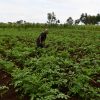
Digitisation Boosts Mechanised Farming Among Kenyan Farmers
When 33-year-old Kimani Mwaniki, an Irish potato farmer in Elburgon, Nakuru County in Kenya’s Rift Valley, heard about a farmer’s virtual school, he didn’t hesitate to enrol. He was keen to learn how the programme will enable him to get higher crop yields for his market in the capital city Nairobi and elsewhere.
World Bank Looks to Trains in Argentina’s Climate Battle
Argentina will receive a 347 million dollar loan from the World Bank to upgrade one of the most important suburban railway lines in the city of Buenos Aires. The operation is part of the multilateral lender’s new policy, which deepens its commitment to the fight against climate change.
Trouble in the Land of Smiles?
Could the rise of the youth-led 'Ratsadon' movement lead to changes in Thai politics? Prime Minister General Prayuth Chan-ocha now faces an ongoing threat as the movement continues to mobilize many, especially young people, against the government. They have broken traditional taboos by opening new conversations about the monarchy and shaping public discourse to question many conservative views in Thai society.
How to Sustainably Finance Universal Health Care
To achieve universal health coverage, a country needs a healthcare system that provides equitable access to high quality health care requiring sustainable financing over the long term. Publicly provided healthcare should be on the basis of need, a citizen’s entitlement for all regardless of means.
Wildlife Trafficking to Come under Fire at IUCN Congress
A recent seizure at Johannesburg’s international airport of a large consignment of rhino horns confirmed worst fears – illegal trafficking of wildlife and the plundering of treasured species is back with a vengeance after a Covid-19 lockdown lull.
African Farmers Could Benefit from More Friendly EU Agriculture Policies
Gilbert Bor manages a small farm in the western highlands of Kenya. Landscapes are hilly, village roads lined with pine trees, his cows mostly of the Friesian breed. He is up at 6:00am daily to lead his animals through the woods into the valley below.
Olympian Turned Volunteer Keeps Traffic Running in Busy Lagos
Bassey Etim Ironbar is a rare example of an Olympian that transformed from an athlete to a volunteer who does menial jobs like sweeping the streets and clearing debris from open sewers.
China Struggles with Socio-environmental Standards in Latin America
In southeast Mexico, work on the Yucatan Solar Park, owned by the Chinese company Jinko Solar, has been halted since 2020 for lack of proper consultation with indigenous communities, after affected local residents filed an injunction against the project.
Suburban Living the Worst for Carbon Emissions – New Research
Work, education, entertainment, or simply better connectivity all draw people to cities. By the end of this century around 85% of the world population are predicted to live in cities.
Central Banks Must Address Pandemic Challenges
Hopes for an inclusive global economic recovery are fast fading. As rich countries have done little to ensure poor countries’ access to vaccines and fiscal resources, North-South “fault lines” will certainly widen. Enhancing relief, recovery, transformation While the International Monetary Fund (IMF) has revised rich countries’ recovery prospects upward, the United Nations (UN) notes formidable challenges, especially for developing countries, due to the pandemic.
Resumption of China-US Contacts: Use of Protocol as Peacetime Weapon in an Unstable World
It had been four long months since the meeting in Alaska between Chinese and American officials, their first interaction since President Joe Biden assumed office in January this year. That was when the Chinese Foreign policy top mandarins Yang Jiechi (Director, Central Foreign Affairs Commission) and Wang Yi (State Councillor and Foreign Minister) bitterly locked horns with the American top diplomats, Antony Blinken (Secretary of State) and Jake Sullivan (National Security Advisor) in Anchorage in intensely chilly circumstances. Bilateral relations remained pretty much frozen since. Both sides might have come around to the belief that a resumption of some level of contact was overdue. Not so much to bring about a thaw; rather, simply to test the water.
WTO Inches Closer To Agreement on Harmful Fishing Subsidies
After more than 20 years of negotiations, the World Trade Organization (WTO) has moved a step closer to an agreement on ending harmful fishing subsidies. The deal would set new rules for the global fishing industry and limit government funding that contributes to unsustainable fishing and the depletion of global fish stocks.
Muslim Women in India’s Workforce: Where Are They?
Muslims are the largest minority community in India, and yet, they are highly underrepresented both in public and private institutions. According to a study conducted by the Economic Times Intelligence Group in 2015, Muslims constituted approximately 2.7 percent of mid to senior executives in the private sector. As of April 2018, only 1.33 percent of officers in the central government, holding the rank of joint secretary and above, were found to be Muslims.
Kenya’s Huge Railway Project Is Causing Environmental Damage. Here’s How
Kenya is constructing a railway line that connects the coastal port of Mombasa and the interior of the country. It is expected to terminate at Malaba, a town on the border with Uganda, and link up with other railways that are being built in East Africa. It’s locally known as the Standard Gauge Railway (SGR).« Previous Page — Next Page »


 UN Commission on International Trade Law Holds Colloquium on Harmonizing Law in Age of Digital Trade and Finance. Credit: UN Photo/Manuel Elías
Trade has historically been a geopolitical tool that can both be used to propel development as well as entrench inequalities. In various nations in East Asia and Latin America, increased trade, as often seen in export booms, has allowed them to achieve influential standings within the global economy. On the other hand, many low-income countries in Sub-Saharan Africa, Asia, and Latin America struggle to maintain a robust trade performance, and oftentimes are subjugated to exploitative trade dynamics through intense extraction of their natural resources. In recent decades, international trade has reached a new era as emerging economies across the world are rising in economic preeminence. Stable international trade is crucial to world peace as global interconnectedness facilitates reliable diplomacy. Nevertheless, significant challenges are on the rise. Notably, a major wave of United States tariff escalations in January 2025 lifted US import taxes to their highest level since the 1930s, changing market dynamics and forcing renegotiations with global trading partners.These articles are aimed at informing readers about the complexities of trade and its varying effects on development, with a special focus on the consequences of the global economic crisis, the potential of fair trade and the gender implications of trade policies.
Updated by Yilan Batista and Shuli Wong August 2026

The Week with IPS

NEXT STOP - SDGs
Tracking global progress towards a sustainable world
Tracking global progress towards a sustainable world
