Languages
Thursday, October 15, 2026



News and Views from the Global South
Editors' Choice
Accepting What It Cannot Control, CARICOM Focuses on What It Can
From wars that drive up fuel prices to supply chain disruptions, inflation and increasingly frequent climate disasters, Caribbean leaders say many of the forces shaping the region's future lie beyond their control.
US Casualty Figures Keep Fluctuating in War with Iran
An age-old axiom in Statistics reads : Figures Cannot Lie, But Liars Can Figure. And more so, in military conflicts, including the five-month-old US-Iran war, where casualty figures are difficult to track down because of lack of transparency and false accounting.
From the Foothills of Mount Kilimanjaro, Magnolia Athletics Camp Is Helping Girls Stay in School, Pursue Athletics and Escape the Pressures of Harmful Traditional Practices
Before sunrise each morning, 19-year-old Josephine Sembeyo joins dozens of teenage runners leaving Magnolia Athletics Camp for training beneath the shadow of Mount Kilimanjaro.
A New Wave of “Communist” Hysteria is Threatening to Spread Across US Politics
Senator Joseph R. McCarthy (Republican of Kansas) rose to public attention in the 1950s with his allegations that hundreds of “Communists” had infiltrated the State Department and other federal agencies.
Extreme Heatwave Escalates Urgency of Climate Adaptation in Europe
As Western Europe endured its worst-ever June heatwave in recorded history, the imperative for climate adaptation is now urgent as the continent accelerates beyond others to become the fastest-warming region in the world.
Cockroach Protests: How India’s Youth Movement Led to Minister’s Resignation
On July 25, after 50 days of protest at Delhi's Jantar Mantar, Union Education Minister Dharmendra Pradhan resigned.
From Castel Gandolfo to Campidoglio: Call for Human Dignity to Be at the Heart of the AI Revolution
After two days of debate at an international conference devoted to the challenges of artificial intelligence (AI), nuclear war and global security, Nobel laureates, former heads of state and government, scientists, human rights defenders, religious leaders and representatives of civil society adopted a joint declaration, calling for it to be based on human dignity.
What Development Looks like in Myanmar Today
When asked what development looks like today, a community leader in Kalaw township points to these fields. Once destroyed by a typhoon, they are now productive again. What began as emergency food assistance in the first month was followed by UNDP support in the community—seeds, training, debris removal, support to microbusinesses and small infrastructure—backed by the Republic of Korea, Norway and Switzerland. One year on, the fields sustain three annual production cycles—rice and flowers—with more resilient practices and higher yields. “This is what development looks like to us,” he says.
Human-Caused Climate Change, Not El Niño, Drives Most Coral Bleaching Events – Research
Every morning, as the Indian Ocean retreats from the reef off Zanzibar's Jambiani village, Chiku Chande steps into the knee-deep lagoon carrying bundles of seaweed seedlings. Years of farming these waters have taught her about every channel and coral outcrop. But lately, the corals that once glowed in brown and gold have become chalky white.
Africa’s Health Defenses Have Improved But Its Funding Has Not
In September 2024, an outbreak of Marburg virus disease in South Ethiopia was confirmed, contained, and declared over within three months.
Africa Can Grow Faster With AI—If It Moves Now
A farmer in Kenya gets weather and planting advice on a basic phone. A teacher in Nigeria uses a chatbot to help students catch up in math. South Africa’s revenue authority uses data analytics to better target tax audits. These are not futuristic examples from Silicon Valley. They are early signs of the broader transformation that artificial intelligence (AI) could bring to sub-Saharan Africa.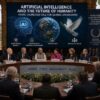
Artificial Intelligence and the Future of Humanity: Nobel Laureates Call for Global Safeguards
"I’m sorry, Dave. I’m afraid I can’t do that.” By bringing the supercomputer HAL 9000 to life in his 1968 film 2001: A Space Odyssey, American director Stanley Kubrick created one of the most powerful symbols of the fear of artificial intelligence (AI) escaping human control.
From the General Assembly to Harlem: Mandela’s Call to Action Endures
Sixty-seven minutes. That is how long volunteers spent serving lunch to people experiencing food insecurity at Refettorio Harlem in New York City last week – one for every year Nelson Mandela gave to public service.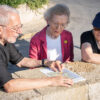
Palestine Must Not Disappear
We have just concluded a visit to the West Bank, Israel, Jordan and Lebanon. From all that we have witnessed and heard, our inescapable conclusion is that the government of Prime Minister Netanyahu, and in particular Ministers Smotrich and Ben-Gvir, aim to make Palestine disappear physically, economically, culturally and politically. Yet other governments either are choosing not to see this or lack the will to take meaningful concerted action.
The Oil Market Absorbed the War Shock, but Buffers Are Running Low
The largest disruption to the global oil market in decades should have sent prices soaring. But after spiking at the start of the war in the Middle East, crude prices soon settled in a range of $90 to $100 per barrel, much lower than many had feared. Why didn’t prices climb higher? The answer is that a combination of factors helped cushion the initial blow. But much of that room has now been used up.
Landmark Ruling Could Redefine Divorced Women’s Property Rights in Pakistan
A landmark Islamabad High Court ruling that recognised marriage as an economic partnership and awarded a divorced woman an equal share of assets acquired during marriage has triggered a legal and religious backlash, with Pakistan's law ministry challenging the judgment before the Federal Shariat Court, a constitutional court empowered to determine whether laws and judicial rulings conform to the Qur’an and Sunnah.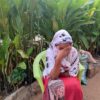
Europe’s Funding Question Puts Tanzania’s Fragile Democracy on Trial
Every evening just before sunset, Salima Kitwana hobbles into her backyard holding a photograph.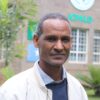
Why Pastoral Production Requires Regional Coordination, Harmonised Policy
At the 64th sessions of the Subsidiary Bodies (SB64) under the UNFCCC in Bonn, Germany, the Local Communities and Indigenous Peoples Platform (LCIPP) underscored the importance of ethically and equitably incorporating indigenous values and knowledge and local knowledge systems such as pastoralism into climate policies and actions ahead of the 31st Conference of Parties on climate change (COP31).
Invasive Prickly Pear Turned into Food, Clean Energy Source
An international academic partnership is helping turn one of Laikipia County’s most destructive and invasive plants, the prickly pear cactus (Opuntia stricta), into a source of food security and clean energy while also helping end perennial resource conflict in the region.
Feeding Africa: Women Farmers Key to Ending Hunger
As FAO coordinates the implementation of the International Year of the Woman Farmer 2026, gender team leader Tacko Ndiaye discusses why investing in Africa’s women farmers is essential for food security, economic growth and creating more resilient agrifood systems
Roma Need Special Consideration After Ukraine War is Over
Governments, donors, NGOs, development banks and businesses recently gathered in Gdansk, Poland, to discuss reconstruction in Ukraine even as Russia’s full-scale invasion continues.« Previous Page — Next Page »





The Week with IPS

NEXT STOP - SDGs
Tracking global progress towards a sustainable world
Tracking global progress towards a sustainable world
