Languages
Wednesday, November 11, 2026



News and Views from the Global South
Education
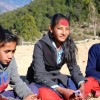
By Girls, For Girls – Nepal’s Teenagers Say No to Child Marriage
If not for a group of her school friends coming to her rescue, Shradha Nepali would have become a bride at the tender age of 14.
Opinion: It’s Time to Step It Up for Gender Equality
If we look at the headlines or the latest horrifying YouTube clip, Mar. 8 – International Women’s Day – may seem a bad time to celebrate equality for women.Namibian President Wins $5 Million African Leadership Prize
Outgoing Namibian President Hifikepunye Pohamba was Monday named winner of the Ibrahim Prize for Achievement in African Leadership, believed to be the most lucrative individual award in the world.

Farm Projects Boost Bangladeshi Women, Children
Women in Bangladesh are carving healthier, wealthier futures for themselves and their children – and they have chicken eggs and pineapples to thank.
Opinion: Goals for Gender Equality Are Not a ‘Wish List’ – They Are a ‘To Do List’
This weekend, at the invitation of President Michelle Bachelet and myself, women leaders from across the world are meeting in Santiago de Chile. We will applaud their achievements. We will remind ourselves of their contributions. And we will chart a way forward to correct the historical record. History has not been fair to women – but then, women usually didn’t write it.
Mobile Technology a Lever for Women’s Empowerment
Providing women with greater access to mobile technology could increase literacy, advance development and open up much-needed educational and employment opportunities, according to experts at the fourth United Nations’ Mobile Learning Week conference here.
Analysis: Economic Growth Is Not Enough
Recent new data show a worrying picture of Latin America and the Caribbean. Income poverty reduction has stagnated and the number of poor has risen — for the first time in a decade — according to recent figures from the Economic Commission for Latin America and the Caribbean.
“HeForShe” Campaign Moves to the Next Stage
It launched in a blaze of social media glory with a viral speech that rocketed around the world, and five months on from the launch of U.N. Women’s groundbreaking HeForShe campaign, the real work is well underway.
Getting Bang for the Buck on New Development Goals
Right now, the United Nations is negotiating one of the world’s potentially most powerful policy documents. It can influence trillions of dollars, pull hundreds of millions out of poverty and hunger, reduce violence and improve education — essentially make the world a better place. But much depends on this being done well.
Nepali Children in Dire Need of Mental Health Services
On the night of Aug. 14, 2014, 10-year-old Hari Karki woke up to his grandfather’s loud yelling in the family’s home in Paagma, a small village in east Nepal.
Diabetes Epidemic Threatens Development Gains in Pacific Islands
The rapid rise of non-communicable diseases (NCDs) in the Pacific Islands, which now cause 75 percent of all deaths, is one of the greatest impediments to post-2015 development, health ministers in the region claim.
Youth Unemployment, Income Inequality Keep Rising
Global youth unemployment may be “six or seven times” what the International Labor Organisation’s (ILO) latest figures state, due to what a youth advocacy group calls a flawed system of assessment.
Bangladesh Fighting Inequality at the Preschool Level
Shanta* is only four years old, but already she loves school. Every morning, her mother walks her to the small pre-primary facility in Mohonpur village, about 140 km away from Bangladesh’s capital Dhaka, and leaves her in the care of a young female teacher, who oversees the day’s activities: storytelling, drama, reciting poetry.
Conflict-Related Displacement: A Huge Development Challenge for India
 The tarpaulin sheet, when stretched and tied to bamboo poles, is about the length and breadth of a large SUV. Yet, about 25 women and children have been sleeping beneath these makeshift shelters at several relief camps across Kokrajhar, a district in the north-eastern Indian state of Assam.

From Bullets to Ballots: The Face of Sri Lanka’s Former War Zone
In four months’ time, Sri Lanka will mark the sixth anniversary of the end of its bloody civil conflict. Ever since government armed forces declared victory over the Liberation Tigers of Tamil Eelam (LTTE) on May 19, 2009, the country has savored peace after a generation of war.

India Still Struggling to Combat Child Labour
Eleven-year-old Chottu* works 12 hours daily at a roadside tea joint near New Delhi's bustling interstate bus terminus.
Dumped, Abandoned, Abused: Women in India’s Mental Health Institutions
Following the birth of her third child, Delhi-based entrepreneur Smita* found herself feeling “disconnected and depressed”, often for days at a stretch. “Much later I was told it was severe post-partum depression but at the time it wasn’t properly diagnosed,” she told IPS.
Missing Students Case Also Highlights Racism in Mexico
The mother tongue of Celso García, a 51-year-old indigenous Mexican, is Mixteca. As a boy, García, the father of one of the 43 students forcibly disappeared four months ago, had to learn Spanish to make his way in mainstream society in this country where most people are of mixed-race heritage.
Conflict-Related Displacement: A Huge Development Challenge for India
The tarpaulin sheet, when stretched and tied to bamboo poles, is about the length and breadth of a large SUV. Yet, about 25 women and children have been sleeping beneath these makeshift shelters at several relief camps across Kokrajhar, a district in the north-eastern Indian state of Assam.
OPINION: Brazil Can Help Steer SDGs Towards Ambitious Targets
With the current Millennium Development Goals (MDGs) expiring at the end of this year to be replaced by the Sustainable Development Goals (SDGs) which will set priorities for the next fifteen years, 2015 will be a crucial year for the future of global development.OPINION: Russia’s Friendship University, Educating the Developing World for 55 Years
People’s Friendship University of Russia (PFUR), which celebrates its 55th anniversary on Feb. 5, is known worldwide as a major academic and research centre. During the last five decades, PFUR has educated 80,000 students from 145 countries.« Previous Page — Next Page »





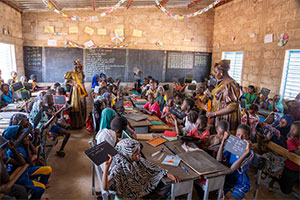 Two teachers work in a classroom in Forces Vives School in Dori, Burkina Faso. Credit: UNICEF/UNI978361
Safe and uninterrupted education is a fundamental right for all children. Education is paramount to global development, as it has been proven that investing in education – especially for girls and children – contributes significantly to economic growth and prosperity. Although more than 1 billion children go to school, many are subjected to conditions that are not conducive to a proper learning environment, including makeshift facilities, a lack of supplies, violence in classrooms, inadequate sanitation, untrained instructors, and widespread school closures. Since 2015, there have been immense gains in education with an increase of 109 million children in school. However, as of 2023, 272 million children are still out of school.
High poverty levels in developing countries also impede children’s access to a proper education. For example, from the early to mid 2000s, Sub-Saharan African nations witnessed a dramatic decline in trained teachers due to inadequate funding in the education sector. Furthermore, major cuts to United States international aid threaten an estimated 23 million additional children's access to education, as USAID‑funded school programmes across Africa and Asia face closure.
Various other factors contribute to the decline of education, notably hunger, which has increased as conflict and climate change interfere with global food production and dissemination. Meanwhile, certain social and cultural practices also impede children’s access to education, with gender inequality, discrimination, child labour, and child marriages preventing millions of children from attending school. Economic conditions such as the inaccessibility of higher education also affect disenfranchised communities across the world. In extreme situations, such as warfare where educational facilities are destroyed in their totality, notably in Gaza and Sudan, entire generations of children might grow up without access to education. Rebuilding educational infrastructure is a long and arduous process, especially when violence persists across generations, and this significantly stunts the development of societal prosperity and stability.
IPS is dedicated to telling the shocking truths about worldwide education through impassioned opinion pieces and comprehensive articles, highlighting global issues that impede worldwide education and the courses of action being taken by organizations such as UNICEF and Education Cannot Wait.

The Week with IPS

NEXT STOP - SDGs
Tracking global progress towards a sustainable world
Tracking global progress towards a sustainable world
