
Monday, November 23, 2026



News and Views from the Global South
Environment

U.S. Replaces Japan in Role of Villain on Whales
The United States has taken over the pro-whaling stance traditionally championed by Japan, but instead of supporting the capture of whales for scientific research purposes, it is doing so under the guise of aboriginal subsistence quotas.U.S.: Floods and Wildfires Trigger New Fears over Nuke Safety
Just 100 days after a deadly earthquake and tsunami devastated the Fukushima Daiichi nuclear power plant in Japan, concerns are being raised about several U.S. nuclear stations that are facing natural disasters of their own.
SOUTHERN AFRICA: Trying to Access Funding for Climate Change
Leaving out non-governmental organisations in climate finance strategies will result in little impact on the ground in the southern Africa region.TRADE: Brazil and Africa Ready to Do the Samba
African trade with India and China flourished over the past decade but, with unemployment rising and industrialisation failing to take hold, cracks are appearing in Africa’s much-vaunted "Look East" doctrine. Meanwhile, from across the Atlantic, Brazil is making inroads into the continent.
ZAMBIA: “Every Year Flooding Makes This Place a Little Hell”
During the rainy season, and many weeks afterwards, home is never the best place to be for Miriam Banda. Until the end of 2008, she enjoyed living at her house in Kanyama, a high-density settlement bordering the central business district in Lusaka, Zambia's capital.ZIMBABWE: “Blood Diamonds” Slip Through Watchdog’s Cracks
Following a recent procedural breakdown of one of the world's leading "blood diamond" watchdogs, experts warn that controversial stones from the Marange fields of Zimbabwe may soon find their way into the hands of unknowing consumers.
CLIMATE CHANGE: Water Sources Need to be Protected
Seventy-five-year-old Verdiana Protas is worried that the 20 cattle she bought with her pension money will soon die because the 10-kilometre-long river in her village in northwest Tanzania has been dry for two years now and finding alternative sources of water is getting more and more difficult.JAPAN: Renewable Energy Grabs Limelight
After decades of being relegated to the sidelines, Japan’s fledging renewable energy industry is now basking in the limelight as the nation struggles to cope with the Fukushima nuclear accident.The Oxymoron of Political Leadership
Political will is all that's needed to bring electricity to the 2.5 billion people with no or unreliable access to power, or to feed the one billion who go hungry every day, or to finally begin to slash carbon emissions to avoid dangerous climate change, or just about any other global problem.
MEXICO: Native Community Defends Land Against Loggers, Organised Crime
"Our patience has run out," says Mary, an indigenous woman with three children to care for on her own, since her husband was kidnapped from his home by an armed group. In this town in western Mexico, local residents have begun to defend themselves with sticks and stones against illegal loggers and organised crime groups that are their allies.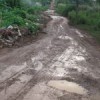
BRAZIL: Politicians Out of Sync with Public Sentiment on the Environment
The environmental movement continues to gain credibility and support as scientific findings confirm its warnings and natural disasters become increasingly frequent. Yet this growing awareness has yet to reach political decision makers in countries like Brazil, much to the frustration of environmentalists.
Q&A: “Africa Can Provide More Than Minerals in South-South Trade”
South-South co-operation is firmly on Africa’s agenda. Leading the way is South Africa, which has recently joined up with Brazil, Russia, India and China’s BRIC formation to form a new global grouping of emerging markets, known as BRICS.
SOUTHERN AFRICA: Getting Water to the People
The Southern African region is underutilising its water – a resource to which its citizens already have limited access.OP-ED: The Good News About Coal
During the years when governments and the media were focused on preparations for the 2009 Copenhagen climate negotiations, a powerful climate movement was emerging in the United States: the movement opposing the construction of new coal-fired power plants.COLOMBIA: Kidnapped in No Man’s Land
"Today we are launching the new campaign for demobilisation in Caguán. Planting seeds of hope against the terror of the FARC," Colombian Defence Minister Rodrigo Rivera recently wrote in his Twitter account.Tourism, Climate Change – Threats to Antarctic Wilderness
Too many tourists and too much climate change are the main concerns of environmental organisations and the governments of signatory countries of the Antarctic Treaty, which came into effect 50 years ago.
ZIMBABWE: Harvesting Water for Food Security
Earth mounds running across her field hold back the water that Caroline Ndlovu uses to grow maize, pumpkins, beans and watermelons long after the short rainy season in this arid part of Zimbabwe.
Mauritania Could Lose Its Capital City to the Sea
For the past five years, water has been seeping out of the ground beneath parts of Nouakchott, undermining foundations and transforming some areas of the Mauritanian capital into uninhabitable marshes.
DR CONGO: Water Shortages Grip the Capital
In recent months, no one in the Congolese capital has been spared the effects of water shortages. Where spending entire days criss-crossing Kinshasa in search of water with battered containers in hand was previously the unhappy task of women and children, now men in suits have joined the fray.Nuclear for the Poor, Renewables for the Rich?
In a debate about the future of energy, the global south wants to spend tens of billions of dollars on nuclear plants while the global north looks to spend hundreds of millions on decentralised, renewable energy.On the Road to Green Energy for All
Like our cave-dwelling ancestors of 200,000 years ago, nearly three billion people still use fire for cooking and heating. Of those, some 1.5 billion people have no access to electricity. For a billion more, their only access is to sporadic and unreliable electricity networks.« Previous Page — Next Page »


Through our global network of local writers, we are continuing our award-winning coverage of global and local environmental challenges, with a focus on the people for whom the ecosphere matters in a direct way: rural dwellers who have little means to protect themselves against adverse conditions; communities that need to switch to sustainable development in order to survive; poor women and children, who are the most vulnerable in natural disasters. Sponsored by the United Nations Environment Program (UNEP), the United Nations Development Program (UNDP) and The World Bank (WB), IPS also maintains the award-winning Tierramérica, a specialised information service on environment and development.

The Week with IPS

Tracking global progress towards a sustainable world


