
Thursday, November 12, 2026



News and Views from the Global South
Environment

Climate Change in South East Asia: Where are we and What are we Bound for?
It is increasingly clear that human health and wellbeing are being threatened everywhere because of global warming and environmental damage. Extreme weather events, sea level rise, increasing scarcity of freshwater, drought and high temperatures, combined with loss of biodiversity and other aspects of ecological degradation such as soil erosion and coral bleaching are all features of anthropogenic self-harm and an increasingly inhospitable planet for human society.
Transforming Africa: Just & Equitable Energy Transition
A global transition to lower-carbon energy sources is crucial for our species' survival given the worsening effects of climate change. With many people increasingly advocating for a rapid shift from an energy system dependent on fossil fuels, questions on how to make this transition arise - one that is just and equitable, especially in the developing world.
If Women Don’t Lead, We’ll Lose the Battle Against Climate Crisis
We are in the midst of so many crises across the Middle East and North Africa (MENA) region: the most unequal, water scarce, least democratic region in the world, with the widest gender gap, multiple armed conflicts raging across it, and fragile states on the brink.
Restore Land to Tackle Multiple Crises
Land is our lifeline on this planet. Yet ‘business as usual’ in how we manage land resources puts our own future on planet Earth in jeopardy, with half of humanity already facing the impacts of land degradation.
Developing Countries and the Perfect Storm
Part I: What Should Developed Countries Do?
Developing countries – in Africa, in Asia, in Latin America and in the Middle East - are facing a combination of crises that are unprecedented in recent times. Over the last three years they have had to face the COVID-19 crisis, the food crisis, the energy crisis, the climate change crisis, the debt crisis and, on top of all this, a global recession. The crises have overlapped, and each has added to the problems created by the previous ones.

Davos Fails on Financial Transparency – And Everything Else
At this year’s World Economic Forum (WEF) at Davos which ended last week, the attention of the world’s financial and economic elite was captured by the war in Ukraine whose president Volodimir Zelensky used his address to call to “complete withdrawal of foreign businesses from the Russian market”, despite 380 of the largest multinational companies still operating in Russia.
Rivers Have no Borders: The Motto of Their Defenders in Peru
"Water is part of our culture, it is intrinsic to the Amazon," said José Manuyama, a member of a river defense committee in his native Requena, a town located in the department of Loreto, the largest in Peru, covering 28 percent of the national territory.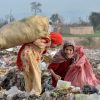
Upset with the Opulence of the Rich? But the World’s Children Are Paying the Bill
The excesses committed by rich people can be deadly–and in fact they are. Be it about food, energy or overall waste, such excesses have been depleting the world's natural resources and pushing both current and future generations towards the edge of a predictable abyss.
Gender Sensitivity Key to Achieving Climate Justice
While the climate crisis affects virtually every aspect of life, its impacts are not felt equally. A person’s vulnerability to climate change varies depending on their position in society, such as socioeconomic status, dependence on natural resources, and capacity to respond to natural hazards. Since different genders often experience different social standings, gender has emerged as a key element to consider for effective climate planning and adaptation.
Not Enough Clean Water in Europe? Who Cares…
So busy as they are with strengthening military alliances and devoting billions of taxpayers' money to double their war budgets and subsidise fossil fuels, European Governments seem not to care about the reiterated alerts that their continent faces a serious risk: the reduced availability -and more polluted– drinking water.
Climate Change Poses Risks: COP27 Presents Unique Opportunity for Africa
Ambassador Maria de Jesus dos Reis Ferreira was appointed in February 2018 as the Permanent Representative of Angola to the UN, the first woman to hold the position.
The Risks of Turning Planet Earth into a Giant Desert
The message is clear: three-quarters of the world’s population will be affected by drought by 2050. Does it sound too far in time? Well, your kids might be among the billions of humans living on a desertified planet.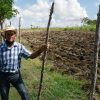
Cuban Farmers Fight Land Degradation with Sustainable Management
Thorny bushes and barren soil made it look like a bad bet, but Cuban farmer José Antonio Sosa ignored other people’s objections about the land and gave life to what is now the thriving La Villa farm on the outskirts of Havana.
Reclaiming Our Future
The Asia-Pacific region is at a crossroads today – to further breakdown or breakthrough to a greener, better, safer future. Since the Economic and Social Commission for Asia and the Pacific (ESCAP) was established in 1947, the region has made extraordinary progress, emerging as a pacesetter of global economic growth that has lifted millions out of poverty.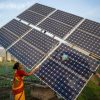
What India Needs To Do To Achieve Net-Zero Status by 2070
The recent IPCC report that came out in the month of March 2022 says that, by the end of the century, the temperature rise is likely to be 2 to 3.7 degrees if global emissions, as they stand today, are not curtailed. In fact, according to the report, carbon dioxide (CO2) emissions need to come down by 45 percent globally (compared with 2005) by the end of 2030.
Caring for Water Where Mining Leads to Wealth and Tragedies in Brazil
The southeastern Brazilian state of Minas Gerais owes its name to the main economic activity throughout its history: mining – of gold since the 17th century and later iron ore, which took on an industrial scale with massive exports in the 20th century.
Oil Business Burns Enough Gas to Power the Whole Sub-Sahara or Two Thirds of Europe
While the attention of mostly Western media and politicians is quasi exclusively hoarded up by the proxy war in Ukraine and its consequences on the energy sector, the world’s big oil business continues to burn Planet Earth with its underreported though highly polluting, wasteful practice of gas flaring.
Floods Drive Urban Solutions in Brazilian Metropolis
"We do everything through parties, we don't want power, we don't want to take over the role of the State, but we don't just protest and complain," said Itamar de Paula Santos, a member of the United Community Council for Ribeiro de Abreu (Comupra), in this southeastern Brazilian city.
When Saviours Are the Problem
Central bank policies have often worsened economic crises instead of resolving them. By raising interest rates in response to inflation, they often exacerbate, rather than mitigate business cycles and inflation.
No Climate Transition Without Securing Land Rights
The landmark land tenure decision by parties to the UN Convention to Combat Desertification (UNCCD) in 2019 offers a blueprint for upcoming climate negotiations in Sharm El Sheikh in November.
Massive Deforestation in the Congo Basin Will Lead to Poverty
Growing up amid under the leafy canopy of the Congo Basin rainforest, the woodland was more than our home. It was our playground, our medicine cabinet, our teacher, our therapist. And it was a source of livelihood with its rich biodiversity and helped shield us from the effects of climate change.« Previous Page — Next Page »





Through our global network of local writers, we are continuing our award-winning coverage of global and local environmental challenges, with a focus on the people for whom the ecosphere matters in a direct way: rural dwellers who have little means to protect themselves against adverse conditions; communities that need to switch to sustainable development in order to survive; poor women and children, who are the most vulnerable in natural disasters. Sponsored by the United Nations Environment Program (UNEP), the United Nations Development Program (UNDP) and The World Bank (WB), IPS also maintains the award-winning Tierramérica, a specialised information service on environment and development.

The Week with IPS

Tracking global progress towards a sustainable world


