Languages
Thursday, November 26, 2026



News and Views from the Global South
Food and Agriculture

Bolivian Sugar Industry Recovers and Seeks Markets
Bolivia’s sugar mills are once again operating at full capacity, with producers flooding the domestic market and desperate to obtain permits to export a surplus of 138,000 tons to Chile, Colombia, Peru and the United States.Senegal Villages Aspire to Self-Sufficiency in Rice
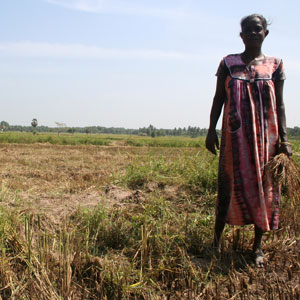
The residents of five villages in the Boyard Valley, in southwestern Senegal, are freeing themselves from "the tyranny of imported rice" by stepping up local production of this important staple food.
War’s End Threatens Water Supply in Northern Sri Lanka
War is seldom good for anything, especially protracted conflicts like the one in Sri Lanka, which dragged on for over three decades and claimed between 80,000 to 100,000 lives.
Billions in Subsidies Prop up Unsustainable Overfishing
Calls are mounting for the world's big fishing powers to stop subsidising international fleets that use destructive methods like bottom trawling in foreign coastal waters, drastically reducing the catch of local artisanal fishers who use nets and fishing lines.
For Champions of Degrowth, Less Is Much More
The concept of degrowth is not a very comfortable one in overdeveloped countries such as the United States.
Farm Holds Out Hope for Peace and Development in DR Congo
Dairy cattle are again grazing on the rolling green hills of North Kivu province, in the eastern Democratic Republic of Congo. Twenty years ago, an explosion of ethnic violence tore through this region, and the restoration of the Lushebere farm can be seen as both a sign and a guarantee of a fragile peace.
Better Governance to Achieve Food Security
Despite a sudden increase in July this year, prices of cereals on world markets remained fairly stable. But there are no grounds for complacency, as cereals markets remain vulnerable to supply shocks and disruptive policy measures. In this context, the good harvests that are expected in the Southern Hemisphere are important.
Indigenous Seek Profits From Forests
Kenya’s Ogiek community, the indigenous group of hunter-gatherers who were evicted from the Mau Forest three years ago, say they will no longer sit by and watch logging companies profit from the resources of their traditional home while they live in poverty in tented camps around the forest without even the most basic of services, like sanitation.
Q&A: “Smallholder Agriculture Needs to Be Seen as a Business”
The countries of the developing South should remove the barriers still faced by small-scale farmers, because smallholders play a key role in economic growth, says Carlos Seré, the International Fund for Agricultural Development’s (IFAD) chief development strategist.
Foreign Farmers Undermine Food Security in Zambia
Increased agricultural development in Zambia will actually compromise the country’s food security as peasant farmers continue to be driven off their customary land to pave the way for large-scale local and foreign agribusiness, according to the University of Zambia’s dean of the school of agriculture, Dr. Mickey Mwala.
Q&A: Food Production Accounts for 29 Percent of Greenhouse Gases
Food production, including agriculture, represent 29 percent of the greenhouse gases that are causing global warming, say scientists with the Consultative Group on International Agricultural Research (CGIAR).
Greening Havana
Sandra Ribalta is no longer satisfied with getting more and more people involved in the task of greening the neighbourhood of Las Cañas in the Cuban capital. She is now working to raise awareness of "climate change, as the key reason for reforestation."What Price Rice May Do
Rice remains the most popular staple in Guinea, but the high price of imported rice is pushing many consumers in this West African country to change their diet. Farmers have responded by rapidly expanding the land area planted with an alternative food crop: cassava.
Zero Hunger Plan in Guatemala Still Grounded
"I heard about the Zero Hunger plan on television, but unfortunately it has not arrived here," complained Elías Ruíz, a small farmer in the southern community of Santa Odilia, about the Guatemalan government's flagship programme to end poverty.
OP-ED: Uruguay – Lessons from a Successful Rice Producer*
Uruguay is in the headlines of agricultural development news this week as it hosts the Second Global Conference on Agricultural Research for Development (GCARD 2) from Oct. 29 to Nov. 1 in the resort city of Punta del Este.
Beating Rural Poverty in South America
The development of agriculture through the adoption of technological innovations will help Latin America leave behind its status as the most unequal region in the world, and will especially benefit the Southern Cone, one of the planet’s largest food reserves.
Dignity Grows On Olive Trees
Affixed to a large cement bloc, the rusted, grey gate leading Palestinian farmers from the northern West Bank village of Salem to their olive groves was opened for four days this year.
Extreme Weather Hits the Poor First – and Hardest
The old adage ‘nature is the great equaliser’ no longer holds true in countries like Sri Lanka, where the poor bear the brunt of extreme weather events.
India Puts GM Food Crops Under Microscope
Environmental activists are cautiously optimistic that a call by a court-appointed technical committee for a ten-year moratorium on open field trials of genetically modified (GM) crops will shelve plans to introduce bio-engineered foods in this largely agricultural country.
Wrangling Begins Over New Sustainable Development Blueprint
As the Millennium Development Goals (MDGs) limp towards their target date of 2015, the United Nations is shifting its focus to another long-term action plan: a new set of Sustainable Development Goals (SDGs).
Regional Trade Key to African Food Security, World Bank Says
The World Bank is urging African countries to strengthen regional food trade, suggesting that food security could be greatly enhanced simply by allowing farmers to trade more easily across the continent.« Previous Page — Next Page »


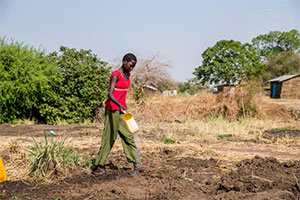 Farming on the Outskirts of Juba. Credit: UN Photo/JC McIlwaine
Promoting human and planetary health is a central focus of the United Nations, as laid out in the 2030 Sustainable Development Goals (SDGs). World hunger and unsustainable farming practices continue to be pressing concerns for the world. According to the 2025 State of Food Security and Nutrition in the World report by the Food and Agriculture Organization (FAO), 673 million people faced hunger in 2024. There are stark regional disparities, with the FAO projecting that 60% of the world population facing hunger will reside in Africa by 2030. Globally, the prevalence of food insecurity has remained consistently higher for women than men.
Sustainable and efficient national food systems are essential in preserving health, education, environmental well-being, peace, economy, and security. However, creating sustainable food systems can be a challenging endeavor, as food production takes a heavy toll on the environment. The agricultural sector accounts for a significant portion of greenhouse gases. Finding safe, sustainable, and ethical strategies to feed the world is crucial in ensuring planetary longevity. A recent initiative from 2023, the EU Regulation on Deforestation-free Products (EUDR), seeks to advocate for sustainable food systems. The main driver of deforestation is the expansion of agricultural land used to produce commodities like cattle, wood, cocoa, coffee, etc. The EUDR is part of the 2020 European Green New Deal and the EU Biodiversity Strategy for 2030 and aims to limit Europe’s consumption of products linked with deforestation by requiring that companies prove that their products are deforestation-free. Despite aiming to achieve major strides in sustainability, policies such as EUDR also raise socioeconomic concerns for targeted countries. Many emerging Latin American economies are impacted by the policy, and have raised the question of how developing countries can grapple with the tensions between economic development and advancing sustainability.
IPS has been at the forefront of providing compelling and insightful stories on communities facing hunger as well as the cost of food production. IPS uses statistics from FAO, the World Food Programme (WFP) and the International Fund for Agricultural Development (IFAD) to bring relevant and hard-hitting facts to readers. This gathering of information and data from such organizations helps bring the best stories from IPS journalists working in the different regions in consultation with experts on the ground.

The Week with IPS

NEXT STOP - SDGs
Tracking global progress towards a sustainable world