
Sunday, September 20, 2026



News and Views from the Global South
Food Security and Nutrition

The Sustainable Use of Wild Species is Important for Everyone
You probably use wild species far more often than you realise. For many people, especially in more developed economies, the use of wild species sounds like something quite removed from their everyday lives – something perhaps more relevant to other people, in other countries.
Ending Hunger in America: Here’s What the White House Conference on Hunger, Nutrition and Health Should Do to Be Inclusive
This September, the White House will convene a conference on Hunger, Nutrition, and Health. Leading up to the conference, the White House is organizing several virtual listening sessions across America to hear firsthand from people impacted by food insecurity and to collect ideas about how to end hunger and hunger-related diseases and disparities.
Disability Inclusion Lifts Rural Ugandan Families From Poverty
Lawrence Akena was born 32 years ago with microcephaly. Because of his neurological condition, he didn't go to school or benefit from skills training.
How to Stop the ‘Hunger Pandemic’ During COVID-19
Johnny, living in the United States (US), goes to his school and gets free breakfast and lunch there. There may not be enough food for dinner at home. But he knows that he can get fed at school. Sadly, however, after the pandemic, schools were closed, which meant no breakfast and no lunch for him.
The World’s Worst Food Crisis for Decades – and What to do About It
This is what happens when you starve. With no food, the body’s metabolism slows down to preserve energy for vital organs. Hungry and weak, people often become fatigued, irritable and confused. The immune system loses strength. As they starve, people—especially children—are likelier to fall sick or die from diseases they may have otherwise resisted. Cholera, respiratory infections, malaria, dengue, and diphtheria kill more people in famines than starvation itself.
Developing Countries and the Perfect Storm
Part I: What Should Developed Countries Do?
Developing countries – in Africa, in Asia, in Latin America and in the Middle East - are facing a combination of crises that are unprecedented in recent times. Over the last three years they have had to face the COVID-19 crisis, the food crisis, the energy crisis, the climate change crisis, the debt crisis and, on top of all this, a global recession. The crises have overlapped, and each has added to the problems created by the previous ones.

How the Russia-Ukraine Conflict Impacts Africa
While Africa is yet to fully recover from the socio-economic repercussions of the COVID-19 pandemic, the Russia-Ukraine conflict poses another major threat to the global economy with many African countries being directly affected.
A Global Food Crisis: Shortage Amidst Plenty
India is being asked by the US government and the IMF to reconsider its decision to suspend wheat exports. Their cited concern is that export restrictions will exacerbate food shortages amidst Russia's invasion of Ukraine. But the argument does not stand ground technically or morally.
Debt Distress in Africa: Problems and Ways Forward
The COVID pandemic has had a profoundly negative impact on Africa’s sovereign debt situation. Currently, 22 countries are either in debt distress or at high risk of debt distress.
Russian Invasion Blamed for 44 Million People Marching Towards Hunger & Starvation
The Russian invasion of Ukraine last February has triggered multiple crises in several fronts: the deaths of thousands of civilians, the destruction of heavily populated cities, the rise in military spending in Europe, a projected decline in development assistance to the world’s poorer nations; the demolition of schools and health-care facilities — and now the threat of hunger and starvation.
Give Edible Insects a Chance as an Alternative High-Quality Protein Source, say Scientists
Growing up in Samoya Village of Bungoma County in the Western part of Kenya, Elvis Wanjala has fond childhood memories of the rainy season, chasing and catching black-bellied winged termites in the rain.
Bringing Seeds of Hope to Farmers
Amidst a backdrop of rising food insecurity worldwide and a global food supply chain crisis, many countries are attempting to increase the level of food self-production. One improved input for farming which is receiving renewed attention is improved seed. The two most populous countries in the world, China and India, have recently made ground-breaking moves to improve their competitive position by developing new seeds which will improve their food production and increase resilience to climate change. So far, in 2022, new regulations on using biotechnology (genetic modification and gene editing) have been put in place by both countries to ultimately allow smallholder farmers to benefit from these new seeds.
Perils of Hunger, Food Insecurity in Southern Africa- Challenges & Opportunities
Food systems are under severe stress around the world now. The thresholds of tolerance are already exceeding limits with millions facing acute food and water scarcity throughout all continents. Over a quarter of Africa’s population are facing hunger and food insecurity. Conflict, droughts, flooding, rising unemployment, inequality, economic crises, and the impacts of Covid-19 pandemic have been ravaging the Continent on an unprecedented scale.
Indian Agriculture Towards 2030
India began its journey as an independent nation in 1947 with fresh memory of the Bengal Famine of 1943 which claimed 1.5 to 3 million lives. Against this backdrop, the First Five Year Plan (1951-56) prioritized agriculture which, however, shifted to heavily industrialization in the second Plan.
The Middle East’s Food Crisis Spells Disaster
In a short period, the war in Ukraine has already had a major effect on the world economy. The United States and the European Union have levied sanctions on an unprecedented scale against Russia, energy prices have skyrocketed, and with the Black Sea closed, the world’s most fertile region is no longer linked to its markets. This will cause an appreciation of food prices that could wreak havoc in the European periphery.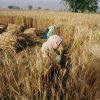
Why Russia’s War on Ukraine Poses a Risk to Global Food Security
The situation in Ukraine is first and foremost a humanitarian crisis, and the food security and wellbeing of the people of Ukraine should be our immediate concern. However, because of the dominant roles of Russia and Ukraine in global food, fuel and fertiliser markets, there are also massive knock-on effects for people around the world. This is particularly true for the supply and cost of food. Here are three ways that the invasion of Ukraine leads to potential risks to food security in other countries.
Donors Must Rethink Africa’s Flagging Green Revolution, New Evaluation Shows (Commentary)
• A scathing new analysis of the Alliance for a Green Revolution in Africa (AGRA) finds that the program is failing at its objective to increase food security on the continent, despite massive funding from the Bill & Melinda Gates Foundation and the US, UK, and German governments.
Addressing Global Food Security with Optimism and Resilience
In an exclusive interview with IPS, Ambassador Cindy Hensley McCain, Permanent Representative of the US Mission to the food and agriculture organizations of the United Nations in Rome, Italy, shares her thoughts on food security, sustainable food systems, the impact of climate change on food production, conflicts and the ongoing crisis in Ukraine, and her plans while working with the Food Agricultural Organization of the United Nations (FAO), International Fund for Agricultural Development (IFAD) and World Food Programme (WFP) with Farhana Haque Rahman and Sania Farooqui.
What This Year’s “No 1 Central Policy Document” Tells Us about Beijing’s Food Security and Rural Revitalisation Ambitions
The recently published “No 1 central policy document” (“No 1 document”), China’s national blueprint for rural policy, further demonstrates Beijing’s commitment to safeguarding food security and advancing rural revitalisation. The document’s release comes against an increasingly complicated geopolitical environment which, along with factors, such as disruptions to the global food chain supplies and worsening climate change impacts, have forced Beijing to rethink how its national goals can be achieved.
Lessons from Liberia for Scaling Poverty Reduction Globally
For the past three years, BRAC International has been piloting in Liberia an adaptation of its acclaimed Graduation approach, whose impact on reducing extreme poverty was first proven in Bangladesh. The success of the Liberia pilot, which I managed, provides not only further proof of impact but vital lessons that can enhance and accelerate scaling of the approach globally.
War in Ukraine Poised to Threaten Global Food Security
The war in Ukraine is a catastrophe for that country and for the world. In any crisis it is the most vulnerable that will be most affected, and this time it is no different.« Previous Page — Next Page »


More than 820 million people in the world are still hungry today, underscoring the immense challenge of achieving the Zero Hunger target by 2030. Hunger is rising in almost all subregions of Africa and, to a lesser extent, in Latin America and Western Asia. There is great progress seen in Southern Asia in the last five years, but the prevalence of undernourishment in this subregion is still the highest in Asia. A disturbing fact is that about 2 billion people in the world experience moderate or severe food insecurity. The lack of regular access to nutritious and sufficient food that these people experience puts them at greater risk of malnutrition and poor health. Although primarily concentrated in low- and middle-income countries, moderate or severe food insecurity also affects 8 percent of the population in Northern America and Europe.
In every continent, the prevalence rate is slightly higher among women than men.
With regard to nutrition indicators, if current trends continue, the 2030 SDG Target to halve the number of stunted children will not be met nor the 2025 World Health Assembly target to reduce the prevalence of low birthweight by 30 percent. The trends of overweight and obesity are additional reason for concern, as they continue to rise in all regions, particularly among school-age children and adults. The most recent data show that obesity is contributing to 4 million deaths globally and is increasing the risk of morbidity for people in all age groups.
The State of Food Security and Nutrition in the World, a joint report by the United Nations agencies, FAO, IFAD, WFP, UNICEF and WHO reaffirms their commitment to working together to overcome emerging challenges and free the world from hunger, food insecurity and malnutrition. The report shows that the global level of the prevalence of undernourishment has stabilised; however, the absolute number of undernourished people continues to increase, albeit slowly.


The Week with IPS

Tracking global progress towards a sustainable world
