
Wednesday, November 11, 2026



News and Views from the Global South
Gender Violence
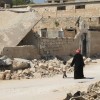
Fighting Violence Against Children as a Global Problem
One billion children experienced physical, sexual or psychological violence in the last year, according to the US Centers for Disease Control and Prevention (CDC), prompting the launch of a new global partnership to tackle the problem here Tuesday.
Latin American Development Depends On Investing In Teenage Girls
Latin America’s teenage girls are a crucial force for change and for promoting sustainable development, if the region invests in their rights and the correction of unequal opportunities, according to Luiza Carvalho, the regional head of UN Women.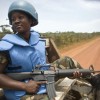
Time for tough action to stop sexual exploitation by UN peacekeepers
"Gentlemen, there are no bad soldiers, only bad officers", said Napoleon Bonaparte to his military staff after they complained that the poor quality of soldiers was inhibiting success on the battlefield. We as former Army officers, totally believe in the sage words of Napoleon.
Closing the Gaps in Sexual Education for People with Disabilities
From forced sterilisation to sexual abuse, young women and men with disabilities are much more likely to have their sexual and reproductive health rights violated than other people.
First Independent Expert To Tackle LGBTI Discrimination: “Historic Victory”
Human rights groups have described the UN Human Rights Council's (HRC) decision on Thursday to appoint an independent expert to target the ongoing discrimination of lesbian, gay, bisexual, transgender and intersex (LGBTI) people all over the world as a "historic victory."
Breaking the silence on Gender Based Violence
The Ministry of Public Service, Youth and Gender Affairs in partnership with the United Nations Population Fund (UNFPA) is establishing and strengthening sexual and gender based violence (SGBV) recovery centres in the country. One such center was launched at the Kilifi County Hospital on 01 July 2016 in collaboration with the Kilifi County Government.
Civil Society Under Serious Attack
Despite their contribution to social justice, civil society organisations came under “serious attack” in 109 countries in 2015, according to a new report published by CIVICUS Monday.Women’s Health Takes Center Stage at UN Population Awards
Social Scientist, Carmen Barroso and Polish Organisation, Childbirth in Dignity received the United Nations Population Awards here Thursday for their outstanding work in population, improving individuals’ health and welfare, and specifically for their decades-long leadership in women's rights.
Bringing Back Our Girls Is Not The End of The Story
"Wherever war reaches there is rape, and wherever rape is there is trauma, pain and terror” Zainab Bangura, Special Representative of the Secretary General on Sexual Violence in Conflict said here last week.
Lords of the Campus
Thomas Pogge is a professor of philosophy at Yale University, one of the most eminent educational institutions in the world. From there he directs the Global Justice Centre, which advocates, among other issues, the premise that the wealthy countries of the world have a moral and ethical responsibility towards providing aid to poorer nations.
UN Staff Unions Demand Stronger Action on Sexual Abuse
The United Nations claims it is doing its best to curb widespread sexual abuses in its peacekeeping operations overseas – from Haiti all the way to the Central African Republic.
Fearing Violence, LGBT Refugees Rarely Seek Help
Despite their extreme vulnerability, lesbian, gay, bisexual, transgender and intersex (LGBTI) refugees often do not seek the assistance they need, since revealing their sexual or gender identities can put them in grave danger.
An Elite Club of Suicide Bombers
It is always baffling, isn’t it, to see the yawning difference in our responses in South Asia to a gathering communal threat, for instance, as opposed to the catastrophic prospect of nuclear annihilation? Only recently, Pakistan toggled between public outcry and terrified whispers when teeming mourners showed up at the funeral of an executed religious zealot, the savage killer of a popular provincial governor.
Case for Overcoming the Ostrich Syndrome
The final week of May 2016 was a grisly one. More than 700 asylum seekers and migrants died as three boats attempting to carry them to Italy sunk in the Mediterranean, and the death toll for the year crossed 2000. A week ago, Unicef reported a doubling of the number of unaccompanied children arriving as asylum seekers this year. The report also highlighted that these children are subjected to sexual violence, forced prostitution and other forms of abuse.
The Paradox of Refuge: Rise of Gender-Based Violence in Times of Crisis
Since the outbreak of war in 2011, 9 million Syrians have fled from their homeland, creating one of the gravest migrant crisis’ the world has ever seen. However, what happens to these vulnerable migrants once they secure the refuge they so perilously seek? Can refuge really bring safety to all? Or is ‘the refugee camp' nothing more than the creation of another war, in this case, fought against one’s own troubled people. Particularly, for those who are traditionally stigmatized, such as women and girls.
Children of a Lesser God: Trafficking Soars in India
Sunita Pal, a frail 17-year-old, lies in a tiny bed in the women’s ward of New Delhi’s Ram Manohar Lohia Hospital. Her face and head swathed in bandages, with only a bruised eye and swollen lips visible, the girl recounts her ordeal to a TV channel propped up by a pillow. She talks of her employers beating her with a stick every day, depriving her of food and threatening to kill her if she dared report her misery to anybody.
A Courageous Life After Escaping the Lord’s Resistance Army
Evelyn Amony’s bravery not only helped her survive and escape captivity from the Lord's Resistance Army (LRA), but has made her an advocate for thousands of abducted women and children who face long term consequences after returning home.
Combating Rape Requires Cultural Change in Brazil
The outrage in Brazil over the gang-rape of a 16-year-old girl by more than 30 men prompted mass protests by thousands of women on the streets of cities around the country, while activists complain that the response to the case by politicians has been misfocused.
Majority of Vulnerable Refugees Will Not Be Resettled in 2017
Only a small percentage of the world’s most vulnerable refugees will be resettled in 2017, according to new figures released by the UN High Commission for Refugees (UNHCR) this week.
The Roots of Misogyny
The outpouring of anger and revulsion at the recent spate of murders of young women who tried to exercise their basic rights will go to waste if the causes of increase in such cases are not seriously tackled.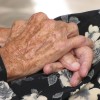
Governments Slow to Respond to Elder Abuse
Although instances of elder abuse are widespread around the world, many government responses have been inadequate.« Previous Page — Next Page »





One in three women around the world have been subject to violence. Women face physical, sexual, and psychological violence in both public and private. Taking forms such as violence in the intimacy of a relationship, human trafficking, and sexual exploitation, gender violence is an issue that affects women in all countries. Only two-thirds of countries have outlawed domestic violence, leaving millions of women unprotected from abuse including from marital and de facto partners in many cases. Additionally, through human trafficking countless women are subjected to sexual exploitation and sexual violence, including horrific acts such as genital mutilation. Today many actors from individuals, to multinational organizations work to address these issues. These articles help to shed light on the violence that women experience every day and how its is being addressed.

The Week with IPS

Tracking global progress towards a sustainable world
