Languages
Tuesday, November 17, 2026



News and Views from the Global South
Gender

Women and Girls Imperative to Science & Technology Agenda
Can you imagine an entire day without access to your mobile phone, laptop, or even to the internet? In our rapidly changing world, could you function without having technology at your fingertips?
Women of Haitian Descent Bear the Brunt of Dominican Migration Policy
A middle-aged woman arranges bouquets of yellow roses in a street market in Little Haiti, a slum neighbourhood in the capital of the Dominican Republic. “I don’t want to talk, don’t take photos,” she tells IPS, standing next to a little girl who appears to be her daughter.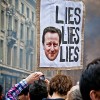
Cameron at large: Want Not to Become a Terrorist? Speak Fluent English!
“Do you speak English fluently? No? Then you risk to become a terrorist!.” IPS posed this dilemma to some young Muslim women living in Cairo, while explaining that this appears to be UK prime minister David Cameron's formula to judge the level of Muslim women's risk to fall, passively, into the horrific trap of extremism.
Women’s Empowerment Will Accelerate Kenya’s Economic Prosperity
When President Barack Obama made his first visit to Kenya as US President in July 2015, one of the poignant messages he left was an exhortation for communities to shun cultures that degrade women and girls.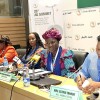
Women’s Rights First — African Summit
Despite the enormous challenges facing Africa now, the leaders of its 1.2 billion plus inhabitants have decided to spotlight the issue of Human Rights With a Particular Focus on the Rights of Women in their 26th summit held in Addis Ababa on 21-31 January this year. Why?
Combating HIV among Teens
Keziah Juma is coming to terms with her shattered life at the shanty she shares with her family in Kenya’s sprawling Kibera slum where friends and relatives are gathered for her son’s funeral arrangements. While attending an antenatal clinic, Juma who is only 16 years discovered that she had been infected with HIV. “I went into shock and stopped going to the clinic, that is why they could not save my baby and I have been bed-ridden since giving birth two months ago,” she told IPS.
Bali holds Family Planning Conference Amidst Many Unmet Needs
Porter Ngengh Tike is in her late thirties, but looks well over 50. For 8 hours every day, she carries around a large bamboo basket on her head, delivering supplies to local traders in the biggest traditional market of Bali – Pasar Badung. At the end of the week, she earns about 18 dollars - a sum that Tike uses for food, household expenses and her 10- year old son’s education. So, when it comes to seeing a doctor, there is no money, says Tike who suffers from genital infections.Spanish Member of Congress Causes Controversy after Breastfeeding in Parliament
A member of the Spanish Congress, Carolina Bescana, of the anti-austerity Podemos Party, created a controversy last week when she took her six-month old baby to work and openly breastfed him during a session. The delegate was widely criticized by almost all parties for her action and the event has spurred a lively debate on the image of mothers who juggle motherhood with their jobs.The State We’re In: Ending Sexism in Nationality Laws
Everyone has the right to be born with a nationality – safe, fearless and free – and secure in their human right to equally transfer, acquire, change or retain it. There is no reason why over 50 countries should still have sexist nationality and citizenship laws, which largely discriminate against women, potentially putting them and their families in danger and denying them the rights, benefits and services that everyone should enjoy.
Tanzania: Girls Struggle to Avoid Forced Marriage, Yearn to Learn
Maria was barely 16 when her father removed her from school to marry her off to a man 20 years older than she was just so that the family could receive eleven cows as her dowry.
Africa, Only If It Bleeds It Leads?
Africa is clearly one of the most negatively impacted regions in the world, not helped by the increasing trend of the mainstream media to focus on tragic news, following a self-imposed rule: “if it bleeds it leads”.
Seven Top Challenges Facing African Women
Economic exclusion; financial systems that perpetuate their discrimination; limited participation in political and public life; lack of access to education and poor retention of girls in schools; gender-based violence; harmful cultural practices, and exclusion of women from peace tables, are the major standing barriers to achieving gender equality in Africa.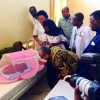
Maternal and Child Health Key to Kenya’s Economic Growth
On Friday, 06 November 2015, we had the honor of meeting the First Lady of Kenya Ms Margaret Kenyatta, a tireless advocate for “every woman and every child”, during the launch of the Beyond Zero campaign in Mandera County, North-Eastern Kenya, a place which has often been described as ‘the worst place on earth to give birth’.
Once Bitten, Twice Shy: Teen Mother Fights the Odds and Wants to be a Nurse
Being a single mother at the age of 19 is not what most teenage girls want for themselves. But this is the life Esther Mkwakwasa is living in Namphungo village in Mulanje District. Orphaned at the age of 14, Esther saw herself being moved from one foster home to another until she got pregnant.2016 Potential Landmark Year for Women Leaders in US and UN
The United Nations is hoping 2016 will be a landmark year for gender empowerment – not only for the world body but also for the United States.
India Needs to “Save its Daughters” Through Education and Gender Equality
Women constitute nearly half of the country's 1.25 billion people and gender equality -- whether in politics, economics, education or health -- is still a distant dream for most. This fact was driven home again sharply by the recently released United National Development Programme’s Human Development Report (HDR) 2015 which ranks India at a lowly 130 out of 155 countries in the Gender Inequality Index (GII). India trails behind most Asian countries, including lesser developed Bangladesh and Pakistan which rank 111 and 121 respectively, and fares not much ahead of war-ravaged Afghanistan at 152.
Detained, Female and Dying: Why Prisons Must Treat Women’s Health Needs
It is a grim fact that prisoners in most countries suffer from poorer health than non-prisoners, and that their right to health is not always protected. But for certain groups these rights can be even more elusive. Such is the case for women.
Wrong Time of the Month: a Rights Gap for Developing Countries’ Girls
The onset of menstruation is a landmark event in the life of a young woman. Yet many complications and challenges accompany such an event. One in 10 adolescent girls miss school and eventually drop out due to menstruation-related issues.
2015 – A Giant Leap for Womankind (Part 2)
Against the backdrop of escalating extremism and conflict globally, 2015 also marked the 15th anniversary of Security Council resolution 1325 on Women and Peace and Security (WPS ) with a Global Study and Review on its effective implementation strongly addressing the impact of conflict on women and their essential role in conflict prevention, peacemaking and peace building. The landmark UNSC resolution 2242 (October 2015) calls for effective and accelerated implementation of the WPS Agenda by all actors.
2015 – A Giant Leap for Womankind (Part 1)
2015, the final year of the United Nation’s Millennium Development Goals (MDGs), heralds the beginning of the most critical fifteen years for the realization of the new Sustainable Development Agenda that the international community launched along with renewed Climate Change and Financing for Development (FfD) compacts.
‘Good, But Not Perfect’, Pacific Islands Women on Climate Deal
Women leaders in the Pacific Islands have acclaimed the agreement on reducing global warming achieved at the United Nations (COP21) Climate Change conference in Paris as an unprecedented moment of world solidarity on an issue which has been marked to date by division between the developing and industrialized world. But for Pacific small island developing states, which name climate change as the single greatest threat to their survival, it will only be a success if inspirational words are followed by real action.« Previous Page — Next Page »


Women make up half the world's population, but don't nearly share half of the world's wealth, well-being and opportunity. Two-thirds of the world poor are women, disproportionally exposing women to precarious living conditions, disease and unmitigated natural disasters. The media, meanwhile, remains a male-dominated sector in much of the world, contributing to women's voices lacking a crucial amplifier to put their concerns on political agendas and unleash the development potential of their ingenuity. Rather than then stereotypical victims of local and global forces, women are also organizer, innovators, conservators and community builders. These are some of their stories.

The Week with IPS

NEXT STOP - SDGs
Tracking global progress towards a sustainable world
Tracking global progress towards a sustainable world
