Languages
Thursday, November 12, 2026



News and Views from the Global South
Gender
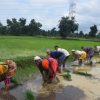
In the Midst of Conflict, India’s Indigenous Female Forest Dwellers Own their Land
Jam Bai, an Indigenous farmer from Korchi village in western India, is a woman in hurry. After two months of waiting, the rains have finally come and the rice saplings for her paddy fields must be sown this week while the land is still soft.
The Nairobi Summit – Towards a Watershed Moment
In 2019 a female scientist created an algorithm that gave the world the first ever images of a black hole. Working with a team of astronomers, physicists, mathematicians and engineers, a young woman led the development of a computer program that in her own words enabled them to “achieve something once thought impossible.”
Domestic Violence and the Role of Education
Trying to teach and inspire youngsters is a daunting task. Many teachers tend to suffer from a harrowing, bad conscience, obliged as they are to follow routines, rules, and regulations set down by their employers while knowing that these are difficult to apply and provide with desired results. Worst is a nagging feeling of inability to reach out to the students. Most teachers want their pupils to be good learners, critically thinking individuals who feel gratified and keen to change things for the better.
On Brutality of Violence Against Women
On a cold night in December 2012, a ghastly crime was committed in New Delhi which stunned the world. Six men dragged helpless Nirbhaya-a 23-year-old female physiotherapy intern- to the back of the bus and raped her one by one. As she kept fighting off her assailants by biting them, one of the attackers inserted a rusted rod in her private part, ripping her genital organs and insides apart. She died a few days later. One of the accused died in police custody in the Tihar Jail. The juvenile was convicted of rape and murder and given the maximum sentence of three years' imprisonment in a reform facility, and subsequently released. The Supreme Court awarded the death penalty but legal complications have prevented its execution.
Saudi Arabia Easing Male Guardianship: But More is Needed
It comes as welcome news that authorities in Saudi Arabia have taken important steps towards dismantling the repressive male guardianship system, which treats women in the country as minors.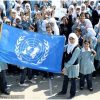
UNRWA Faces Donor Backlash Amidst Charges of Sexual Misconduct & Nepotism
The UN Relief and Works Agency (UNRWA), which has been undermined by a sharp cut in US contributions, has been embroiled in a scandal that threatens to jeopardize its very future.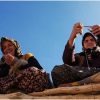
Social Norms & Women’s Access to Financial Services
How do financial services providers (FSPs) shape gender norms that restrict or expand women’s access to financial services? In more ways than you might think, and there are good reasons why FSPs should be aware of this.
Power is a Privilege & a Responsibility: Q&A with Justin Trudeau, Prime Minister of Canada
It’s on all of us to make gender equality a reality – which means harnessing our collective power to build a gender equal world. By empowering girls and women, realizing sexual and reproductive health and rights, tackling gender-based violence, and confronting the combinations of sexism, misogyny, racism, and colonialism, we can take steps towards true gender equality.
Women, Power, & Changing Face of Political Representation in Latin America & the Caribbean
Gender inequality is about power asymmetries. In the late 1970s, Robert Putnam reflected on the status of women in policy decisions in his comparative study on political elites. Quoting Elizabeth Vallance, he concluded that, “where power is, women aren’t.”.
How Widespread is Human Trafficking in the US?
The United States is no exception to the practice of modern day slavery—a crime for which it is rarely held accountable at the United Nations.
Sexual Exploitation of Minors is a Crime Against Humanity
If they pay for it, men tend to believe they have the right to do anything to a woman’s body. You pay for your own entertainment without a thought about who you are paying and what cause you are supporting. Money is used as an excuse for and a means to oil a machinery that generates lots of profit while keeping pimps and other perpetrators out of the reach of the law.
US Leads Donor Funding to Fight HIV/AIDS Amidst Overall Decline
Since 2010, donor funding to fight HIV/AIDS in low-and middle-income countries has dropped significantly, according to a new report released here.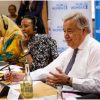
Women Are Pivotal in the War on Terror
On 10 July 2019 I was honored to moderate a meeting with women’s groups for the UN Secretary General Mr. Antonio Guterres, whose aim was to better diagnose the role of women in the prevention or instigation of violent extremism.
The Fight to End Violence Against Women in the Asia-Pacific Region
Parliamentarians met in Laos last week to discuss violence against women and girls. The meeting was organized by the Asian Population and Development Association (APDA) and hosted by the National Assembly of Laos.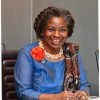
Let’s Talk About Sex – and Why Power Matters
Every year on World Population Day (July 11), UNFPA receives queries from journalists about the total number of people around the world. Numbers are indeed important because they help governments develop policies that respond to evolving needs for services such as education and health.
Sustainable Development Needs a Hardware Update
When UN Member States adopted the 2030 Agenda and its SDGs in September 2015, they signalled with the title Transforming our World that ‘business as usual’ is no longer an option and fundamental changes in politics and society are necessary.
Paraguay Moves Towards Sustainable Commodities
The statistics are alarming. By 2050, the world will require an estimated 60 percent growth in agricultural production to meet the food demand of a population of close to 9 billion people.
Unseen and Unsafe: Violence Against Women within Migrant Families
Refugee and migrant women often face inescapable violence in the home. And the potential for intimate forms of violence is exacerbated by humanitarian crises and job insecurity.
Is there a Co-Relation Between Human Development & SDGs?
“People are the real wealth of nations,” began the first Human Development Report (HDR). That 1990 report marked a turning point in the global development debate.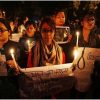
India’s Criminal Justice System is Failing Victims of Sexual Violence
Early in 2018, India was shaken by the horrific details surrounding the abduction, gang rape, and murder of an 8-year-old girl in Kathua, a district in the north Indian state of Jammu and Kashmir.10 digital solutions for women entrepreneurs win support from United Nations’ FinTech Innovation Fund
(ESCAP) - A crowdfunding platform for women farmers, online marketplaces for women-produced goods and services, and e-wallet enabled lending were among ten of the winning business models which will be co-funded by the United Nations to improve access to finance for women-owned, managed or led micro, small and medium enterprises (MSMEs) in the region.« Previous Page — Next Page »





Women make up half the world's population, but don't nearly share half of the world's wealth, well-being and opportunity. Two-thirds of the world poor are women, disproportionally exposing women to precarious living conditions, disease and unmitigated natural disasters. The media, meanwhile, remains a male-dominated sector in much of the world, contributing to women's voices lacking a crucial amplifier to put their concerns on political agendas and unleash the development potential of their ingenuity. Rather than then stereotypical victims of local and global forces, women are also organizer, innovators, conservators and community builders. These are some of their stories.

The Week with IPS

NEXT STOP - SDGs
Tracking global progress towards a sustainable world
Tracking global progress towards a sustainable world
