Languages
Friday, November 13, 2026



News and Views from the Global South
Global

Weaponizing Science in Global Food Policy
In July, the United Nations will convene “Science Days”, a high-profile event in preparation for the UN Food Systems Summit later this year. Over the course of two days, the world will be treated to a parade of Zoom sessions aimed at “highlighting the centrality of science, technology and innovation for food systems transformation.”
COVID-19 as Instigator of Bigotry, Chauvinism and Megalomania
By the end of April 2019, a government campaign to vaccinate more than 40 million children under five against polio in Pakistan was suspended after a series of attacks on health workers and police. On 23 April, a police officer protecting polio workers was gunned down in Bannu, the same day a polio worker was in Lahore seriously wounded by a father “protecting his child from vaccination”, these incidents were followed by the murder of another police and a health worker under his protection. Health workers were also seriously wounded in the districts of Sindh, Balochistan and Punjab. Afghanistan and Pakistan are the only countries where polio remains, in all other nations of the world vaccination campaigns have eliminated the disease. In April this year, three female polio vaccine providers were killed in Afghanistan.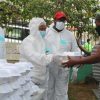
A Time for Systemic Solutions in Latin America & the Caribbean
The first wave of COVID-19 never ended in Latin America and the Caribbean (LAC). Since the region became a hotspot for the pandemic in June 2020, successive waves have continued to build upon the first.
Maldives’ UN General Assembly Presidency Renews Hope for Small Island Developing States
Earlier this month, Abdulla Shahid, the Maldives’ foreign minister, was elected President of the 76th Session of the United Nations General Assembly (UNGA), which commences in September.
Digital Media on the Frontline: Supporting the Ones who Support the Rest
For Dr Farzana Khan, a frontline worker and a second-generation immigrant from Pakistan living in California, social media helped her connect and realign herself during the COVID-19 pandemic.
The Importance of Being Listed: Why Politics Threaten the Protection of Children in Armed Conflict
Frontline workers who document and respond to violations against children have faced a particularly challenging last year, from the impact of Covid-19 on operations and child protection to the record levels of displacement worldwide to the ever-worsening threats from militaries and non-state armed groups.
Boldly Finance Recovery to Build Forward Better
COVID-19 has become a “developing country pandemic”, retreating from the North’s mass vaccination. With developing countries heavily handicapped, the International Monetary Fund (IMF) warns of a “dangerous [new] divergence”.
Kuciak Case Retrial An Opportunity to Break Global Cycle of Impunity in Journalist Killings
A ruling last week ordering a retrial in the murders of a Slovak journalist and his fiancée has led to a “unique” opportunity to break a global cycle of impunity in journalist killings, press freedom groups have said.
Education Cannot Wait for Refugee Children in Crisis, says Yasmine Sherif
With financing, the number of out-of-school refugees could be reduced to zero, Yasmine Sherif, Director of Education Cannot Wait (ECW) says, as the world commemorates World Refugee Day.
The Energy Revolution Is Here: How to Be Part of It
The industrial revolution took 100 years. The digital revolution, two decades. The next global revolution, the energy revolution, has already begun. But how fairly and how fast it happens is the biggest challenge of our time.
For People with Disabilities, COVID-19 Lays Bare the Weaknesses in Social Safety Nets
People with disabilities were particularly hard hit by the social and economic impacts of efforts to control COVID-19.
Call for Political Belt-tightening to Prevent Drought Becoming the Next Pandemic
“Drought is on the verge of becoming the next pandemic and there is no vaccine to cure it.”
Apocalypse Now? Christian Fundamentalists and COVID-19
Will a British ICC Chief Prosecutor be Brave Enough to Investigate UK & its Allies?
As British barrister Karim Khan QC begins his term as ICC chief prosecutor, his first steps should be to proceed with investigations into alleged war crimes involving UK allies in Afghanistan and Palestine.
Setting the Stage for Wars During a Global Pandemic
Looking through my emails for the last year, I was struck by how often the adjective “unprecedented” occurred. The term, of course, referred to the global Covid-19 pandemic. One would imagine that this unprecedented year would result in unprecedented trends in other aspects of life.
Soil for Survival: Countries Commit to Halt Land Degradation
India’s Prime Minister Narendra Modi has told the first United Nations General Assembly meeting on desertification and drought in a decade, that his country’s report card will show it is well on track to meet its land restoration commitments.
World’s Nuclear Arms on High Operational Alert — & Ready to Strike
The world’s nine nuclear armed states have downsized their military arsenals, but made up for their loss by increasing the number of weapons on high operational alert, according to a new report from the Stockholm International Peace Research Institute (SIPRI).
Powerful States Push Tax Race to the Bottom
Last week, the largest rich countries, home to most major transnational corporations (TNCs), agreed to a global minimum corporate income tax (GMCIT) rate. But the low rate proposed and other features will deprive developing countries of their just due yet again.
The Real Price of Marriage in South Sudan
August of this year will mark the one-year anniversary of the end of South Sudan’s civil war, yet recent surges of violence suggest that peace is far from being realized. These attacks by armed groups include instances of sexual violence against women and girls.
Why Mixed Messages Could Turn Boris Johnson’s Glasgow Climate Summit Dream into a Nightmare
How are preparations for the Glasgow Climate Summit in November proceeding? Currently, we are more than halfway through three weeks of virtual preparatory negotiations taking place in June. These online talks are challenging in their own right, just as many had feared (see: ‘Should the 2021 Climate Summit in Glasgow Still Take Place?’).
UN Scientists: Climate Change and Biodiversity Loss. Two Parts. One Problem.
Earth is in the throes of multiple environmental crises, with climate change and the loss of biodiversity the most pressing. The urgency to confront the two challenges has been marked by policies that tackle the issues separately. Now, a report by a team of scientists has warned that success on either front is hinged on a combined approach to the dual crises.« Previous Page — Next Page »


The Week with IPS

NEXT STOP - SDGs
Tracking global progress towards a sustainable world
Tracking global progress towards a sustainable world
