Languages
Wednesday, November 25, 2026



News and Views from the Global South
Headlines
With Poverty & Hunger Skyrocketing, is a Global Economic Rescue Package the Answer?
The United Nations has been relentlessly pursuing a highly-ambitious blueprint for the sustainable future of humanity –harking back to the adoption of a new global economic agenda by the General Assembly back in 2015.
The SDGs, COVID-19 and the Global South: Insights from the Sustainable Development Report 2020
COVID-19 has claimed more than 550,000 lives and disrupted the entire world, sparing no region. As of July 2020, the number of daily new confirmed cases and deaths due to COVID-19 are growing rapidly in Latin America and the Caribbean, especially in Brazil and Mexico but also in many African countries as well as India. As highlighted in a recent article, these numbers are likely underestimated given the reduced testing capacity in many low and middle-income countries.
Dealing with Food Insecurity, on a Longer Term
African countries are beginning to reopen borders, and this is finally enabling many citizens to resume their normal life. However, there is still an urgent need for African countries to prioritize agriculture to tackle food insecurity issues that have been exacerbated by COVID and will continue to be an issue into the near future. According to the latest estimates by the United Nations World Food Programme, COVID-19’s compounding effects could drive 270 million people into food insecurity.
Covid-19 Cannot Be Defeated by a Divided World
Announcing an independent evaluation of the global Covid-19 response on 9th July, World Health Organization (WHO) Director-General Dr Tedros Adhanom Ghebreyesus asked why it has been “difficult for humans to unite and fight a common enemy that is killing people indiscriminately?”.
IPS Webinar: Gender Equality Crucial in ‘Building Back Better’ Post-COVID-19
While men are more likely to die from COVID-19, women are facing the full blow of the socio-economic fallout from the ongoing pandemic as well as seeing a reversal in equality gains made over the last two decades, says an all-women panel of international thought leaders, who met virtually during a discussion convened by IPS.
Fog Traps Save Chilean Farming Community from Severe Drought
"The harvested water has helped us at critical times and the fog nets have also brought us visibility. Today we produce beer here and many tourists come," says Daniel Rojas, president of the Peña Blanca Agricultural Community in Chile.
Coronavirus Shows the Dangers of Letting Market Forces Govern Health and Social Care
In March, 10,000 NHS staff signed a letter to UK prime minister Boris Johnson demanding better protection against COVID-19. Nurses and doctors wanted to treat patients without fear of infecting them and to minimise their own risk of falling ill. But they lacked the proper protective equipment.
UN Chief Remains Focused on Re-election While Geneva Staff Feel Abandoned
Two years have passed since the introduction of the illegal pay cuts imposed on staff in the Professional category-- and above-- working for the UN in Geneva, following a cost of living survey conducted by the International Civil Service Commission (ICSC) in 2016.
Cheap or Adequate and Accessible to Everyone?
The COVID-19 pandemic has revealed some lesser-known realities, or some we had not wanted to think about, and exposed its consequences for the right of people to feed themselves in dignity.
Q&A: Understanding COVID-19’s Impact on Food Security and Nutrition
While it is too early to assess the full impact of the global COVID-19 lockdowns, at least 83 million to 132 million more people may go hungry this year -- 690 million people were classified as hungry in 2019 -- as the pandemic has highlighted the vulnerabilities and inadequacies of global food systems.
Countdown to a Bitter Battle Over the Water of the Nile?
In the 1990s, after the collapse of the USSR, the idea that water would drive the wars of the future took hold among analysts and the media. Three decades later and that grim prospect has, fortunately, not yet materialised, and international cooperation, despite its ups and downs, is the norm in the management of transboundary waters.
Re-Conversion of Hagia Sophia into a Mosque a Very Trumpian Move
President Erdogan’s “reconversion” of the Hagia Sophia, into a mosque is a very Trumpian move, making a populist gesture to his base evoking shared misconceptions of history, reckless of its actual diplomatic and economic cost.
How Senegal is Providing Reproductive Health Services to those Who can Least Afford it
Pregnant with her second child, 30-year-old Ndiabou Niang was enduring pelvic pain, but couldn’t afford to access prenatal care in Diabe Salla, a village on the outskirts of the small town of Thilogne in north-east Senegal. Her husband was unemployed and her earnings of under CFAF 10,000 (17 USD) from selling seasonal fruits in the local market were insufficient to make ends meet.
Can Private Finance Really Serve Humanity?
The recent explosion of private finance has nursed the hope, dream or illusion that it can be mobilized for the public good, e.g., to achieve the Sustainable Development Goals, associated with Agenda 2030. However, such hopes ignore how changes in financial investing have deeply transformed corporations, national economies and prospects for the world economy and social progress.
Electrification of Transport: A Challenge for Urbanised Latin America
Electric transport, still limited in Latin America despite its urban benefits, could expand during the post-pandemic economic recovery, says Adalberto Maluf, president of the Brazilian Association of Electric Vehicles (ABVE).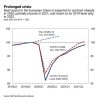
Toward a More Resilient Europe
Europe, like the rest of the world, faces an extended crisis. An element of social distancing—mandatory or voluntary—will be with us for as long as this pandemic persists. This, coupled with continued supply chain disruptions and other problems, is prolonging an already difficult situation. Based on updated IMF projections released last month, we now expect real GDP in the EU to contract by 9.3 percent in 2020 and then grow by 5.7 percent in 2021, returning to its 2019 level only in 2022. If an effective treatment or vaccine for COVID 19 is found, the recovery could be faster—but the opposite would hold true if there are large new waves of infection.
Providing an Education in Favour of Senegal’s Girls
When Fatima* became pregnant in the middle of the school year and dropped out, she was disowned by her parents. Hers is a story that could have ended as another statistic of dropout rates among female learners in Senegal.
Miracle or Mirage? Gangs and Plunging Violence in El Salvador
After decades of harrowing gang crime, homicides have plunged in El Salvador on the watch of the new president, Nayib Bukele. Faced with the growth of the MS-13 and 18th Street gangs, previous governments resorted to “iron fist” policies to crush them, only to find these fuelled a backlash.
The Fuzia Story: Empowering Women Through the Fusion of Cultures and Ideas
A young and dynamic digital platform, named Fuzia, has attracted millions of women social media followers and 100,000 active global users with its eclectic mix of content. The platform showcases women’s talent and provides a support network.
India’s Fisheries: Past, Present, and Future
Fisheries and aquaculture are an important source of food production, nutritional security, employment, and income in India. The fisheries sector is a direct source of livelihoods for more than 20 million fishers and fish farmers; contributes INR 1.75 trillion annually to the gross value added to India’s economy; and is a major export earner, with fish being one of the most important agricultural commodities to be exported from India.
On World Youth Skills Day, Don’t Forget the Importance of Soft Skills
It’s no secret that under pandemic lockdown for so many months, young people around the world have coped in tremendous ways. They have found new outlets for learning and creative channels for developing and using their skills.« Previous Page — Next Page »


