Languages
Wednesday, November 25, 2026



News and Views from the Global South
Headlines

Research Provides the Bricks and Mortar for Our Food Systems to ‘Build Back Better’
The COVID-19 pandemic has exposed the structural weaknesses of today’s food systems, showing how quickly global networks of food production, trade and supply can waver under the impact of a single disease.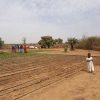
‘One CGIAR’ with Two Tiers of Influence? The Case for a Real Restructuring of Global Ag-Research Centres
While the ‘CGIAR System’ may sound like a technocratic body, few organizations have exerted as much influence on today’s food systems as this network of global agricultural research centres. Since its inception at the height of the ‘Green Revolution’ in 1971, the CGIAR has driven advances in crop breeding and agricultural mechanization and modernization across multiple continents. Its mission – to develop knowledge and innovation for agriculture in the global South – is as relevant today as ever, in light of climate change, COVID-19 and a host of additional challenges.
Inadequate Water & Sanitation Threatens Women’s & Girls’ Development in Senegal
With Tabaski (Eid al-Adha) around the corner, 11-year-old Fatoumata Binta from Terrou Mballing district in M'Bour, western Senegal, wakes up early and joins her brothers Iphrahima Tall and Ismaila to fetch water from a river several miles from home.
South China Sea Provocations & Meeting China Halfway
In the words of (ret.) Colonel Lawrence Wilkerson, Secretary of Defense Colin Powell’s Chief of Staff, the Trump Administration has been dangerously “poking China in the eye.”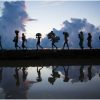
The Great Migration Clash
The world is in the midst of the Great Migration Clash, a bitter struggle between those who “want out” of their countries and those who want others to “keep out” of their countries. More than a billion people would like to move permanently to another country and no less than a billion people say fewer or no immigrants should be allowed to move into their countries.
COVID-19 Impact Means Women and Girls Will Still Eat Last, Be Educated Last
Catherine Bertini, former executive director of the World Food Programme, began the IPS United Nations Bureau webinar “The Impact of the COVID-19 Pandemic on Women and Girls” by reminiscing on a talk she gave in 1995 entitled “Women eat last”. She remarked that after 25 years, the phrase is still something that is relevant to the present day.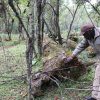
How Kenya’s Indigenous Ogiek are Using Modern Technology to Validate their Land Rights
The Ogiek community, indigenous peoples from Kenya’s Chepkitale National Reserve, are in the process of implementing a modern tool to inform and guide the conservation and management of the natural forest. The community has inhabited this area for many generations, long before Kenya was a republic. Through this process, they hope to get the government to formally recognise their customary tenure in line with the Community Land Act.
Tobacco Industry Factoid on Illicit Trade Leading Governments Astray
A factoid is unreliable information repeated so often that it becomes accepted as fact. One such factoid repeatedly echoed across the globe by the tobacco industry is that tobacco tax increases worsen cigarette smuggling.
Dead Rats Can Raise GDP, Economists Have Lowered It
GDP has been increasingly challenged on many grounds as a measure of economic and social progress. Clearly, GDP does not take account of other dimensions of wellbeing, natural resource depletion or environmental damage.
Pros and Cons of a Super Regulator – The case of the Spanish Regulator
On June 10, 2020, Senator Ricardo Monreal, President of the Political Coordination Board of the Senate of Mexico, presented a legislative initiative to reform Article 28 of the Political Constitution of the United Mexican States, in order to cluster in a single regulator of economic competition, the Telecommunications, Broadcasting and Energy sectors.
Challenging Cultural Norms and Removing Stigma is Key to Confronting Lesotho’s Rape Culture
The Covid-19 pandemic has exposed and given rise to a new, deeply concerning wave of rape culture in Lesotho. Although the true extent is not known yet, we have noticed concerning reports that the onset of the pandemic has worsened sexual violence with more women and girls being confined to small living places whilst social tensions are exacerbated.
The World Needs You. Now.
“We may all come on different ships, but we are in the same boat now,” Martin Luther King Jr once said. His timeless wisdom rings truer than ever today for the many challenges the world is facing. COVID-19, continued armed conflicts and forced displacement, climate-change induced disasters, deep divides and widespread discrimination mark the human family in the 21st century.
The United Nations At 75 Remains The World’s Moral Compass
“The vision and promise of the United Nations is that food, healthcare, water and sanitation, education, decent work and social security are not commodities for sale to those who can afford them, but basic human rights to which we are all entitled.” Those were the poignant words of the UN Secretary-General, Antonio Guterres, in a hard hitting speech on 18 July 2020 to mark Mandela Day.
Digital Divide Exposes Class Divide in Nepal Schools
Nepal’s education system was in crisis long before the pandemic hit. But with schools closed now for four straight months, remote learning has also exposed the class divide in access to education.
Are Women-led Startups Key to Sustainability in Senegal?
Growing up in the Senegalese capital of Dakar, Siny Samba (28) watched with fascination as her grandmother made snacks for her family, using the fresh fruit from their garden. She would often help her grandma make these snacks to feed the neighbourhood children.
Relevance of US Peace Corps in Post-COVID World
I have had 5-decade long and happy association with the Peace Corps since I was a 7th grade student in the hills of Nepal. My wonderful Peace Corps teachers were instrumental in helping transform my life. And the 4000+ Peace Corps Volunteers who have served in Nepal have contributed immensely to my country’s development.
How will COVID-19 Affect Women Entrepreneurs?
Two years ago, Aarti started a small business selling traditional handicrafts online, supporting artisans based in rural Karnataka. After an initial phase of struggle, she had a steady stream of orders and was looking to procure manufacturing equipment and scale the impact of her business by supporting more local talent.
Journals Opening up to Science Expertise from South
Global travel restrictions as a result of the COVID-19 outbreak are accelerating a trend towards research publications focussed on the global South, publishers say.
World Poverty: We Have Come So Far… But So Much Further To Go
The United Nations’ first Sustainable Development Goal (SDG) is “No poverty,” the most important because almost half the world, 46%, lives on less than $5.50 a day according to the World Bank. But world attention has turned away from poverty. Why?
COVID-19-Induced Policy Reforms in India: Overcoming Implementation Challenges
The global outbreak of Covid-19 has disrupted the food system throughout the world. From initial lockdown by the national governments to slow the spread of the Covid-19 to now opening of the economies have had food security implications for all players in the food system ranging for the farmers to consumers and the rest in between.
US, UK, Interpol Give Ghana Phone Hacking Tools, Raising Journalist Concerns on Safety & Confidentiality
In May 2019, senior members of Ghana’s law enforcement posed for photos with the U.S. ambassador to their country at a ceremony in the capital, Accra. Between them they held boxes and bags, gifts from the U.S. government to Ghana which, according to one of the recipients, contained Israeli phone hacking technology.« Previous Page — Next Page »


