Languages
Monday, August 24, 2026



News and Views from the Global South
Health

Motorcycle Diaries with a Twist
Four women, two motorbikes, 64 districts and a journey of a lifetime, this is the story of Dr. Sakia Haque from Bangladesh. In November 2016, Dr Haque co-founded “Travelettes of Bangladesh - Bhromon Konya,” a women's only group, with the motto of “empowering women through travelling.” This platform is not just an ordinary online travel group, but it is a platform of connection, sisterhood and networking of almost 60,000 girls and women in Bangladesh that empowers them by teaching them to raise their voices and encourages them to step out of their comfort zones and to “go see the world”.
Leprosy Must Not Be Forgotten amid the Covid-19 Pandemic
The 74th World Health Assembly (WHA) takes place from May 24 to June 1. This year's gathering is likely to be dominated by Covid-19, but here I want to talk about a different disease—leprosy—and a resolution that was adopted at the WHA exactly 30 years ago.
Are There Clinically Meaningful Differences Between anti-COVID-19 Vaccines?
Despite claims by the industry and some politicians, there are no clinically meaningful differences among the variety of vaccines approved under emergency use authorisation (EUA).
To Beat Covid, Beat HIV, & Beat Inequality, Find the Money
In this time of intersecting crises – the Covid crisis, the HIV crisis, the inequality crisis, and more – progress on all these crises is being blocked by another crisis: finance.
Developing Countries Desperately Need COVID-19 Financing
Failure to sufficiently accelerate comprehensive efforts to contain COVID-19 contagion has greatly worsened the catastrophe in developing countries. Grossly inadequate financing of relief, recovery and reform efforts has also further set back progress, including sustainable development.
Why Our Best Defence Against Future Pandemics is Data
Although the World Health Organization’s (WHO) mission to discover its origins has proven inconclusive, the Covid-19 pandemic has nonetheless clearly highlighted the need for better care, attention, and investment in animal health systems.
Five Ways to Measure the Effects of a Crisis Like COVID-19 on Women
Social issues and crises tend to affect women more severely than men. This is why terms like “gender mainstreaming policies”, “gender-responsive interventions” and “gender-based budgeting” have become more popular in public policy discussions in recent years.
Wanted: Transparency & Accountability in Pandemic-Related Spending
Governments around the world are playing a crucial role in providing lifelines to people and firms to help combat the pandemic and its economic fallout. To support the effectiveness of these efforts, it is important that such spending be subject to adequate transparency and accountability.
Nepal is the New COVID-19 Hotspot: The Cure is Citizen Engagement
If you live in Nepal, a quick survey of friends and family will quickly prove how rapidly Covid-19 infection rates have spiked. For instance, out of 50 people we called last week, more than half had been infected, with the rest reporting that their extended families or colleagues had tested positive.
– Successful Crop Innovation Is Mitigating Climate Crisis Impact in Africa –
On the occasion of World Environment Day, 5 June 2021, drawing from IPS’s bank of features and opinion editorials published this year, we are re-publishing one article a day, for the next two weeks. The original article was published on February 17 2021

When Battling Covid-19 Becomes a National Policy Disaster
We went to the Kanatte cemetery, Sri Lanka’s largest, where most of us, residents of the capital city, would end up sooner or later. But it was deserted, and so we had time for a leisurely chat with some of the helpful staff there, albeit after admiring some of the grave sites and remaining beautiful trees.
Large Corporations Cash in on COVID-19 Relief Funds
Poverty and income inequality are being deepened as COVID-19 relief funds are handed out to large corporations instead of social protection programmes in developing countries, groups involved in a new study of COVID-19 bailouts have said.
Put People Before Profits for Progress
Millions of people are expected to die due to delayed and unaffordable access to COVID-19 tests, treatment, personal protective equipment and vaccines. Urgent cooperation is desperately needed to save lives and livelihoods for all.
Women Leading Somalia’s Health System
Somalia is one of the most complex regions of the world, with threats and political instability, extreme weather conditions, movement of internally displaced people (IDPs), decades of conflict, poverty-related deprivation, poor health and communicable diseases that are killing people. There is a constant risk of gender violence making women, children and members of minority groups particularly vulnerable, and more so during displacement or while seeking work. Three decades of civil war and instability have weakened Somalia’s health system and contributed to it having some of the lowest health indicators in the world. The COVID-19 pandemic has added yet another strain on its tremendously fragile infrastructure presenting unexpected challenges and dilemmas.
– Mining giant Rio Tinto Face Environmental, Human Rights Complaint in Papua New Guinea –
On the occasion of World Environment Day, 5 June 2021, drawing from IPS’s bank of features and opinion editorials published this year, we are re-publishing one article a day, for the next two weeks. The original article was published on January 4 2021
COVID-19 Vaccination: The Barriers to Achieving Global Herd Immunity
The global community is conducting a rapid vaccination program against the SARS.Cov-2 virus, using several vaccines, authorised for emergency use. To date, the percentages of adults vaccinated vary between less than 2% to over 90% in different countries.
Where are the Women? How Pandemic Decisions are Ingraining Global Gender Bias
There are teams of experts around the world right now tackling the coronavirus pandemic, providing pathways to put an end to this deadly global scourge and charting the course for recovery.
Russia’s Sputnik Diplomacy
While Western countries were busy with their own vaccination campaigns, Russia has filled the leadership vacuum in developing countries. Amid the West’s scramble for vaccines, a trickle of news flies under the radar. Argentina becomes the first country in South America to produce Russia’s Sputnik V vaccine. The first shipment of Sputnik V is promised to Peru by May.
Reimagining Education with Imagination
The month of May marks mental health awareness month or mental health awareness week in several countries around the world. Many people will be reading posts and blogs about the importance of getting more sunshine and exercise to avoid the blues, about ways to deal with the stress of the pandemic, about dealing with everyday challenges that disrupt our striving for happiness.
COVID-19 Brings Fresh Challenges to Nigeria’s Leprosy-affected
 People affected by leprosy, also known as Hansen’s disease, are often stigmatised. In countries like Nigeria, many of them end up as beggars due to the psycho- and socio-economic problems they face. The COVID-19 pandemic has brought fresh challenges for them and life is getting increasingly difficult. Sam Olukoya in Lagos takes a look at how people affected by leprosy in Nigeria are faring in the face of the COVID-19 pandemic.

It Takes a Community to Defeat COVID-19
The media is awash with the devastating news of deaths and sufferings due to COVID-19 coming out of India. What most media outlets overlook is the way Indian communities are rallying to save lives, reduce sufferings and stop the current wave of the pandemic.« Previous Page — Next Page »


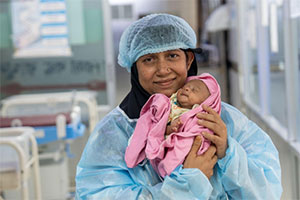 Credit: UNICEF/UNI944397/Mojumder
Since the onset of the 2000s, global life expectancy has seen an overall rise, attributed to significant technological and scientific innovations in healthcare. Due to an increased understanding of different conditions as well as a rise in cooperation among healthcare experts around the world, there have been major strides made in ensuring that as few people die from chronic illnesses as possible. Despite the belief that healthcare is a fundamental human right, people from low- or middle-class backgrounds, marginalized groups, and underdeveloped countries have far more limited access to basic healthcare services.
The COVID-19 pandemic showed how marginalized communities are disproportionately affected by health crises, proving that we have much work to do in ensuring that no one dies of terminal conditions. While the global response to the coronavirus saw significant strides in immunization and vaccine development, the global outbreak of mpox in 2022 and its upsurge in parts of Africa in 2024 must remind us to remain vigilant.
Other major disease outbreaks in recent years have been linked to the destruction of infrastructure during warfare. Notably, in 2024, the Gaza Strip witnessed a return of the poliovirus since its eradication in the region 25 years ago. Israel’s blockade on Gaza has resulted in the collapse of the region’s sewage plants and desalination plants, and also destroyed healthcare capacities. The UN stated that this lack of clean water and sanitation would lead to an outbreak of cholera and other deadly infectious diseases. The 2026 OCHA Humanitarian Situation Report confirmed that the over two years of conflict in Gaza has produced a catastrophic health emergency, with millions remaining dependent on relief aid amid tight restrictions and no functioning public health system.
IPS is committed to providing full and comprehensive coverage on healthcare challenges around the world. IPS seeks to address the multifaceted causes of such challenges, including unprecedented pandemics, conflict-driven disease outbreaks, as well as socioeconomic barriers to equal healthcare access. IPS is also dedicated to reporting on innovations in the healthcare industry.

The Week with IPS

NEXT STOP - SDGs
Tracking global progress towards a sustainable world
Tracking global progress towards a sustainable world
