
Wednesday, November 11, 2026



News and Views from the Global South
Indigenous Rights
BIODIVERSITY: Fighting for a Green Future
At just 13 years old, Felix Finkbeiner may be one of the youngest participants in the two-week U.N. Forum on Forests, but he already has years of environmental activism under his belt.
PERU: Rural Education Reflects Ethnic, Socioeconomic Inequalities
In rural villages in the Amazon district of Datem de Marañón in northern Peru, teachers often have 70 students in their one-room schoolhouses and travel two or three days to get to their jobs, said Emir Masegkai, describing the challenges of providing education in remote areas of this South American country.Dams Threaten Aboriginal Tribe
Over the years, the Kadars, a dwindling aboriginal tribe who live on the borders of the southern Indian states of Kerala and Tamil Nadu, have survived pestilences, extreme exploitation and even mass sterilisations. But a new government plan to build a hydroelectric dam across the Chalakudy River would have been the death knell for the group who now number about 1,500.Forest Summit Seeks “People-Friendly” Solutions
Earlier this month, on a hot and humid day in the Jambi province of Indonesia, a group of local farmers was critically injured after being shot as they attempted to harvest fruit on a contested palm plantation.Q&A: ‘Wherever There was Injustice, William Stood Up’
More than 70 years ago, an elderly Aboriginal man led the only known privately- organized demonstration against Kristallnacht (Night of the Broken Glass), the mass anti-Jewish pogrom across Germany and Austria.
ARGENTINA: Guarani Effort to Strengthen Culture Through Tourism
Since recovering part of their territory in 2005, an indigenous Guaraní community in the northeastern Argentine province of Misiones is working to maintain and expand a cultural tourism initiative.Easter Islanders Seek U.N. Intervention in Dispute with Chile
"We are a peaceful people. We don't like war. We don't want police and military on our land," said Erity Teave, an indigenous activist from the Chilean-administered Easter Island in the Pacific Ocean.MEXICO: Native Craftswomen Harness Their Skills
It took María de los Ángeles Carrillo, a native craftswoman from Mexico, eight months to weave a decorative junco reed basket, for which she won an 8,000 dollar prize from the Mexican government.
Malnutrition Has an Indigenous Face in Peru
Indigenous children under five in Peru's highlands regions still bear the brunt of chronic malnutrition, even though local authorities in those areas received millions of dollars worth of taxes between 2006 and 2010 from the mining companies operating there.
BRAZIL: Creation of Native Reserves Slowed Down Under Lula
In Luiz Inácio Lula da Silva's eight years as president of Brazil, he signed decrees creating just 88 indigenous reserves, far fewer than his immediate predecessors.CHILE: Flood of Indigenous Demands a Challenge for Government
While many are sceptical that the Chilean government will deliver on its promise of a shift in indigenous policy, the deadline is looming for the administration of Sebastián Piñera to live up to Inter-American Commission on Human Rights recommendations with respect to imprisoned members of the Mapuche community.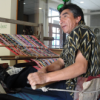
ECUADOR: Keeping Age-old Weaving Technique Alive
Outside the modest two-story adobe house, a flag of Ecuador flutters alongside a large sign that reads "Ikat: weaving demonstrations and sales." Hanks of yarn and colourful fabrics hang from the handrail running around the edge of the courtyard and balcony, and weaving looms can be seen inside.Indigenous Peoples Gain U.S., U.N. Recognition
As 2010 draws to a close, both the United States and the United Nations have reached out to one of the world’s most marginalised groups in society: indigenous peoples.
Q&A: “This Time There Will Be No Noah’s Ark”
"The market is not going to resolve the environmental crisis," says theologian and environmentalist Leonardo Boff, professor at Brazil's State University of Rio de Janeiro. The solution, he says, lies in ethics and in changing our relationship with nature.PERU: Sacrificing the Rainforest on the Altar of Energy
The construction of five hydroelectric dams in Peru as part of an energy deal with Brazil will do considerable damage to the environment, such as the destruction of nearly 1.5 million hectares of jungle over the next 20 years, according to an independent study.INDIA: Life Term for Activist a Setback for Human Rights
The life sentence served on Dr Binayak Sen on charges of helping Maoist rebels in eastern India has rattled people and organisations fighting to strengthen human rights in a country that prides itself on being the world’s biggest democracy.PERU: Decades On, Women Remain Last in Line for Justice
Investigations of the raping of women in the 1980s during Peru's counterinsurgency war have ground to a halt, even though the national Truth and Reconciliation Commission filed the respective complaints in 2004. Not one sentence has been handed down for the soldiers alleged to have committed the rapes, while more victims come forward.
Dire Development Issues Converge in the Drylands
Few are aware that close to one billion people in over 100 different countries are suffering from or severely threatened by intense desertification. Yet awareness is crucial, for it is human behaviour that has led to the proliferation of hyper- arid, uncultivable drylands over the past few decades.U.S., Last Holdout on Native Rights Declaration, Reverses Stand
U.S. President Barack Obama announced Thursday he was reversing the U.S.'s position and endorsing the United Nations Declaration on the Rights of Indigenous Peoples.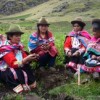
LATIN AMERICA: Rural Women, Success Stories and Exploitation
The traditional image of rural women in Latin America is shifting, from one of subsistence farmers raising their families to that of women playing a growing role in small- and large-scale commercial and productive activities. But behind that change lie both success stories and exploitation.
CLIMATE CHANGE: As Andean Glaciers Recede, Region Steps Forward to Adapt
The mountainous areas of South America's Andean nations supply water to the coastal cities, provide habitat to important biodiversity, and serve as natural barriers, but global warming threatens those regions, which are home to millions of people.« Previous Page — Next Page »





The planet's roughly 350 million indigenous peoples took notable steps on the international stage in the last decade. They got the world's governments to agree to create a body to represent them at the United Nations, the Permanent Forum on Indigenous Issues, and to appoint a special rapporteur responsible for their human rights. In 2007 a Universal Declaration on the Rights of Indigenous Peoples was approved by the UN. Yet the living conditions of most "tribal", "aboriginal", "native" or "first" peoples remain precarious. IPS, with its network of contributors at the UN and linked to indigenous communities worldwide, is committed to tracking the world community's efforts to do justice to the rights and aspirations of these peoples, with a special current focus on Latin America's 40 million rural indigenous peoples.

The Week with IPS

Tracking global progress towards a sustainable world
