Wednesday, October 14, 2026



News and Views from the Global South
Integration and Development Brazilian-style

Lithium and Clean Energy in Argentina: Development or Mirage?
The intense white brightness of the salt flats interrupts the arid monotony of the Puna in northwest Argentina, resembling postcards from the moon. Beneath its surface are concealed the world's largest reserves of lithium, the key mineral in the transition to clean energy, the mining of which has triggered controversy.
Solar and Biogas, the Perfect Agroenergy Duo in Brazil
 "They're the ideal duo," because the combination of solar and biogas sources makes it possible to provide electricity around the clock, one during the day and the other at night, says Anelio Thomazzoni, a pig farmer who has become a producer of clean energy in southwestern Brazil.
India’s Electric Mobility Needs Enabling Infrastructure to Pick up Speed
Dogged by intractable air pollution debilitating large northern swathes from mainly urban vehicle emissions, India earlier this year announced targets for a 40 percent non-fossil component in its fuel-mix by 2030 as part of its Nationally Determined Commitments (NDC) to the Paris accord on climate change. It aims for full electrification of public transit systems and of one-third private vehicles by 2030.
Water Is Worth More than Milk in Extrema, Brazil
"They called me crazy" for fencing in the area where the cows went to drink water, said Elias Cardoso, on his 67-hectare farm in Extrema, a municipality 110 km from São Paulo, Brazil's largest metropolis.
IDB Modernises Crucial Social and Environmental Safeguards
The Inter-American Development Bank (IDB) is in the process of modernising the social and environmental safeguards that govern the financing of projects considered vital for the construction of sustainable infrastructure in the Latin American region.
Rock Glaciers Supply Water to Highlands Communities in Argentina
In Argentina's Puna region, at 4,000 metres above sea level, the color green is rare in the arid landscape, which is dominated by different shades of brown and yellow. In this inhospitable environment, daily life has improved thanks to a system of piping water downhill from rock glaciers to local communities.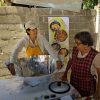
Solar Cookers Produce More Than Food for Mexican Women
The sun's rays are also used to cook food and thus replace the burning of firewood and gas, improve the health of local residents and fuel the energy transition towards the use of renewable sources - the objectives of an enterprise in the southern Mexican state of Oaxaca. 
Solar Energy Transforms Villages in Argentina’s Puna Highlands
"On moonless nights it was very difficult to walk around this town," says Celia Vilte, a teacher from San Francisco, a highlands village of just 54 people in the extreme northwest of Argentina whose centre is not a town square but 40 solar panels, which provide one hundred percent of its electricity.
Combining Biogas and Solar, the Best Energy Deal in Brazil
"Biogas is the best energy, it has no contraindications," and if you combine it with solar it becomes "the best energy business," at least in Brazil, says Anélio Thomazzoni.
In Southern Brazil, Need Becomes an Environmental Virtue
The state of Santa Catarina in southern Brazil is the largest national producer and exporter of pork and this year it also leads in exports of chicken, of which it is the second-biggest producer in the country.
Biogas Makes Pig Farming More Sustainable in Southern Brazil
Biogas has the potential to provide 36 percent of the electricity consumed in Brazil or replace 70 percent of diesel if purified as biomethane, according to the Brazilian Association of Biogas and Biomethane (Abiogas). 
Producing Energy from Pig and Poultry Waste in Brazil
Romário Schaefer is fattening up 3,300 pigs that he receives when they weigh around 22 kg and returns when they reach 130 to 160 kg - a huge increase in meat and profits for their owner, a local meat-processing plant in this city in Brazil.
Mexican Women Use Sunlight Instead of Firewood or Gas to Cook Meals
Reyna Díaz cooks beans, chicken, pork and desserts in her solar cooker, which she sets up in the open courtyard of her home in a poor neighborhood on the outskirts of this town in southwestern Mexico.
Producing Clean Energy from Pigsties in Brazil
Pigs, already the main source of income in this small municipality in southwestern Brazil, now have even more value as a source of electricity.
Using Renewable Energy and the Circular Economy to Fight Poverty in Argentina
On the outer edges of Buenos Aires proper, where the paved streets end and the narrow alleyways of one of Argentina’s largest shantytowns begin, visitors can find the En Haccore soup kitchen.
Solar Collectors and Solidarity Change Lives in Argentina
"This is the best thing ever invented for the poor," says Emanuel del Monte, pointing to a tank covered in black tarps protruding from the roof of his house. It forms part of a system built mostly from waste materials, which heats water through solar energy and is improving lives in Argentina.
Chilean Schools Recycle Greywater to Combat Drought
Children from the neighboring municipalities of Ovalle and Río Hurtado in northern Chile are harvesting rain and recycling greywater in their schools to irrigate fruit trees and vegetable gardens, in an initiative aimed at combating the shortage of water in this semi-arid region.
Indigenous Communities Head Towards Energy Self-Sufficiency in Guatemala
Because the government has never provided them with electricity, indigenous communities in the mountains of northwest Guatemala had no choice but to generate their own energy. 
Renewables to Become the Norm for the Caribbean
Jamaica and other Small Island Developing States (SIDS) are embracing renewable energy as part of their plans to become decarbonised in the coming decades.
Against All Odds, Indigenous Villages Generate Their Own Energy in Guatemala
In the stifling heat, Diego Matom takes the bread trays out of the oven and carefully places them on wooden shelves, happy that his business has prospered since his village in northwest Guatemala began to generate its own electricity.
The Amazon Seeks Alternatives that Could Revolutionise Energy Production
A large steel wheel, 14 meters in diameter and 1.3 meters wide, could be the energy solution of the near future, generating 3.5 megawatts - enough to supply a city of 30,000 people, according to a company in the capital city of the state of Amazonas in northwest Brazil.« Previous Page — Next Page »





South American imperialist power, or integrationist power? The role currently played by Brazil is perhaps located midway between these two extremes. On the other hand, there is no doubt about the dynamic nature of its economy or the influence of its corporations in Latin America. Wherever infrastructure, energy or the extraction of natural resources transcend borders in the region, Brazil tends to be a key player. What are the risks? What is the potential? What kind of development do dams and other major projects underway foment? What effect will they have on the population, and on nature? What will the new geopolitical order that is taking shape look like? With the support of the Mott Foundation, IPS is launching a series of investigative reports by Brazilian correspondent Mario Osava and a team of outstanding journalists in other key parts of the region, to produce a picture of the new course Brazil is taking in Latin America.

The Week with IPS

Tracking global progress towards a sustainable world