Languages
Saturday, November 28, 2026



News and Views from the Global South
Latin America & the Caribbean

Olympic Games End Decade of Giant Mega-projects in Brazil
An era of mega-events and mega-projects is coming to a close in Brazil with the Olympic Games to be hosted Aug. 5-21 by Rio de Janeiro. But the country’s taste for massive construction undertakings helped fuel the economic and political crisis that has it in its grip.
New Alliance to Shore Up Food Security Launched in Africa
As over 20 million sub-Saharan Africans face a shortage of food because of drought and development issues, representatives of the U.N. Food and Agriculture Organisation (FAO) and the Pan African Parliament (PAP) met in Johannesburg to forge a new parliamentary alliance focusing on food and nutritional security.
Lessons from Germany for Latin America’s Energy Transition
Germany has been undergoing an energy transition for over 20 years, and it can offer valuable lessons to Latin America with regard to promoting renewable energy and moving towards a low-carbon economy.
Colombia Includes Gender Focus for a Stable, Lasting Peace
The novel inclusion of a gender perspective in the peace talks that led to a historic ceasefire between the Colombian government and left-wing guerrillas is a landmark and an inspiration for efforts to solve other armed conflicts in the world, according to the director of U.N.-Women in Colombia, Belén Sanz.
Urban Land – a Key Building Block to Full Rights
Now that the wind no longer blows her roof off and her house belongs to her, Cristina López feels safe in the shantytown where she lives on the outskirts of the Argentine capital. But she and her neighbours still need to win respect for many more rights they have been denied.
No Medals for Sanitation at Rio Olympics
The biggest frustration at the Olympic Games, to be inaugurated in the Brazilian city of Rio de Janeiro on August 5, is the failure to meet environmental sanitation targets and promises in the city’s beaches, rivers, lakes and lagoons.
Climate Victims – Every Second, One Person Is Displaced by Disaster
Climate change and related extreme weather events have devastated the lives and livelihoods of tens of millions of most vulnerable people worldwide-- by far exceeding the total of all the unfortunate and unjustifiable victims of all terrorist attacks combined. However, the unstoppable climate crisis receives just a tiny fraction of mainstream media attention. See these dramatic facts.
Forests and Crops Make Friendly Neighbors in Costa Rica
While Latin America keeps expanding its agricultural frontier by converting large areas of forest, one country, Costa Rica, has taken a different path and is now a role model for a peaceful coexistence between food production and sustainable forestry.
400 Million People Live with Hepatitis But They Do Not Know
With some 400 million people around the world infected with hepatitis B or C, mostly without being aware, the United Nations top health agency encourages countries to boost testing and access to services and medicines for people in need to combat the 'ignored perils' of this disease.
Rights of Indigenous Peoples ‘Critical’ to Combat Climate Change
No longer it is about restoring the legitimate rights of over 370 indigenous peoples spread across 70 countries worldwide, many of them living in dire situation, but now about their central, critical role in combating climate change.
El Salvador Faces Dilemma over the Prosecution of War Criminals
The ruling of the highest court to repeal the amnesty law places El Salvador in the dilemma of deciding whether the country should prosecute those who committed serious violations to human rights during the civil war.
Beyond Rhetoric: UN Member States Start Work on Global Goals
UN member states “are going beyond rhetoric and earnestly working to achieve real progress” towards the Sustainable Goals, the members of the Group of 77 and China said in a ministerial statement delivered here on 18 July.
Forests: To Farm or Not to Farm? This Is the Question!
The dilemma is critical: on the one hand, there is an absolute need to produce more food for the world’s steadily growing population; on the other, there is pressing urgency to halt -and further revert- the increasing trend to deplete the forests, which are as necessary for human survival as it is for ensuring their dietary needs.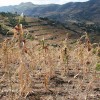
‘Monster’ El Niño Subsides, La Niña Hitting Soon
As if human-made armed conflicts, wickedness, rights abuse, gender violence, cruel inequality and climate catastrophes were not enough, now the saying “God Always Forgives, Men Sometimes, Nature Never” appear to be more true than ever. See what happens.
Women Empowerment Holds the Key for Global Development
Latin America's inclusion of women in its development model, with greater participation within the work force and improved wage conditions, was a decisive factor in the region's successful diminishment of extreme poverty.
Indigenous Villages in Honduras Overcome Hunger at Schools
Barely 11 years old and in the sixth grade of primary school, this student dreams of becoming a farmer in order to produce food so that the children in his community never have to go hungry. Josué Orlando Torres of the indigenous Lenca people lives in a remote corner of the west of Honduras.
Teachers and Students: Tip of Iceberg of Mexico’s Human Rights Crisis
Mexico is experiencing a monumental human rights crisis. There is abundant evidence of widespread human rights violations in the country, including torture, extrajudicial executions, enforced disappearances and violence against journalists and human rights defenders.
The Delusion ‘I Am Not Responsible’
- One of the many interesting details to be learned by understanding human psychology is how a person's unconscious fear works in a myriad of ways to make them believe that they bear no responsibility for a particular problem.
Latin American Development Depends On Investing In Teenage Girls
Latin America’s teenage girls are a crucial force for change and for promoting sustainable development, if the region invests in their rights and the correction of unequal opportunities, according to Luiza Carvalho, the regional head of UN Women.
Talking Openly – The Way to Prevent Teenage Pregnancy
In plain and simple language, an Argentine video aimed at teenagers explains how to get sexual pleasure while being careful. Its freedom from taboos is very necessary in Latin American countries where one in five girls becomes a mother by the time she is 19 years old.
International Organizations Concerned by El Niño Funding Gap
The response to the 2015-2016 severe El Nino - which has effected over 60 million people from Southern Africa, to South-East Asia to Latin America - remains severely underfunded.« Previous Page — Next Page » *#*

The Week with IPS

NEXT STOP - SDGs
Tracking global progress towards a sustainable world

