Languages
Wednesday, October 7, 2026



News and Views from the Global South
Latin America & the Caribbean

UN Admits it Needs to do More After Causing Haiti Cholera Epidemic
Update: On Thursday 18 August the United States Court of Appeals for the Second Circuit upheld the immunity of the UN from legal proceedings in the case of Georges et al v. United Nations et. al (the Haiti Cholera case) in accordance with the UN Charter and other international treaties. Six years since UN peacekeepers brought cholera to Haiti, the United Nations has finally accepted a greater degree of responsibility for its role in causing the outbreak, which has claimed tens of thousands of lives, and affected hundreds of thousands more.
The Time is Ripe to Act against Drought
Let us start with some good news. Sort of. The strongest El Niño in 35 years is coming to an end. [1]
Humanitarian Crises: Business Called to Take a Lead
With more than 65 million people forced to flee their homes due to violence and armed conflicts, this year’s Wold Humanitarian Day on August 19 will call on all governments and social sectors to work together to tackle this unprecedented human crisis.
Peruvians Say “No!” to Violence Against Women
Peruvians took to the streets en masse to reject violence against women, in what was seen as a major new step in awareness-raising in the country that ranks third in the world in terms of domestic sexual violence.
One Humanity? Millions of Children Tortured, Smuggled, Abused, Enslaved
Children are being smuggled, sexually abused, maimed, killed for their vital organs, recruited as soldiers or otherwise enslaved. Not only: 69 million children under five will die from mostly preventable causes, 167 million will live in poverty, and 263 million are out of school. And 750 million women will have been married as children by 2030.
Women’s Inclusion in Sports Competes in Rio Games
At the age of 14, Kaillana de Oliveira of Brazil knows she won’t be as tall as most professional basketball players, because of family genetics. But she is not letting that get in the way of her dream of standing out in the sport.
The Wild Cards
The Rio Olympics began with the signature fanfare that accompanies the Games every four years. However, unlike every year, the nature and size of the spectacle, the synchronised dancers, over-the-top fireworks and the millions spent brought a new set of disappointments with them.
Don’t Bash the Games
There have been few moments in my life as memorable as competing in the 1984 Olympic Games in Los Angeles. The chance to represent my country was a distinct honor, as was being part of the community of the Olympics — an event with the rare power to unite the world in the common spirit of competition and athletic excellence.
Native Plants Boost Local Diets in El Salvador
Juana Morales is cooking one of the most popular dishes in El Salvador: pupusas, corn tortillas with different fillings. But hers are unique: they are not made with the traditional corn tortillas, but use Maya nuts, a highly nutritional seed that has fallen out of use but whose consumption is being encouraged in rural communities.
Right to Education Still Elusive for Native People in Latin America
Education, the most powerful instrument in the struggle against exclusion and discrimination, is still elusive for indigenous people in Latin America who remain the most disadvantaged segment of the population despite their wide presence in the region.
Olympic Games End Decade of Giant Mega-projects in Brazil
An era of mega-events and mega-projects is coming to a close in Brazil with the Olympic Games to be hosted Aug. 5-21 by Rio de Janeiro. But the country’s taste for massive construction undertakings helped fuel the economic and political crisis that has it in its grip.
New Alliance to Shore Up Food Security Launched in Africa
As over 20 million sub-Saharan Africans face a shortage of food because of drought and development issues, representatives of the U.N. Food and Agriculture Organisation (FAO) and the Pan African Parliament (PAP) met in Johannesburg to forge a new parliamentary alliance focusing on food and nutritional security.
Lessons from Germany for Latin America’s Energy Transition
Germany has been undergoing an energy transition for over 20 years, and it can offer valuable lessons to Latin America with regard to promoting renewable energy and moving towards a low-carbon economy.
Colombia Includes Gender Focus for a Stable, Lasting Peace
The novel inclusion of a gender perspective in the peace talks that led to a historic ceasefire between the Colombian government and left-wing guerrillas is a landmark and an inspiration for efforts to solve other armed conflicts in the world, according to the director of U.N.-Women in Colombia, Belén Sanz.
Urban Land – a Key Building Block to Full Rights
Now that the wind no longer blows her roof off and her house belongs to her, Cristina López feels safe in the shantytown where she lives on the outskirts of the Argentine capital. But she and her neighbours still need to win respect for many more rights they have been denied.
No Medals for Sanitation at Rio Olympics
The biggest frustration at the Olympic Games, to be inaugurated in the Brazilian city of Rio de Janeiro on August 5, is the failure to meet environmental sanitation targets and promises in the city’s beaches, rivers, lakes and lagoons.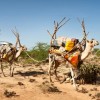
Climate Victims – Every Second, One Person Is Displaced by Disaster
Climate change and related extreme weather events have devastated the lives and livelihoods of tens of millions of most vulnerable people worldwide-- by far exceeding the total of all the unfortunate and unjustifiable victims of all terrorist attacks combined. However, the unstoppable climate crisis receives just a tiny fraction of mainstream media attention. See these dramatic facts.
Forests and Crops Make Friendly Neighbors in Costa Rica
While Latin America keeps expanding its agricultural frontier by converting large areas of forest, one country, Costa Rica, has taken a different path and is now a role model for a peaceful coexistence between food production and sustainable forestry.
400 Million People Live with Hepatitis But They Do Not Know
With some 400 million people around the world infected with hepatitis B or C, mostly without being aware, the United Nations top health agency encourages countries to boost testing and access to services and medicines for people in need to combat the 'ignored perils' of this disease.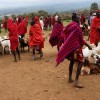
Rights of Indigenous Peoples ‘Critical’ to Combat Climate Change
No longer it is about restoring the legitimate rights of over 370 indigenous peoples spread across 70 countries worldwide, many of them living in dire situation, but now about their central, critical role in combating climate change.
El Salvador Faces Dilemma over the Prosecution of War Criminals
The ruling of the highest court to repeal the amnesty law places El Salvador in the dilemma of deciding whether the country should prosecute those who committed serious violations to human rights during the civil war.« Previous Page — Next Page » *#*

The Week with IPS

NEXT STOP - SDGs
Tracking global progress towards a sustainable world
Tracking global progress towards a sustainable world

