Languages
Friday, November 27, 2026



News and Views from the Global South
Latin America & the Caribbean
Opinion: The University for Peace, Chronicle of a Death Foretold
You've probably never heard of it. When, in 2007, I tentatively searched the web for “peace education” and Google told me that a U.N.-mandated University in Costa Rica was offering a master's degree in precisely that, I was dumbfounded. As soon as I set foot on campus, I fell in love with UPEACE.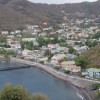
Views from the Caribbean ahead of COP21, the December 2015 Climate Change Summit in Paris – Building Resilience to Disaster: Adaptation
 From constructing barriers against rising sea levels to rehabilitating mangroves and providing agrometeorology services, the Caribbean isn’t waiting for a new international agreement on climate change to start implementing adaptation measures. But funding to roll out such projects on the necessary scale remains a key issue, and many communities remain desperately vulnerable to storms and flooding.

Industrial Fisheries Crowd out Artisanal Fisherpersons in South America
Millions of families on South America’s Pacific coast have long depended on artisanal fishing for a living. But they have been increasingly being pushed aside by the industrial fisheries that have made this region a major player in the global seafood industry.
Domestics in Mexico Face Abuse and Scant Protection
Her last two jobs left a bitter taste in the mouth of Yoloxochitl Solís, a 48-year-old single mother from Mexico. She sums up the experience in two words: abuse and discrimination.
Adaptation Funding a Key Issue for Caribbean at Climate Talks
With less than six months to go before the next full United Nations Conference of the Parties also known as COP 21 – widely regarded as a make-or-break moment for an agreement on global action on climate change – Caribbean nations are still hammering out the best approach to the talks.
Peru a Shining Example for South America’s Climate Action Plans
This week, Peru became the first South American nation to publicly announce its Climate Action Plan, or INDC. In doing so, it may have set the scene for a new wave of highly transparent and ambitious INDC submissions from the continent.
Organic Cacao Farmers Help Reforest Brazil’s Amazon Jungle
“Now we realise what a paradise we live in,” said Darcirio Wronski, a leader of the organic cacao producers in the region where the Trans-Amazonian highway cuts across the Xingú river basin in northern Brazil.
Infrastructure Investments in Emerging Economies Hit Record Levels – but at What Cost?
According to new data released by the World Bank Tuesday, investments in infrastructure in 139 emerging economies shot up to 107.5 billion dollars in 2014, with just five countries – Brazil, Colombia, India, Peru and Turkey – accounting for 73 percent of the total.
A Regional Foodbasket Plans for the Worst
Despite its highly variable climate, Guyana is the only Caribbean Community (CARICOM) country that enjoys food security. But rapid climate change could pose a challenge not only for Guyana, but for its Caribbean neigbours who depend on the South American country for much of their produce.
Why ACP Countries Matter for the EU Post-2015 Development Agenda
We are witnessing a shift in the original rationale behind the unique relationship between the European Union and the African, Caribbean and Pacific countries of the ACP group, which goes beyond the logic of “unilateral aid transfer”, “donor-recipient approach” and “North-South dialogue”.
Ni Una Menos – The Cry Against ‘Femicides’ Finally Heard in Argentina
In the wake of the massive response to their call to protest violence against women in Argentina, the organisers of this week’s demonstrations are starting to plan the steps to be taken to get results for their demand “Ni Una Menos” (not one less), taking advantage of the strength in numbers shown to obtain political support for public policies aimed at protecting women.
As Jamaica’s Prime Forests Decline, Row Erupts Over Protection
For Jamaica, planting more trees as a way to build resilience is one of the highest priorities of the government's climate change action plan. So when Cockpit Country residents woke up to bulldozers in the protected area, they rallied to get answers from the authorities.
Native Communities in Mexico Demand to be Consulted on Wind Farms
“It hurts us that our land is affected, and the environmental impacts are not even measured. Wind farm projects affect streams and hurt the flora,” said Zapotec Indian Isabel Jiménez, who is taking part in the struggle against the installation of a wind park in southern Mexico.
Jamaican Gov’t Sees IMF Successes but No Benefits for the Poor
For Jamaicans like Roxan Brown, the Caribbean nation's International Monetary Fund (IMF) successes don’t mean a thing. Seven consecutive tests have been passed but still, the mother of two can’t find work and relies instead on the kindness of friends and family.
Prolonged Drought Leaves Caribbean Farmers Broke and Worried
St. Lucian farmer Anthony Herman was hoping that next year he’d manage to recoup some of the losses he sustained after 70 per cent of his cashew crop withered and died in the heat of the scorching southern Caribbean sun.Indigenous Voices Ignored in Financing Panamanian Dam Project
Indigenous people who would be directly affected by the impact of a hydroelectric project in Panama were not consulted despite national and international human rights obligations to obtain their free, prior and informed consent, according to a just-released report.
Thousands Rally to Demand Freedom for Puerto Rican Activist
Children in strollers held placards. Those unable to make it into the streets leaned out of high-rise apartment building windows, shouting support to the river of protestors below. For hours, several city blocks became a mass of red and blue, as scores of people waved the national flag of Puerto Rico. One name was on everyone’s lips, but the cause was broader than a single man.
Garment Sweatshops in Argentina an Open Secret
The death of two Bolivian boys in a fire and the mistreatment and sexual abuse of a young Bolivian woman put the problem of slave-like labour conditions in clandestine sweatshops back in the headlines in Argentina.
Latin America’s Relative Success in Fighting Hunger
The Latin American and Caribbean region is the first in the world to reach the two global targets for reducing hunger. Nevertheless, more than 34 million people still go hungry.
Bahamas Builds Resilience Against a Surging Sea
Small Island Developing States (SIDS) have championed the phrase “1.5 to stay alive” in demanding that global temperature increases be kept as far below 1.5 degrees C as possible to limit the anticipated devastating effects of climate change on the world’s most vulnerable countries.
ACP Aims to Make Voice of the Moral Majority Count in the Global Arena
“Four decades of existence is a milestone for the ACP as an international alliance of developing countries,” Dr Patrick I. Gomes of Guyana, newly appointed Secretary-General of the African, Caribbean and Pacific group of countries, said at the opening of the 101st Session of the group’s Council of Ministers.« Previous Page — Next Page » *#*

The Week with IPS

NEXT STOP - SDGs
Tracking global progress towards a sustainable world

