Languages
Saturday, November 28, 2026



News and Views from the Global South
Latin America & the Caribbean

Laissez Faire Water Laws Threaten Family Farming in Chile
Family farmers in Chile are pushing for the reinstatement of water as a public good, to at least partially solve the shortages caused by the privatisation of water rights by the military dictatorship in 1981.
Pineapple Industry Leaves Costa Rican Communities High and Dry
Twelve years after finding the first traces of pesticides used by the pineapple industry, in the rural water supply, around 7,000 people from four communities in Costa Rica’s Caribbean region are still unable to consume their tap water.
School Gardens Combat Hunger in Argentina
In Argentina, where millions of families have unmet dietary needs despite the country’s vast expanse of fertile land, the Huerta Niño project promotes organic gardens in rural primary schools, to teach children healthy eating habits and show them that they can grow their own food to fight hunger.
Caribbean Looks to France as Key Partner in Climate Financing
By the time leaders of the international community sit down in Paris later this year to discuss climate change, at least two Caribbean leaders are hoping that France can demonstrate its commitment to assisting their adaptation efforts by re-joining the Barbados-based Caribbean Development Bank (CDB).
A Chimera in Growing Cooperation Between China and Brazil
A total of 35 agreements and contracts were signed during Chinese Prime Minister Li Keqiang’s visit to Brazil, as part of the growing ties between the two countries. But there is one project that drew all the attention: the Transcontinental Railway.
Latin America Must Address Its Caregiving Crisis
As in the rest of the world, the care of children, the elderly and the disabled in Latin America has traditionally fallen to women, who add it to their numerous domestic and workplace tasks. A debate is now emerging in the region on the public policies that governments should adopt to give them a hand, while also helping their countries grow.
Development Threatens Antigua’s Protected Guiana Island
In June 2014, Gaston Browne led his Antigua and Barbuda Labour Party to a resounding victory at the polls with a pledge to transform the country into an economic powerhouse in the Caribbean.
“Megaprojects” Can Destroy Reputations in Brazil
Megaprojects are high-risk bets. They can shore up the government that brought them to fruition, but they can also ruin its image and undermine its power – and in the case of Brazil the balance is leaning dangerously towards the latter.
Murders of Gays Raise the Question of Hate Crimes in Cuba
During the events surrounding the eighth annual celebration of the Day Against Homophobia in Cuba, it emerged that a young transsexual had recently been killed in the city of Pinar del Río near the western tip of this Caribbean island nation.
Poor Land Use Worsens Climate Change in St. Vincent
For 32 years, Joel Poyer, a forest technician, has been tending to the forest of St. Vincent and the Grenadines.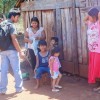
Pregnancy and Childbirth Still Kill Too Many Women in Latin America
In spite of strides in social progress, Latin America’s maternal mortality rates remain unacceptable, and many of the deaths are avoidable, occurring partly because of neglect of the prescriptions provided by experts: preventive action and health promotion.
IACHR Tackles Violence Against Native Peoples in Costa Rica
After years of violence against two indigenous groups in Costa Rica, the Inter-American Commission on Human Rights (IACHR) demanded that the government adopt measures by May 15 to protect the life and physical integrity of the members of the two communities.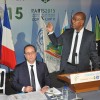
Caribbean Looks to Paris Climate Summit for Its Very Survival
Caribbean leaders on Saturday further advanced their policy position on climate change ahead of the 21st Conference of Parties, also known as COP 21, scheduled for Paris during November and December of this year.
Latin America’s Social Policies Have Given Women a Boost
Although they do not specifically target women, social policies like family allowances and pensions have improved the lives of women in Latin America, the region that has made the biggest strides so far this century in terms of gender equality, although there is still a long way to go.
Living the Indigenous Way, from the Jungles to the Mountains
In the course of human history many tens of thousands of communities have survived and thrived for hundreds, even thousands, of years. Scores of these largely self-sustaining traditional communities continue to this day in remote jungles, forests, mountains, deserts, and in the icy regions of the North. A few remain completely isolated from modern society.
Costa Rica’s Energy Nearly 100 Percent Clean
Costa Rica has almost reached its goal of an energy mix based solely on renewable sources, harnessing solar, wind and geothermal power, as well as the energy of the country’s rivers.
The Blue Amazon, Brazil’s New Natural Resources Frontier
The Atlantic ocean is Brazil’s last frontier to the east. But the full extent of its biodiversity is still unknown, and scientific research and conservation measures are lagging compared to the pace of exploitation of resources such as oil.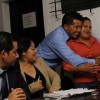
Draconian Ban on Abortion in El Salvador Targeted by Global Campaign
International and local human rights groups are carrying out an intense global campaign to get El Salvador to modify its draconian law that criminalises abortion and provides for prison terms for women.
In Nicaragua Marriage Is Only for ‘Him’ and ‘Her’
A new Family Code that went into effect in Nicaragua this month represents an overall improvement in terms of the rights of Nicaraguans. However, it has one major gap: it fails to recognise same-sex marriage, and as a result it closes the doors to adoption by gay couples.
Campaign Against Glyphosate Steps Up in Latin America
After the World Health Organisation (WHO) declared glyphosate a probable carcinogen, the campaign has intensified in Latin America to ban the herbicide, which is employed on a massive scale on transgenic crops.
Caribbean Stakes Out “Red Lines” for Paris Climate Talks
When the international climate change talks ended in Peru last December, the 15-member Caribbean Community (CARICOM), a political and economic union comprising small, developing, climate-vulnerable islands and low-lying nations, left with “the bare minimum necessary to continue the process to address climate change”.« Previous Page — Next Page » *#*

The Week with IPS

NEXT STOP - SDGs
Tracking global progress towards a sustainable world

