Languages
Tuesday, October 20, 2026



News and Views from the Global South
Migration & Refugees

Slavery Modernises, Adapts to Stay Alive in Brazil
"Slave labour is not declining; it has taken on new forms and is growing; it expanded to new sectors where it did not previously exist," said Ivanete da Silva Sousa, an activist in the fight against modern-day slavery in northern Brazil.
Personal Conviction Versus Fandom: The Case of Mitt Romney
The great American impeachment show has ended not with a bang, but with a whimper. The dirt was washed away from President Trump, the perfect Teflon Guy. Maybe his invulnerability comes from the fact that he appears to be more of a brand than a real person, adapted to a frame of mind that increasingly dominates social media – cheap entertainment, shallowness, vulgarity, invectives, and catchy phrases without support in well-founded facts. Trump is all and nothing, a shape shifting trickster pretending to be the role model for voiceless masses.
Not a pretty picture
Television news summarises daily what a new world order shaped by civilisationalists entails. Writer William Gibson's assertion that "the future is already here—it's just not evenly distributed" is graphically illustrated in pictures of hundreds of thousands, if not millions, of desperate Syrians fleeing indiscriminate bombing in Idlib, Syria's last rebel stronghold, with nowhere to go.
Nepal’s Baby Export
A major discrepancy between Nepal government and foreign records of the number of Nepali children adopted in North America and Europe has exposed a trafficking ring that involves various child welfare agencies in Kathmandu.
Zimbabwe’s Thin Line between Child Smuggling and Child Trafficking
Elton Ndumiso*, a bus-conductor who works the route from Zimbabwe’s capital, Harare, to neighbouring South Africa, sees it all the time: Zimbabwean women travelling with three or four children, who are clearly not their own kids, and taking them across the border.It’s a crime that most bus drivers or conductors either turn a blind eye to, or become accomplices in by assisting the women.

What Future for the Rohingyas after the ICJ Ruling?
 In a groundbreaking ruling in January 2020, the International Court of Justice demanded that Myanmar halt all measures that contribute to the genocide of the Rohingya community.

Globalization of Indifference: Ai Weiwei and the Refugee Crisis
Humans belong to a species that is constantly on the move . Since some Homo Sapiens 125,000 years ago began to move from the African continent, humans can be found all over the world, even in such utterly inhospitable places as the icebound plateaus of Antarctica. By moving, humans have tried to escape inadequate food-supply or otherwise unacceptable living conditions. Natural forces have forced them to leave, or even more commonly – violent actions by other humans. With them migrants have brought their means of expression and interaction, some of them expressed through their art.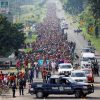
In a migrant’s story, facts are truer than fiction
Jeanine Cummins, the author of the latest American best-seller novel “American Dirt”, is taking a lot of flak for her story based on the experience of a Mexican woman named Lydia and her eight-year-old son who flee their home and cross over to the USA. Several critics have pointed out that Cummins exploited the harrowing experience of an illegal migrant but at the same time used “harmful stereotypes”. Some have even hinted that the novel glamorises the life of migrants and their struggles.Burkina Faso shattered by world’s fastest growing displacement crisis
The number of people displaced in Burkina Faso increased tenfold last year to over 560,000. The figure is predicted to skyrocket to 900,000 people by April as horrific violence continues to force families from their homes.
When economics prevails over genocide
(The Daily Star) - Two days after the Interna-tional Court of Justice (ICJ) approved emergency “provisional measures” asking Myanmar to stop persecution of the Rohingya in all forms— including killing, raping, and destroying homes and villages—two Rohingya women died in Rakhine State when the Myanmar army shelled a village. One of them was pregnant.Amnesty’s musical appeal for education of Rohingya and host community children
Amnesty International released a music video today on the occasion of the International Day of Education to encourage people of Bangladesh and around the world to support education for Rohingya children and those of host communities in Bangladesh.
Experts laud International Court of Justice Order on Myanmar to Halt all Genocidal Conduct
In a groundbreaking and much anticipated ruling delivered on Thursday, the International Court of Justice demanded that Myanmar halt all measures that contribute to the genocide of the Rohingya community.
Am I Abused or Am I a Failure to Adjust? – A Migrant’s Story
Every year hundreds of immigrants leave their homes and trail to a land of dream and hope where they aspire to find peace, happiness and sometimes a little bit of safety compared to what they leave behind.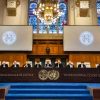
Top UN Court Orders Myanmar to Protect Rohingya from Genocide
Myanmar must take steps to protect its minority Rohingya population, the top UN court unanimously ruled on Thursday.
Global Inequality Continues to Grow: UNDESA Report
More than 70 percent of the global population is currently living in parts of the world where income inequality has grown, according to a World Social Report 2020 launched by United Nations Department of Economic and Social Affairs (DESA).
UN Special Rapporteur Offers Assistance to Indian Supreme Court in Case of Rohingya Deportation
University of California professor E. Tendayi Achiume, who is a United Nations Special Rapporteur, has recently offered her assistance to the Indian Supreme Court in a long hearing about India deporting Rohingya refugees to Myanmar.
In the Elusive Grip of an Abusive Partner: A Migrant’s Story
To live in a home with family, to have a safe environment, food and basic human necessities, are some of the essentials that most people expect to have without giving it all much thought. When a child is born, parents or caregivers are likely to provide these things. These expectations get renewed whenever someone gets married and moves to a new home, a different neighborhood, or a city. We can hardly find someone who will say that they were not expecting happiness and safety when stepping into a new relationship, or starting a new chapter of life. But these expectations of a better life turn disastrous for millions of people when they step into another country as a dependent.
2020: a Year Full of Danger
Let’s face what lies ahead with open eyes: 2020 is going to be a very tough year for the world, and developing countries in particular. The infant decade has already begun with the harbingers of climate disaster as thousands fled to beaches in Australia from raging bush fires, and the Middle East braced for more conflict after a U.S. air strike in Baghdad killed Iran’s top general.
Reflections for a New Year
In a world shaken by so many problems, it is difficult to look at 2020 and not make some kind of holistic analysis. While enormous progress has been made on many fronts, it is clear that the tide has turned, and we are now entering – or have already entered – a new low point in the history of humankind..
UN Chief Warns of Rising Misogyny, Xenophobia, Discrimination, Racism & Hate Speech
As we prepare to bid farewell to 2019, we must take a clearsighted look at the global situation and the new challenges we face. Our world is undergoing a shift. It is no longer bipolar or unipolar. But it is not yet truly multipolar. Balances of power are changing, creating new and dangerous risks.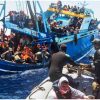
EU Policies Don’t Tackle Root Causes of Migration – They Risk Aggravating Them
According to political scientist Zaki Laïdi’s La tyrannie de l’urgence (The tyranny of emergency) from 1999, crisis and emergency situations leave no time for analysis, prevention or forecasting. As an immediate protective reflex, they prevent long-term solutions and pose a serious risk of jeopardising the future.« Previous Page — Next Page »





Human migration is a matter of global concern. Flows of migrants and refugees influence and change the social, economic and political dynamics of their destinations -- and the places they have left behind. IPS covers crucial issues such as migrant and refugee rights, irregular or undocumented migration, human trafficking, remittances, displaced persons and forced labour. And the positive: in many cases migration creates a new dialogue among civilisations. Migrants themselves become the building blocks of bridges connecting different cultures.

The Week with IPS

NEXT STOP - SDGs
Tracking global progress towards a sustainable world
Tracking global progress towards a sustainable world
