Languages
Tuesday, November 10, 2026



News and Views from the Global South
Migration & Refugees

Half of World’s Civilian War Deaths Occurred in Syria, Iraq and Yemen
Between 2010 and 2015, nearly half of all civilian war deaths worldwide occurred in Syria, Iraq and Yemen, a major independent, neutral organisation ensuring humanitarian protection and assistance for victims of war and armed violence informs.
VIDEO: Yusra Mardini, A Young Refugee, Finds Safety in Her New Home
 The United Nations Department of Public Information has launched a new animated video on the dramatic story of Yusra Mardini, a young refugee from conflict-torn Syria who achieved her dream to compete in the Olympics last year. Yusra Mardini was appointed as a Goodwill Ambassador for the United Nations High Commissioner for Refugees, the UN Refugee Agency (UNHCR) on 27 April 2017. The video was produced by the Education Outreach Section in support of the Together Initiative to mark World Refugee day on 20 June and highlight the advent of the International Day of Peace on 21 September.

Children Now More Than Half of the 65 Million Displaced
Around 20 people are newly displaced every minute of the day, according to a new report. In its annual Global Trends report, the UN’s refugee agency UNHCR has recorded unprecedented and concerning levels of displacement around the world.
The World Society Needs to Express Greater Solidarity for Refugees Worldwide
The world is heading into troubled waters as we are witnessing an unprecedented movement of people – refugees, migrants and internally displaced persons (IDPs) alike – fleeing from misery, poverty and conflicts. The refugee crisis that has swept across Europe and the Middle East is becoming the 21st century’s most protracted crisis with no immediate solution in sight. The world has not witnessed a more complex movement of people since the end of the Second World War; thousands of human beings undertake perilous and treacherous journeys in hope for a better and a safer future. Many of them perish during these hazardous journeys.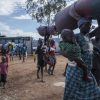
New Inhumane Record: One Person Displaced Every Three Second
Nearly 66 million people were forcibly displaced from their homes last year, the United Nation refugee agency has reported.
Africa: Drought and Jobless, Hopeless Youth, Fertile Grounds for Extremism
Ignoring the plight of jobless young people in sub-Saharan Africa is a recipe for political instability and global insecurity, warned a high-level symposium of Africa’s interior, environment and foreign affairs ministers in Ouagadougou, Burkina Faso.
Housing Refugees of the Middle East Conflicts: Where Will They Go?
Prolonged conflicts in the Middle East have led to a deadly humanitarian crisis, with as many as 17.5 million people displaced in Syria, Iraq and Yemen.
IFAD’s President Houngbo Calls for Investment in Climate-Smart Agriculture for Poverty-Free Future
Implementing climate-smart agriculture is critical to reduce hunger and poverty, according to International Fund for Agricultural Development’s (IFAD) new president Gilbert Houngbo.
Negotiations in Miami Must not Treat Central American Asylum Seekers as Bargaining Chips
Today in Miami, the governments of US and Mexico are putting aside their well-publicized tensions of recent months and co-hosting a conference on security and governance in Central America´s Northern Triangle of El Salvador, Guatemala and Honduras, from where thousands of people flee extreme violence to seek asylum in the US and Mexico.
Migrant Workers Pour Trillions into World Economy
A new report by the International Fund for Agricultural Development (IFAD) says the flow of money from migrants—commonly located in developed countries—to their families in lower income countries has doubled over the last decade.
Our Land. Our Home. Our Future
We all have dreams. For most of us, those dreams are often quite simple. They are common to individuals and communities all around the world. People just want a place to settle down and to plan for a future where their families don’t just survive but thrive. For far too many people in far too many places, such simple dreams are disappearing into thin air.
New Alert: Refugee Numbers Outpace Resettlement Spots
Against the backdrop of increasing refugee numbers around the globe, fuelled by crisis and insecurity, and an ever-widening gap in places to resettle them, the top United Nations official dealing with refugee issues has called on governments to “step up” and deliver places for refugees in line with the commitments they have made.
Child Labor in the Arab Region Does Not Belong to the 21st Century
Today marks the 2017 World Day against Child Labor to reaffirm the goal to eliminate all forms of child labor. This year’s annual theme highlights a subject that is often neglected, namely the importance of addressing child labor in conflict areas and in disaster settings.
Heavy Toll of Disrupted Farming, Higher Prices and Displaced Livelihoods
Large agricultural harvests in some regions of the world are buoying global food supply conditions, but protracted fighting and unrest are increasing the ranks of the displaced and hungry elsewhere, according to a United Nations new report.
This Is the Nation of 170 Million Enslaved Children
Globally over 1.5 billion people live in countries that are affected by conflict, violence and fragility. Meantime, around 200 million people are affected by disasters every year—a third of them are children. And a significant proportion of the 168 million children engaged in child labour live in areas affected by conflict and disaster. These are the facts. Up to you to reflect on the immediate future of humankind.
What Future for 700 Million Arab and Asian Youth?
With a combined population of around 400 million inhabitants, 22 Arab countries are home to nearly 300 million youth. Meantime, there are 400 million youth living in Asia and the Pacific. In both regions, these 700 million young people aged 15–24 years account for up to 60 per cent of world’s youth population. What future for them?.
Civilian Casualties Mount in Battle to Re-take Mosul
East of Mosul, many of the lands liberated from ISIS stand empty. Driving through the Nineveh plains, traditional homelands of Iraq’s minority communities of Yezidis, Christians, Shabak and Turkmen, you pass one ghost town after another, peopled only by members of the armed militias known in Iraq as the Hashd al-Shaabi, or ‘popular mobilization’.
The Relentless March of Drought – That ‘Horseman of the Apocalypse’
By 2025 –that’s in less than 8 years from today-- 1.8 billion people will experience absolute water scarcity, and two thirds of the world will be living under water-stressed conditions. Now it is feared that advancing drought and deserts, growing water scarcity and decreasing food security may provoke a huge ‘tsunami” of climate refugees and migrants.
Instability Widens in Mali and the Sahel Region of Africa
The first foreign visit of the new French President Emmanuel Macron, after a now habitual trip to Berlin, was to Gao in northern Mali as head of the French military.
Re-Connect with Nature Now… Before It Is Too Late!
Now that president Donald Trump has announced the withdrawal of the world’s largest polluter in history—the United States, from the Paris Accord, perhaps one of the most specific warnings is what a United Nations independent expert on rights and the environment has just said: “We should be fully aware that we cannot enjoy our basic human rights without a healthy environment.”
Aggression against children in the Arab region needs to come to an end
On 20 February 1997, the United Nations General Assembly adopted Resolution 51/77 to promote the rights of children. This Resolution was considered a milestone in promoting and advancing the right of children in conflict and wars.« Previous Page — Next Page »





Human migration is a matter of global concern. Flows of migrants and refugees influence and change the social, economic and political dynamics of their destinations -- and the places they have left behind. IPS covers crucial issues such as migrant and refugee rights, irregular or undocumented migration, human trafficking, remittances, displaced persons and forced labour. And the positive: in many cases migration creates a new dialogue among civilisations. Migrants themselves become the building blocks of bridges connecting different cultures.

The Week with IPS

NEXT STOP - SDGs
Tracking global progress towards a sustainable world
Tracking global progress towards a sustainable world
