Languages
Saturday, November 14, 2026



News and Views from the Global South
Natural Resources

World’s Top Chefs Cook for Change
For Denmark’s leading chefs, it’s not only the “taste” that counts. Many have an ambitious goal to “revise the relationship between people and food,” use local ingredients, produce less waste and go completely organic.
Q&A: Everyone Loses in War Over Amazon Dams
In the war over major hydropower dams in the Amazon jungle, everyone loses - even the winners who manage to overcome the opposition and build them, but who suffer delays, costs that are difficult to recoup, and damage to their image.
Uruguay Prepares for Iron Rush
A bill that would regulate large-scale mining operations is making its way through Uruguay’s two houses of parliament, despite a lack of political consensus and vocal opposition from environmental organisations and other sectors of civil society.
Civil Society Calls for Vote on Drilling in Ecuador’s Yasuní Park
The Ecuadorean government’s decision to allow oil drilling in the Yasuní National Park, one of the most biodiverse areas of the planet, has caused alarm among environmentalists and indigenous people, who are calling for a referendum on the issue.
Mining in Chile Going Back Underground
Declining mineral content, the need to preserve the environment, and technological advances are causing big mining companies to turn back to underground mining in what is a rising trend in Chile and around the world, experts say.
Water Dispute Pits Communities Against Brewing Giant
Josefina Escamilla was in the Salvadoran capital to protest against UK brewing giant SABMiller, whose local subsidiary plans to drill a new water well on land alongside her community that, she says, will cause water scarcity for local residents.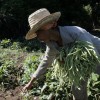
Sustainable Technologies Safeguard the Soil in Cuba
The furrows are hard to make out in fields of the Finca de Semillas, a farm on Havana’s outskirts, because its administrators, Esmilda Sánchez and Raúl Aguilar, protect every centimetre of soil with mulch.
Southern Africa Shows the Way With Water
Water remains a key component in development policy. And, as the Southern African Development Community discusses how best to develop the region, the effective management of watercourses will be key, says Professor Anthony Turton, one of the foremost experts on water policy in southern Africa and a trustee of the Water Stewardship Council of Southern Africa.
Caribbean Economies Battered by Storms
The Caribbean is in danger of becoming “a region of serial defaulters” with respect to international debt obligations, according to one expert, and this may partly be due to its economies suffering frequent shocks from natural disasters.
Ecological Cuban Recipes Boost Sustainable Agriculture
Vilda Figueroa and her husband, José Lama, live in Marianao on the outskirts of Havana, where they share hundreds of recipes based on Cuban-grown foods and sun-drying, along with other ecological food preservation methods.
Opponents of Fracking Seek to Thwart Shale Gas Finance
Non-governmental organisations are putting pressure on multilateral financial institutions not to finance production of shale gas by hydraulic fracturing or fracking because of the high environmental costs they say are associated with this method.
The Role of the State in Developing Countries under Attack from New FTAs
Two new trade agreements involving the two economic giants, the United States and the European Union, are leading a charge against the role of the state in the economy of developing countries.
Building the Future Enterprise by Enterprise in Rural Peru
Women and young people are central players in dozens of small businesses and environmental protection plans that are changing the lives of poor rural families in the Andes highlands of southern Peru.
A Stark Choice: Extreme Heat or Dirty Fuels
Two reports released Wednesday reveal the dangerous gap between science and politics. New climate research shows that extreme events such as the severe heat wave in the U.S. last year will double in 2020, increase 400 percent by 2040, and then get far worse without significant carbon reductions.
Study Finds Many “Bee-Friendly” Plants Laced with Pesticide
Major U.S. retailers are selling garden plants that are billed as “bee-friendly” but laced with pesticides known to be toxic to bees, according to a preliminary study, the first on the issue, released Wednesday.Mongolia Wrestles with Dutch Disease Dilemma
Ochir Damchaa chuckles as he drives his second-hand Toyota sedan through the alleyways of Nalaikh, a ramshackle town 35 kilometres east of Ulaanbaatar: “There’re just two kinds of jobs here: drive a taxi, or dig coal.”
Push for Legal Production of Hemp in Mexico
Marijuana and the closely related hemp can provide medicinal, food and textile industrial materials that could attract substantial investment and development in Mexico if cannabis were legalised and its cultivation and sale regulated, experts say.
Highway through National Park Sparks Protest in Brazil
Environmental groups have appealed to UNESCO to help stop the reopening of Caminho do Colono, a stretch of highway in southern Brazil that crosses through Iguaçu National Park, declared a World Heritage site by the UN agency in 1986.
Q&A: “When the String of the Inequality Gap Snaps, You Have Political Crisis”
"There is no development without peace. It should be understood that, for there to be development in a country, there must be an internal peace process,” says Kanayo Nwanze, president of the International Fund for Agricultural Development (IFAD).
Ivory Course Runs From Africa to Malaysia to China
A distance of nearly 9,000 kilometres separates Malaysia from Africa, but that hasn’t stopped the Southeast Asian nation from becoming a key staging post in the illegal trade of ivory from Africa to China.
Mining Industry Plans Massive Use of Seawater in Arid Northern Chile
The arid climate in northern Chile has forced mining companies to seek out new sources of water. The main source is seawater from the Pacific Ocean, whose use is expected to increase significantly in the coming decade despite the high costs of extraction and transport.« Previous Page — Next Page »


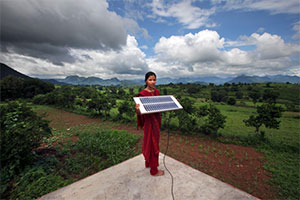 Bringing clean energy to rural India. Credit: Abbie Trayler-Smith / Panos Pictures / Department for International Development
Large reserves of oil, gas and minerals in developing countries generate opulent revenues. They could be used to stimulate economic growth and reduce poverty, but often result in environmental destruction and conflict, benefiting large companies and corrupt governments. Furthermore, competition over natural resources often manifests through geopolitical conflict. For example, before the US-Iraq war, Iraq’s domestic oil industry was nationalized. With US aggression came weakened Iraqi institutions and foreign intervention, thus eventually leading to the privatization of Iraqi oil, leaving the industry now largely dominated by Western companies. As another example, China’s rising investments within the lithium sector in South America are increasing the US-China rivalry across the Western Hemisphere. Notably, Bolivia has the largest reserves of lithium in the world, and the nation’s state-owned lithium extraction firm recently signed a contract with China’s CBC Consortium, while rejecting the entry of Western firms into the nation. In Bolivia’s case, rising Chinese investment in the nation’s lithium sector also raises concerns about environmental sustainability and the sociopolitical rights of Indigenous communities. More broadly, Sub-Saharan Africa holds nearly 30% of global reserves of critical minerals required for low-carbon technologies. Despite this, the region attracts less than 10% of global exploration investment, depicting a critical barrier to both the clean energy transitions and Sub-Saharan Africa’s economic development. Furthermore, resource wealth continues to fuel conflict like Sudan’s civil war, which has led to 9.1 million internally displaced people and is intensely connected to competition over gold, water, and agricultural land. IPS covers news about major oil, gas, and mining projects, their effects on the environment and local communities, and the ideas and actions of the interest groups involved.

The Week with IPS

NEXT STOP - SDGs
Tracking global progress towards a sustainable world
Tracking global progress towards a sustainable world
