Languages
Wednesday, November 11, 2026



News and Views from the Global South
Human Rights

Haunting Photos of Bangladesh’s COVID Pandemic
 Documentary photographer and filmmaker Mohammad Rakibul Hasan has documented the health crisis in Bangladesh over the past several months. In these haunting images, Hasan brings to life the conditions in which many patients are being treated in poor conditions exacerbated by the COVID-19 pandemic.

As Climate Disaster Migration Rises, Girls Get Married Off
When 11-year-old Mitali Padhi hugged her childhood friends to say goodbye, she felt a deep-seated foreboding.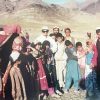
The Tragedy of Afghanistan: Is there a Way Forward?
The desperate scenes at Kabul airport of Afghans trying to flee and the image of the US Airforce flight taxying down the runway with people scrambling to climb on, is an image that will be etched on our minds forever.
“Don’t Call It Ethnic. Ituri Conflict Is a Mystery”
It is a metallic sound, harmless. It lasts just over a second, but it can become as sharp as a machete blade or as devastating as the burst from an assault rifle. It is a beep, just the beep of a phone notification. A woman is on the ground, her belly open, her intestines exposed and her severed head resting on her arm. A pagne of colorful fabric still girds her hips. Where? Why? Then, a video. Do you hear those voices? It happened there, in that village. It was them who did it, it was them.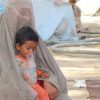
Afghanistan – What Will Happen Now?
As I write this, India has just celebrated the 75th anniversary of its independence from British rule (Pakistan celebrated it a day earlier). But there is little cause for celebration. A dark shadow looms over both countries, indeed over much of the world as well.
Prioritising Profits Reversed Health Progress
Instead of a health system striving to provide universal healthcare, a fragmented, profit-driven market ‘non-system’ has emerged. The 1980s’ neo-liberal counter-revolution against the historic 1978 Alma-Ata Declaration is responsible.
Southern African Migrants Excluded as COVID-19 Pandemic Grows
Migrants across the Southern Africa region are massively disadvantaged as they find themselves excluded from vaccine programmes – even when the global vaccine initiative COVAX often funds these programmes.
Parliamentarians Determined to Reach ICPD 25 Goals
Politicians from Asia and Africa shared activism anecdotes demonstrating their determination to meet ICPD 25 commitments. They were speaking at a hybrid conference held simultaneously in Kampala, Uganda, and online.
Salvadoran Migrants Still Look to the U.S. to Lift Themselves Out of Poverty
The Joe Biden administration's call for undocumented Central American migrants not to go to the United States, as requested by Vice President Kamala Harris during a June visit to Guatemala, appears to have fallen on deaf ears.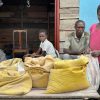
Eastern DRC Under a State of Siege: A Bitter Pill in North Kivu
On May 6, 2021, after a decision by President Félix Tshisekedi, a state of siege was established in Ituri and North Kivu, two provinces that are located in the eastern Democratic Republic of the Congo and that are in the grip of endless violence.
Where Did We Go So Wrong in Afghanistan?
President Biden’s decision to finally withdraw US forces from Afghanistan was the correct decision and certainly overdue. However, the lack of preparation to do so orderly and safely was yet another terrible mistake in a string of mistakes that have plagued the US from day one.
Internationally Trained Medical Doctors Sidelined in Canada
Canada is ranked number one out of 78 countries globally, with the highest marks in social purpose indicators, emphasizing human rights, social justice, and racial equity commitment, according to a recent U.S. News & World Report survey.
Were US War Profiteers the Ultimate Winners in Battle-Scarred Afghanistan?
As the 20-year-old occupation of Afghanistan came to an inglorious end last week, there were heavy losses suffered by many-- including the United States, the Afghan military forces and the country’s civilian population.
Afghan Female Journalist: “I may not be Alive by the time US can Evacuate Me”
Steven Butler describes it as “mass panic.” As the Taliban seized control of Afghanistan, CPJ’s Asia program coordinator has been fielding “hundreds and hundreds” of daily pleas from journalists asking for help to flee the country.
How Many More Innocent Lives Must be Lost in Tigray, asks Adama Dieng
Despite a June 30 unilateral ceasefire declaration by Ethiopian President Abiy Ahmed, United Nations agencies say a recent escalation in fighting has been ‘disastrous’ for children, amid reports of over 100 children being killed in an attack on displaced families.
As the Taliban Returns, 20 Years of Progress for Women Looks Set to Disappear Overnight
As the Taliban takes control of the country, Afghanistan has again become an extremely dangerous place to be a woman.
A New Global Agenda on Sport for 2030
Does sport need to change to better serve society? What can sport and development actors do better in the future? How can sport play a greater role in contributing to development and peace? Can we reimagine the role of sport? Can we resolve the conflict and contradictions inherent within sport?
Privatised Health Services Worsen Pandemic
Decades of public health cuts have quietly taken a huge human toll, now even more pronounced with the pandemic. Austerity programmes, by the International Monetary Fund (IMF) and World Bank, have forced countries to cut public spending, including health provisioning.
Solar Energy Revitalises Indigenous and Farming Communities in Chile
Communities in Arica y Parinacota, the region in the extreme north of Chile, are using solar energy and are being empowered by projects for shrimp and trout farming, the production of yarn from camelid wool, the production of tomatoes and cheese, and even the sale of surplus solar power to the national electric grid.
Indigenous Peoples Need Recognition, Reciprocity & a New Social Contract
The coronavirus pandemic has invited the world to reflect on relationships – between people within and across countries and communities, and between people and nature around the planet.
‘Proud of Being Able to Speak the Truth’: Journalist Nidhi Razdan on her Cyber Attack
Earlier in January, Indian journalist Nidhi Razdan found out she was a victim of one of the most sophisticated and elaborate cyber attacks. Razdan wrote in a piece that it was all an attempt to access her bank account details, personal data, emails, medical records, passport and access to all her devices, including computer and phone.« Previous Page — Next Page »





One world, one humanity, now one court to defend its rights. Another step towards universal human rights, but not remotely a step far enough. The United Nations adopted the Universal Declaration of Human Rights more than half a century ago, but that has done little to stop violations the world over, just as the Geneva Convention has not protected prisoners of war enough. Democracy itself and the freedom it presupposes has not been protective enough. This is the century to move from politicisation of human rights towards humanising political ways. IPS keeps an eye on that difficult path.

The Week with IPS

NEXT STOP - SDGs
Tracking global progress towards a sustainable world
Tracking global progress towards a sustainable world
