Languages
Wednesday, November 11, 2026



News and Views from the Global South
Human Rights
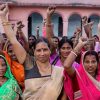
“Time Is A-Wasting”: Making the Case for CEDAW Ratification by the United States
The U.S. is one of only a handful of countries that has yet to ratify the Convention on the Elimination of Discrimination against Women (CEDAW), rendering it “strange bedfellows” with Sudan, Somalia, Iran, Tonga, and Palau.
The Main Contradiction of the Modern Era
The main contradiction of the modern era, and indeed of all human history, is not between capitalism and socialism, and not even between authoritarianism and democracy, but between individualism and collectivism, between public and personal interests. Countries that are getting ahead in the economic race allow themselves the luxury of individualism, prioritizing human rights, which ultimately undermines their political and economic power and causes their decline and the rise of more collectivist civilizations. It is literally the story that is as old, as the world itself…
Belarus Crackdown Leaves Human Rights, Minorities Exposed
There will soon be no one left to defend human rights or help minorities in Belarus as the country’s third sector moves closer to “complete liquidation”, international rights groups have warned.
Civil Society Must Build on Protest Movements – Podcast
 2020 was a year of tremendous upheaval. The murder of George Floyd, followed by global Black Lives Matter protests, Covid-19 and the stark light that the pandemic shone on inequality within countries and between the global north and south, protests and brutal repression after elections in Belarus, ongoing demonstrations for climate action led by youth around the world, to name just a few.

Afghanistan: A Swedish Officer’s Point of View
Like most of us, I rely on news media to find an explanation to tragedies I watch on TV. Neverthelss, some of my opinions about the Afghan tragedy have furthermore been influenced by talks I once had with my friend Bernth Dagerklint. We had for some years been working as teachers at a high school, though this was not Bernth’s main occupation. Most of the time, he served as an officer during international, armed campaigns supported by the Swedish government. He had been to former Yugoslavia, the West Bank and not the least in Afghanistan, where he since 2003 on several occasions worked as ”instructor” for Afghan officers.
Afghanistan – Another Viet Nam?
There are several points of similarity between the war in Afghanistan and the war in Viet Nam. The Taliban, like the North Vietnamese and the Viet Cong, proved to be formidable tacticians and fighters. They managed to contain a far better equipped opponent and mount effective counteroffensives; access sufficient domestic and foreign funding to pay their fighters and support their families; build a formidable intelligence network; and acquire necessary technical capabilities in areas such as repair and maintenance of small arms.
Afghanistan – a Turning Point?
Headlines in the press, live TV and internet coverage of the chaos at Kabul airport following the American withdrawal from Afghanistan has generated an impression around the world of an American foreign policy debacle, belittling the supremacy of American military power.
Journalists in Hiding to IPS: Silencing Women Journalists, is Silencing the Voice of Afghan Women
“If I fall into the hands of the Taliban, not only me but my family will be killed,” said AB, 23*, who worked as a broadcast journalist for the past seven years and is a well-known face on the television screen.
Internationally Trained Medical Doctors are Part of the Solution in Post-Covid-19 Canadian Healthcare System
Access to quality healthcare is a basic human right, but for many, especially those in vulnerable communities, the right is not fully realized.
Biden’s Revenge: Fueling ‘Madness of Militarism’ in Afghanistan
Joe Biden provided a stirring soundbite days ago when he spoke from the White House just after suicide bombers killed 13 U.S. troops and 170 Afghans at a Kabul airport: “To those who carried out this attack, as well as anyone who wishes America harm, know this: We will not forgive. We will not forget. We will hunt you down and make you pay.”
South Korea’s Women Fire Back
A strong movement of feminism is sweeping South Korea. While women feel empowered to stand their ground, the men are retaliating. When South Korean archer An San won two gold medals in just two days during the recent Tokyo Olympics, the response the 20-year-old received at home was a mixed. Some men were angered and said her medals should be taken away. Why? Because her short hair was a sign that she was a ‘man-hating’ feminist.
Is Canada Missing out on Leveraging ITMDs in Its Healthcare Plans?
With elections right round the corner in Canada, Prime Minister Justin Trudeau recently said that a re-elected Liberal government would spend billions in the coming years to hire family doctors. This report says, Justin Trudeau promised that the Liberals would spend $3 billion over four years starting in 2022 to hire 7500 family doctors and nurses as well as tax and student loan incentives for health professionals who set up shop in rural or remote communities and also pledges an extra $6 billion to wrestle with wait lists.
Closed Borders and Hostile Receptions Await Afghan Refugees
Whether desperately trying to get a place on the last evacuation flights out of Kabul or trekking to the borders with neighbouring Pakistan and Iran, tens of thousands of Afghans are fleeing their country once more. Events are unfolding at speed. The Taliban are establishing a central government in the capital to fill the void of the collapsed western-backed administration, but they do not control all the country as the protracted civil war enters a new stage. The UN refugee agency UNHCR says that in its “worst case scenario” it is preparing for around 500,000 new refugees in the region by the end of this year. As with many past estimates that could prove optimistic.
The Taliban Win: The Aftermath in Afghanistan and in the World
Some years ago, on a piece on the Afghan crisis I had written that Mullah Omar’s face bore no resemblance to that of the impossibly beautiful, albeit mythical, Helen of Troy. Yet it too had caused the launch of a thousand ships (airships to be more precise), just as Helen’s had done in Homer’s epic tale, the Iliad. Like Troy in that ancient narrative, Afghanistan of the present times was swarmed with invaders who could also be seen as the counterparts of those Greeks- the Americans and their NATO allies. This war lasted for double the time of the Trojan episode, twenty years instead of ten. At its end it led to a reverse situation, victory of the Trojans, in this case, of the Taliban. Though the Greeks destroyed Troy by the ruse of a gift of the Wooden Horse, eventually a Trojan warrior, Aeneid, sailed to southern Mediterranean and laid the foundation of the Rome and its empire. The Greek epoch ultimately yielded to the Roman age, and the annals of geopolitics of that time took a completely new turn. Will the impact of the Afghan war be the same? Shall we see a power transformation in a new paradigm from what we have at the present time? Will American predominance make way for a risen China, now or in the future?
After Afghanistan, War’s Idealists Must Accept Defeat
As the Western occupation of Afghanistan has come to an end, TV news is broadcasting harrowing scenes of death and destruction, citizens in fear, allies abandoned, and dreams dashed.
Advancing the Rights of Women Manual Scavengers in India
Manual scavenging is a caste-based profession that leads to discrimination and atrocities against those engaged in it. Generations of families from marginalised communities in India have been forced to continue in this profession because of social ostracism and a lack of alternatives.
Pacific Community Warns of Threat to Education Retention in the Wake of COVID-19
Before the pandemic, many Pacific Island countries grappled with low numbers of students completing secondary education. Now experts in the region are concerned that the closure of schools to contain the spread of COVID-19, and the economic downturn, will lead to even more students dropping out of education early.
Systemic Barriers Exist in Canadian Healthcare for Immigrant Health Professionals
Albert Einstein said, “In the midst of every crisis lies great opportunity.” The year 2020 was a year of crisis across many sectors in Canada, especially the health care sector. There was a severe strain on the health care system through long waiting lists for family physicians, specialists, and vaccination clinics, and Intensive Care Units were working at a high level of capacity.
Crisis in Afghanistan: All Eyes on Central Asia
The political and human catastrophe in Afghanistan is threatening to boost autocratic tendencies in Tajikistan and Uzbekistan. With the withdrawal of US and coalition forces from Afghanistan and the rapid takeover by the Taliban, neighbouring Central Asian countries are once again at the focus of international attention.
Tonga’s experience: Implementation of Domestic Violence Legislation
Fourteen Pacific Island Countries have enacted specific legislation to address domestic violence. While these laws have been developed to respond to domestic violence, implementation continues to be a challenge. It is affected by various factors that include practical social, cultural, religious, political, environmental and economic challenges.
Why Do Organizations Fail to Keep Workplace Harassments in Check
“Sexual harassment is not about sexual attraction, it is about power. If an individual uses power plays to subjugate other people, when we have such dynamics going on in the workplace, what we need is a system that fights back against it, which unfortunately a lot of workplaces, they allow it to persist,”, says Adrienne Lawrence, anchor and legal analyst in an interview given to me here.« Previous Page — Next Page »





One world, one humanity, now one court to defend its rights. Another step towards universal human rights, but not remotely a step far enough. The United Nations adopted the Universal Declaration of Human Rights more than half a century ago, but that has done little to stop violations the world over, just as the Geneva Convention has not protected prisoners of war enough. Democracy itself and the freedom it presupposes has not been protective enough. This is the century to move from politicisation of human rights towards humanising political ways. IPS keeps an eye on that difficult path.

The Week with IPS

NEXT STOP - SDGs
Tracking global progress towards a sustainable world
Tracking global progress towards a sustainable world
