Languages
Thursday, November 12, 2026



News and Views from the Global South
Human Rights

China & Russia Throw Protective Arms Around Myanmar
When million-dollar arms sales knock on the door, human rights violations and war crimes fly out of the window. As the United Nations grapples for a reaction to the military coup in Myanmar, both China and Russia, two veto-wielding permanent members of the UN Security Council (UNSC), refused to support a statement condemning the army takeover—a collective statement that warrants consensus from all 15 members.
Water Graves: Nightmare for Mexican Fishermen
All of Erizo's nightmares are the same. Since his return from the ocean - almost unrecognizable - every bad dream is identical. A wave punches his little boat and throws him into the deep sea where everything is so dark that he can't even see his own hands.
Myanmar Looks Back in Fear and Anger after Military Coup
As night fell on Tuesday, the second day of the military coup in Myanmar, two familiar scenes were being played out on opposite sides of the world.
The Afghan Dilemma for the Biden/Harris Administration
President Biden and his administration confront a very challenging situation within the United States and abroad. His predecessor, Mr. Trump, refused to accept the defeat or extend any cooperation to the incoming team.
Road to Hell Paved with Good Intentions
Access to COVID-19 vaccines for many developing countries and most of their people will have to wait as the powerful and better off secure earlier access regardless of need or urgency. More profits, by manufacturing scarcity, will surely cause even more loss of both lives and livelihoods.
As Army Takes Over, Fear and Uncertainty Grip Myanmar Citizens
Yangon resident Ni Ni Aye walked to her office yesterday morning. A couple of hours before, the army had staged a coup by seizing power and declaring a state of emergency in Myanmar. Ni Aye, an employee of one of Yangon’s largest technology firms, tried to call her colleagues and family, but phone services were down. So, she decided to walk to the office and see what was happening. “There were no armoured vehicles or soldiers with heavy weapons, yet everything was extremely quiet. It was very confusing; nobody had a clue on what is really happening. Then we realised, the action is all happening in the capital,” Ni Aye told IPS.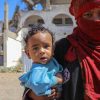
A Counter-Narrative? Ruminations Around Holocaust Memorial Day
For more than two decades, the mantra was “PVE” (preventing violent extremism) and/or “CVE” (countering violent extremism). Millions of dollars were spent, new NGOs and think tanks emerged, government policy papers were drafted, countless books and articles were published, large and small scale initiatives developed - indeed almost an entire industry in development and foreign policy spaces thrived.
Sri Lanka’s Deteriorating Human Rights Situation Raises Multiple Alarms
A decade has passed since the end of Sri Lanka’s civil war between the government and the LTTE, where at least 100,000 people were killed in the over three-decade long conflict. Families of victims of enforced disappearances continue to seek justice, the government is yet to end impunity and put accountability for crimes under international law and human rights violation and abuses in its transitional justice process.
Myanmar Coup Sends ‘Chilling Message that Military won’t Tolerate Dissent’
Responding to reports this morning that Myanmar’s military has seized control of government in a coup on the eve of the country’s opening session of its new parliament, rights group Amnesty International said it “sends a chilling message that the military authorities will not tolerate any dissent amid today’s unfolding events”.
A Grey Cloud Over Lebanon: Mental Health Burdens
Humankind is no stranger to the destabilizing events of 2020. The state of the global economy and the outbreak of the COVID-19 pandemic hit the headlines. In this ever escalating global crisis, Lebanon, has been facing what can only be described as unimaginable hardships. For the past year the country has seen challenges which have resulted in an utter state of hopelessness and rapid deterioration in mental health of many of its citizens.
Elections in Africa go on Amid COVID-19
Central African Republic and in Niger held their presidential and parliamentary elections on 27 December 2020 to round up a challenging year where despite fears of disruption from the COVID-19 pandemic, most countries in Africa managed to stick to their scheduled elections.
French Editor Pays Tribute to Civil Rights Icon Angela Davis
Renowned activist and intellectual Angela Davis turned 77 years old on Jan. 26, marking more than five decades of her fight against systemic racism and inequality.
Q&A: What Nigerian Feminists Hope will Come Out of the #EndSARS Movement & Pandemic
As Nigeria’s biggest city, Lagos, reportedly experienced a massive shortage of oxygen cylinders last week — with demand increasing fivefold in one of the city’s main hospitals just as the country recorded some of its highest number of coronavirus cases — its youth leaders are concerned about the impact on vulnerable women.
Incitement to Violence Is Rarely Explicit – Here Are Some Techniques People Use to Breed Hate
As senators plan for an impeachment trial in which former President Donald Trump is accused of inciting his supporters to mount a deadly insurrection at the Capitol, global concern is growing about threats of violent unrest in multiple countries, including the U.S. The United Nations reports the proliferation of dangerous speech online represents a “new era” in conflict.
The Struggle to End Female Genital Mutilation: A Dark Secret No More
Survivors of female genital mutilation or cutting (FGM/C), are determined to share their stories to end this practice – even though they face ostracisation by their communities. Masooma Ranalvi, an FGM/C survivor and founder of ‘WeSpeakOut’, an organisation committed to eliminating FGM/C or khafd/khafz/khatna explains that FGM/C is practised by various communities in India but is prominently practised among the Dawoodi Bohras.
“Saving Journalism: A Vision for the Post-Covid World”
In the midst of the COVID-19 pandemic, journalists everywhere are feeling the consequences; job cuts, layoffs and closures have swept the world.Will vaccine nationalism lead to the exclusion of Rohingya refugees?
The World Health Organization (WHO) has adopted "leaving no one behind" and "equitable access to vaccines" as the basic principles for Covid-19 vaccination around the world. GAVI, the Vaccine Alliance, has also set up "equitable and sustainable use of vaccines" and "leaving no one behind" as the core of their high-level strategy for worldwide immunisation. All these strategies are in alignment with the Sustainable Development Goals. However, global vaccination is not just a mere strategy or goal. This relates to the right to healthcare, which is an integral part of the right to life and must be ensured irrespective of nationality, religion, race, creed or culture.
An American Horror story
Occasionally some of us might suffer from a feeling of maximal overload, overwhelmed by COVID-19 and the reign of Donald Trump. It can maybe be conceived as far too euro-centric to be concerned about the disastrous situation in the U.S., with media stuffed to the brim by news about Donald Trump while the global environmental crisis is steadily getting worse and war, injustices and famine continue to agonize people in places like Darfur, Yemen, Afghanistan, and Syria.
COVID-19’s Social & Economic Fallout Hits Women Harder
With over 90 million confirmed cases and 1.9 million deaths globally, and a second wave sweeping into 2021, the COVID-19 pandemic continues to hold the world hostage.
We are Facing a Climate Emergency, Warns UN Chief
We begin this year with a heightened awareness of the importance of resilience. The COVID-19 pandemic has reminded us that we cannot afford to ignore known risks.
Implementation Research to Achieve Health Related #SDGs
The Sustainable Development Goals (SDGs) aim to ensure healthy lives and promote well-being for all ages. The main focus of the SDGs is to improve equity to meet the needs of women, children and disadvantaged populations in particular.« Previous Page — Next Page »





One world, one humanity, now one court to defend its rights. Another step towards universal human rights, but not remotely a step far enough. The United Nations adopted the Universal Declaration of Human Rights more than half a century ago, but that has done little to stop violations the world over, just as the Geneva Convention has not protected prisoners of war enough. Democracy itself and the freedom it presupposes has not been protective enough. This is the century to move from politicisation of human rights towards humanising political ways. IPS keeps an eye on that difficult path.

The Week with IPS

NEXT STOP - SDGs
Tracking global progress towards a sustainable world
Tracking global progress towards a sustainable world
