Languages
Monday, November 16, 2026



News and Views from the Global South
Human Rights

Africa’s Investment Drive Gathers Pace
Headwinds are blowing amid IMF warnings of a “synchronised slowdown” in global economic growth, yet Africa’s investment drive is still gathering pace, supported by intense international competition in development finance.
Beaten and Tortured for a Ransom, Lured by the Promise of a Livelihood
After his father passed away two years ago, the burden of caring for a six-member family rested on the shoulders of the now 19-year-old Farhad Hossain. He had no clue how he would support his family and pay for the education of his four younger siblings.
UN’s 75th Anniversary Shadowed by Right-Wing Nationalism, Widespread Authoritarianism & Budgetary Cuts
When the six much-ballyhooed high-level UN meetings concluded late September, there were mixed feelings about the final outcomes. And civil society organizations (CSOs), who were mostly disappointed with the results, are now gearing themselves for two upcoming key climate summit meetings: COP25 in Santiago, Chile in December and COP26 in Glasgow, UK in late 2020, along with the 25th anniversary of the Beijing Women’s Conference scheduled to take place in September 2020 in New York.
Holding Transnational Corporations Accountable for Human Rights Abuses
In Geneva this week, a treaty process is underway that promises to usher in a new era for human rights around the globe. The process—the intergovernmental working group on the binding treaty on transnational corporations and human rights—could mean that for the first time, human rights would be prioritized above corporate profits.
Election Death Toll Underscores Afghanistan’s Fragile Democracy
A wave of bloody Taliban attacks aimed at derailing Afghanistan’s recent elections killed and maimed hundreds of people, including children, the United Nations mission to the country said on Tuesday.
Global Challenges for the ‘NextGen’
Success has many parents – so the saying goes. In the case of the massive successes of international agricultural research, no one person can claim parentage. There are heroes along the way such as Norman Borlaug and his early cereal breeding, and the team that eliminated the cattle disease Rinderpest from the world – smallpox is the only other disease that has been totally eradicated. Another is the founder of The Crawford Fund, Derek Tribe, who was also instrumental in the creation of what is now the International Livestock Research Institute (ILRI), which I chair. However, it would be more correct to highlight the thousands of scientists who have contributed to the world’s greatest feat of feeding an extra three billion people when pundits said it was impossible.
Vibrant Civil Society Essential for Sustainable Development in Iran
2019 has not been a good year for Iranian human rights activists. At a time where civic space had completely closed, many watched in disbelief as the regime mounted even more restrictions on civil society. Over recent months, many activists have been arrested, like Noushin Javari (a photographer), Marzieh Amiri (a journalist), and Javad Lal Mohammadi (teacher).
Why Are So Many Nepali Workers in Korea Committing Suicide?
For many Nepalis, it is dream to find work in Korea where they expect to earn many times more than in Nepal. Yet, there is a dark side to the Korean Dream: between 2009 to 2018, there were 143 deaths of Nepali workers in South Korean soil, and of them 43 were suicides.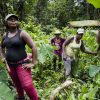
Rural Poverty Is Still a Scar on the Soul of Colombia, but a New Program Supporting Agri-Entrepreneurship Can Help Heal the Wounds
Rural poverty and inequality continue inflicting large swaths of population in Colombia, especially in rural areas. This situation, endemic since at least the beginning of the twentieth century, was at the root of the 50-year long conflict that shattered the country, leaving 220,000 deaths and 5.7 million displaced persons, and devastating a significant part of the rural areas, where government services and infrastructure vanished.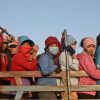
The #MeToo Movement’s Powerful New Tool
If one dreamed up an ambitious global #metoo success story, it might involve governments around the world enthusiastically supporting legal norms and action on sexual harassment with active support and cooperation from businesses and workers.
Huge moment for Ethiopia as Abiy Ahmed wins Nobel Peace prize
Ethiopia found itself in the global spotlight for all the right reasons after Abiy Ahmed, its young, dynamic prime minister was awarded the Nobel Peace Prize.
Justin Trudeau´s Blackface
Politics is a dodgy game, maybe even more so if you represent political views based on a moral approach. When the charismatic Justin Trudeau, son of a cosmopolitan liberal who served as Canada´s Prime Minister for 16 years, in 2015 was elected Prime Minister it was within a global political climate different from what it is today. Barack Obama was in the White House, Angela Merkel served her third period as German Chancellor, and the UK Government had not yet announced its country's withdrawal from the EU. Nevertheless, Russia had three months before Trudeau´s election annexed Crimea, while Viktor Orbán´s Hungarian government the month before initiated the construction of a 4 metres high barrier along its nation´s eastern and southern borders to keep immigrants out.
For Some in Kashmir Marriage Equates to Sexual Slavery
Haseena Akhtar was only 13 when an agent told her parents that they could earn a good amount of money by letting her marry a Kashmiri man. The man was, however, three times older than Akhtar, the agent said.Statement by NRC Secretary General Jan Egeland following the announcement of the Nobel Peace Prize winner for 2019:
"We congratulate Dr. Abiy Ahmed on the Nobel Peace Prize and his courageous efforts in bringing ambitious reforms to Ethiopia and offering the hand of peace to neighbouring Eritrea. The Norwegian Refugee Council is among the very few international groups operating in Eritrea and Ethiopia and assisting people in need in both countries. We have witnessed the dramatic improvement in relations between the two countries during Dr. Abiy Ahmed´s government after conflict and tension over the years produced displacement and suffering.14 aid agencies warn of humanitarian crisis in North-East Syria
Civilians in north-east Syria are at risk and humanitarian aid could be cut off following the launch of a new military operation in the area, leading aid agencies are warning.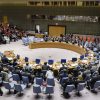
Aid Groups Warn of Humanitarian Crisis from Turkey’s Assault on Syria
Aid groups operating in northeastern Syria have been raising the alarm about civilian casualties and an impending humanitarian crisis this week, as Turkey began a military assault on the turbulent region’s Kurdish militants.
The Role of Emerging Technologies in Military Conflicts
Throughout history, technology has transformed armed conflict. The carnage of First World War battlefields is a stark example of what happens when advances in weaponry outpace the normative frameworks around its use.
Abortion Remains an Unresolved Issue: ICPD25 Meeting next Month
Currently, the topic of abortion as human rights leaves the world bustling. When the state of Alabama1 in the United States enacted a very strict ban on abortion, it shocked the world. This prompted so-called conservative movements, led by female business owners, to make a full-scale advertisement in the New York Times claiming abortion is a human right2 ; hence the global debate between pro-life and pro-choice.
The Most Important Meeting You’ve Never Heard Of — & the Grand Challenge on Inequality
Last month 195 world leaders once again met in New York for big speeches and grand events. But on inequality, when all is said and done, more has been said than done.
Hollywood and Business Luminaries Spotlight World’s ‘Stateless’ Woes
Movie star Cate Blanchett and businessman Richard Branson spoke up this week for the millions of people around the world who cannot get passports and other papers because they lack an official nationality.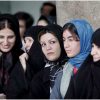
Reforms Will Grant Nationality to Children of Iranian Women
After more than a decade of women’s rights activism, Iran’s Guardian Council has finally approved an amendment that would grant Iranian citizenship to the children of Iranian women married to foreign men.« Previous Page — Next Page »


One world, one humanity, now one court to defend its rights. Another step towards universal human rights, but not remotely a step far enough. The United Nations adopted the Universal Declaration of Human Rights more than half a century ago, but that has done little to stop violations the world over, just as the Geneva Convention has not protected prisoners of war enough. Democracy itself and the freedom it presupposes has not been protective enough. This is the century to move from politicisation of human rights towards humanising political ways. IPS keeps an eye on that difficult path.

The Week with IPS

NEXT STOP - SDGs
Tracking global progress towards a sustainable world
Tracking global progress towards a sustainable world
