
Tuesday, November 24, 2026



News and Views from the Global South
Human Rights

Women Farmers in Chile to Teach the Region Agroecology
An organisation that brings together some 10,000 peasant and indigenous women from Chile is launching an agroecology institute for women campesinos, or small farmers, in South America.
Many More Snakes Than Ladders for U.S. Policy in 2014
If U.S. President Barack Obama conceived his foreign policy prospects for 2014 as a popular child’s board game, the snakes he will have to jump over significantly outnumber the ladders that can propel him to success.
Pakistan’s Polio Campaign Runs Into Taliban Wall
The Taliban are proving to be a huge stumbling block for Pakistan as the South Asian nation - one of only three remaining polio endemic countries in the world – tries to fight the crippling disease.
Hospitality, Agriculture Firms Vulnerable to Human Trafficking
Shareholders are calling on 15 U.S.-based multinational corporations to ensure that their global supply chains are not facilitating human rights abuses, particularly labour and sex trafficking.
South Sudan Declares Emergency in Two States
South Sudanese President Salva Kiir has declared a state of emergency in two states, according to the government's official Twitter account.
Libyan Highlanders Enforce Rule of Law
Everybody in this mountain village is seemingly familiar with the new regulations. “People other than militiamen or policemen will be fined 500 dinars [around 300 euros] for carrying guns,” local resident Younis Walid tells IPS.
A Complicated Calculus in South Sudan
Hours after forces ostensibly under Riek Machar’s command claimed victory in the strategic South Sudanese city of Bor, the former vice-president and once again rebel commander announced he would – after a week of postponement – send an envoy to upcoming peace dialogues in Addis Ababa with regional leaders and representatives of his one-time superior and comrade, President Salva Kiir.
Democracy Gets an Electronic Boost
Elections in Pakistan have long been marred by allegations of fraud, but now one of its provinces is hoping to give democracy a boost with the help of technology. Khyber Pakhtunkhwa in the north of the country has given a thumbs up to the biometric voting machine.
Mexican Communities On Guard Against Thirst for Oil
The Terra 123 oil and gas well in the southeastern Mexican state of Tabasco was in flames since late October, just 1.5 km from a community of 1,500 Oxiacaque indigenous villagers, who were never evacuated.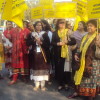
Pakistani NGOs Fear New Year Constraints
A new policy by the Pakistani government to regulate foreign-funded non-governmental organisations (NGOs) has come in for sharp criticism from the social sector, with many saying it could stifle rights-based groups and affect crucial services provided to the needy.

Cuba’s Reforms Don’t Believe in Tears
The landscape is changing in Cuba’s cities and towns, with political slogans giving way to lighted signs advertising the best of local and international cuisine and air-conditioned lodgings – signs of an emerging private sector that was inconceivable until recently.
Barren Fields Recover From Taliban
Ahmed Nawaz, a 55-year-old farmer in northwestern Pakistan’s Swat valley, rues the day the Taliban arrived in his beautiful land, known for its rolling mountains, lush fields and blossoming orchards. “The earth became barren,” he says.
Baka Caught in the Maze of Modernism
Essomba Dominique, a Baka man from Mindourou in Cameroon’s East Region, sits dulled-eyed in front of his hut, known in the Baka language as the ‘mongoulou’.Sri Lanka Faces New Year Pressure Over Rights
When the American Centre in Colombo held a memorial event honouring the late South African President Nelson Mandela, the first few questions at the question and answer session had nothing to do with the great freedom fighter.
Palestinians Face a Route to Nowhere
The full moon sets; another dawn rises over Route 443. For over 40,000 Israeli residents and settlers commuting daily between Jerusalem and the Tel Aviv metropolitan area, it isn’t yet rush hour.
West Papua Searches Far for Rights
The indigenous struggle for liberation in West Papua on the western half of the island of New Guinea in the south-west Pacific, with the loss of thousands of lives, is far from ending. But, despite political uncertainties, a united coalition of pro-independence leaders has reignited hope of freedom by galvanising the support of a Pacific Islands inter-governmental organisation.
Syrian Children Lose More Than Their Country
As refugees from Syria continue to pour into Lebanon, the majority of children are not going to school, spurring concern that they will become a ‘lost generation’.
The Legacy of 2013
At this time of hope for what the new year may bring, it would be useful to look at the legacy we carry with us from the year we leave behind. It was a year full of events - wars, rising social inequality, unchecked finance, the decline of political institutions, and the erosion of global governance.
Free Expression Still a Mirage for Zimbabwean Artists
That citizens cannot enjoy democracy if they are ruled by an undemocratic party is the warning that got Cont Mhlanga's play "Members" banned from theatre stages in Zimbabwe in 1985.
Rebuilding Lives Skilfully
Farhat Bibi, 43, was left to fend for her three young sons after her husband was killed in a bomb attack in Pakistan’s Federally Administered Tribal Areas (FATA) three years ago. A few days later, she landed at a camp for people displaced by violence. “The camp proved to be a blessing in disguise,” she says.
OP-ED: Declaring Muslim Brotherhood “Terrorists” Has Far-Reaching Implications
For the first time in its 85-year history, the Egyptian Muslim Brotherhood Wednesday was declared a terrorist organisation. The provisional government’s decision, presumably with the military junta’s approval, came after two deadly bombings in Mansura and Cairo.« Previous Page — Next Page »


One world, one humanity, now one court to defend its rights. Another step towards universal human rights, but not remotely a step far enough. The United Nations adopted the Universal Declaration of Human Rights more than half a century ago, but that has done little to stop violations the world over, just as the Geneva Convention has not protected prisoners of war enough. Democracy itself and the freedom it presupposes has not been protective enough. This is the century to move from politicisation of human rights towards humanising political ways. IPS keeps an eye on that difficult path.

The Week with IPS

Tracking global progress towards a sustainable world
