Languages
Thursday, November 26, 2026



News and Views from the Global South
Human Rights
Q&A: For Day Labourers, Life Is a Game of Russian Roulette
They wait in parking lots, hoping for someone to come and offer them a few days of work. This work could entail anything from cleaning to construction, and though they may not be trained or equipped for these types of jobs, they have little choice, for they are day labourers, undocumented immigrants with no legal or moral support and subject at the mercy of their employers.
Constitutional Poll Polarises Egypt
This Saturday, Egyptians will head to the polls to vote on a controversial draft constitution. The referendum has divided this nation – still pulsing with the revolutionary fervour that toppled former dictator Hosni Mubarak in early 2011 - with most Islamist parties and groups supporting the proposed national charter, while liberal, leftist and 'revolutionary' groups, in addition to Egypt's sizable pro-Mubarak demographic, are opposed to it.
War Widows Struggle in a ‘Man’s World’
Sita Tamang’s husband went missing sometime in 2004, two years before Nepal’s civil war came to an end. A native of Dharan, a town about 600 kilometres southeast of Kathmandu, Tamang waited seven years after his disappearance before she tried to claim compensation offered by the government after a 2006 peace deal ended this country’s bloodshed.
Bolivia’s Tapiete People – a Culture in the Hands of 38 Families
Three and a half hours away from the nearest town along a dirt road, 38 families are struggling to preserve their land, customs and language in Bolivia’s Gran Chaco region. They are the Tapiete Indians, who refuse to disappear.
Major Study Suggests Crimes Against Humanity in Sudan
Reporting on the results of a two-year investigation, on Wednesday the U.S.-based Human Rights Watch presented findings that suggest that the Sudanese government’s aerial bombardment of civilians in the country’s south could amount to crimes against humanity.
Favelas – the Football in the Run-Up to Brazil’s World Cup
Opinions are divided in Morro da Providência, Brazil's oldest favela, over construction works for the 2014 FIFA World Cup and the 2016 Olympics. While some residents are optimistic about the improvements that lie ahead, others point out that hundreds of dwellings will be demolished.Syria Opposition Wins International Backing
More than 100 countries have recognised a new Syrian opposition coalition, opening the way for greater assistance to the forces fighting to topple President Bashar al-Assad, including possibly military aid.
Outrage Over Acquittal in Argentine Sex Trafficking Case
The courtroom broke out in angry shouts and cries when judges in Argentina unexpectedly acquitted 13 defendants accused of kidnapping a young woman and forcing her into prostitution in 2002.
Native Communities in Peru Take Charge of Environmental Monitoring
At the end of every month, with the skill of an environmental engineer, Wilson Sandi prepares a work plan that will be used by Achuar indigenous people, like him, to document the scars left by 40 years of oil drilling in the Peruvian Amazon region of Loreto.
Changing the Game to Achieve Nuclear Disarmament
Twenty-five years ago, on Dec. 8, presidents Mikhail Gorbachev and Ronald Reagan signed the Intermediate-Range Nuclear Forces (INF) Treaty. This historic agreement eliminated a modern class of land-based “theatre” weapons - the SS20s, cruise and Pershing missiles - that had been brought into Europe in the early 1980s.
No Basic Services for Oil Country
South Sudan may have received slightly more than 10 billion dollars in oil revenue from 2005 to January 2012, when oil production shut down, according to both government officials and the World Bank. But development experts have urged the government to begin investing in the country and its people, as basic social services remain scarce.
U.S. Defends Low-Key Stance on Rwanda, Congo
President Barack Obama’s top diplomat on African affairs on Tuesday defended the U.S. administration’s response to the continued crisis in the Democratic Republic of Congo (DRC), in the face of stepped up criticism from both civil society and U.S. lawmakers.
Q&A: The Challenges of Women’s Empowerment and Equality
Today, approximately 125 countries have laws that penalise domestic violence - a great advance from a decade ago. Yet 603 million women around the world still live in countries where domestic violence is not a crime, and up to seven in ten women are targeted for physical or sexual violence, or both.
Tunisia Gears Up to Host World Social Forum
Following in the wake of the wave of revolutions dubbed the ‘Arab Spring’, which originated here nearly two years ago, North Africa is gearing up to host the World Social Forum (WSF) for the first time.
Crisis Hits Spain’s Roma Hard
Daniel introduces himself as a “gypsy and guitarist,” Francisco José wants to become a doctor, Yomara timidly says she likes to cook, and María has no idea what she wants to study.Iran Debates Talking with the U.S.
As the Iranian leadership prepares to engage in negotiations with the five permanent members of the U.N. Security Council plus Germany (P5+1) over the fate of its nuclear programme, the conversation inside Iran has moved beyond the nuclear issue, and now includes a debate about the utility of engaging in direct talks - even relations - with the United States.
OP-ED: Women Out Loud
Global efforts to reach the “three zeros” for women and girls - zero new HIV infections, zero discrimination and zero AIDS-related deaths - are gaining momentum. Much of the progress we have seen is underpinned by the work of women living with HIV.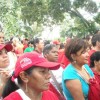
Chávez Names Civilian Heir for Sake of Unity
Nicolás Maduro, the Venezuelan vice president and foreign minister, has been announced by President Hugo Chávez as his political successor. Many analysts view this as a specific call for party unity, and a preference for a civilian over a former military leader.Off the Blacklist Doesn’t Imply Improvement in Human Rights in Colombia
Colombia will be removed from the Inter-American Commission on Human Rights “blacklist” next year. In exchange, the government of Juan Manuel Santos facilitated a visit to the country by a delegation from the Commission.
Haitian Community Radio Reopens After Protests
A community radio station silenced by Haitian authorities is open again thanks to the mobilisation of other stations as well as organisations and associations both inside and outside of Haiti.Syria Rebels “Seize Key Aleppo Army Base”
Syrian rebels have captured parts of a large army base in the country's north, just west of the city of Aleppo, activists say.« Previous Page — Next Page »


One world, one humanity, now one court to defend its rights. Another step towards universal human rights, but not remotely a step far enough. The United Nations adopted the Universal Declaration of Human Rights more than half a century ago, but that has done little to stop violations the world over, just as the Geneva Convention has not protected prisoners of war enough. Democracy itself and the freedom it presupposes has not been protective enough. This is the century to move from politicisation of human rights towards humanising political ways. IPS keeps an eye on that difficult path.

The Week with IPS

NEXT STOP - SDGs
Tracking global progress towards a sustainable world
